
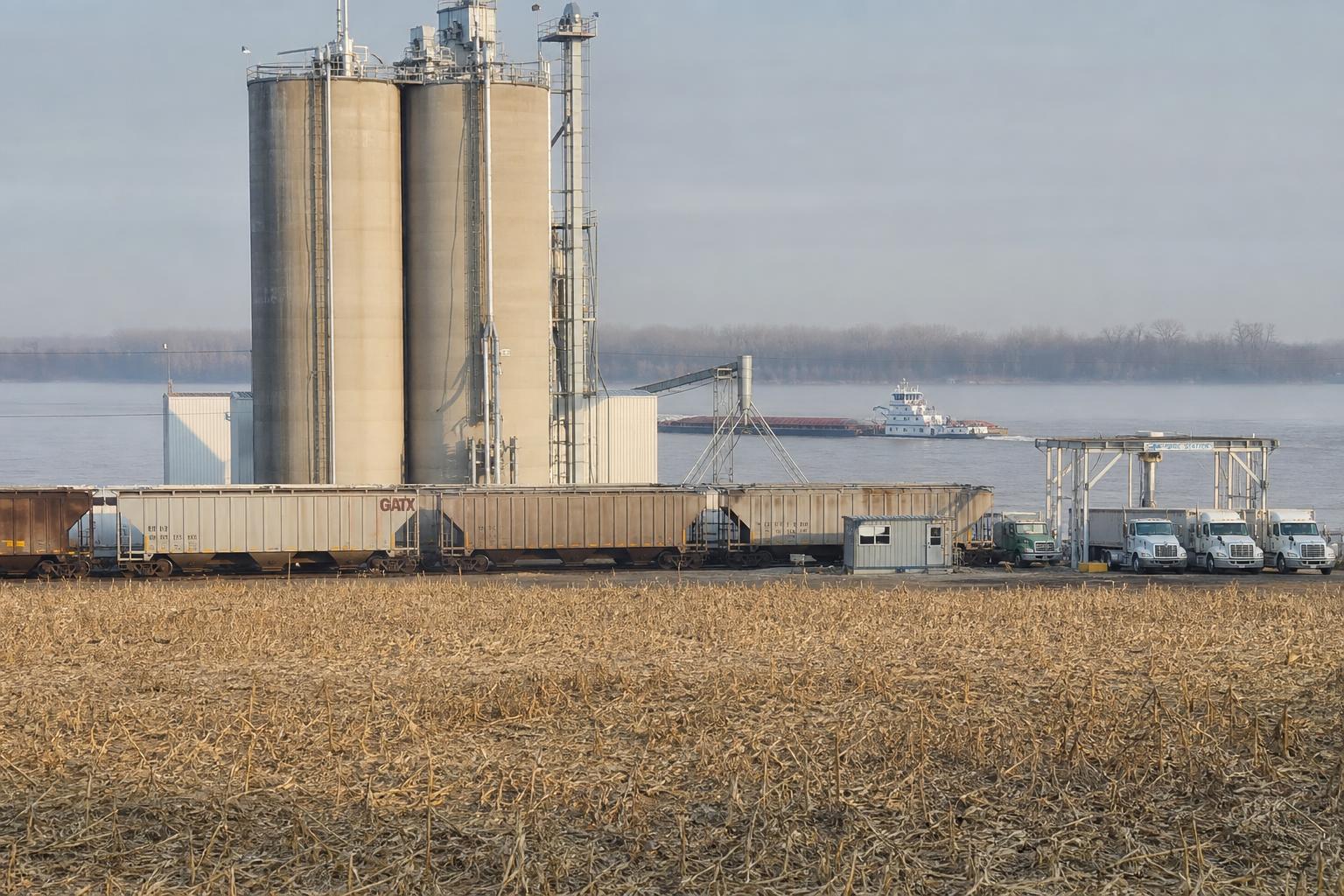
U.S. grain movement is still a freight-driven merchandising story. For farmers, elevators, feed mills, processors, and exporters, the key question is not only where futures trade next, but whether the local delivery path can handle bushels at a workable cost.
Truck availability, railcar timing, barge execution, and export loading schedules all shape the net bid received at the farm gate. That makes transportation planning a daily part of grain marketing, especially when basis, storage, and delivery windows are already influencing selling decisions in the U.S. grain market.
Freight cost is part of the cash grain price
For a grower or country elevator, the posted bid is only one side of the transaction. The practical value of that bid depends on truck turn time, fuel cost, driver availability, delivery hours, and whether the buyer can unload quickly.
When local freight gets tight, nearby bids can lose appeal even if headline prices look steady. In those periods, sellers may need to compare a stronger bid with a longer haul against a weaker bid with faster unloads and lower execution risk.
Elevators should also watch how inbound farmer deliveries line up with outbound rail or barge commitments. A mismatch can turn into demurrage exposure, storage congestion, or rushed truck scheduling.
Rail, barge, and truck decisions should be coordinated
Each mode serves a different part of the grain chain. Trucks handle local assembly and short-haul delivery. Rail moves larger interior volumes to domestic users and export channels. Barges remain important for river-linked export flows when river conditions and terminal capacity allow efficient movement.
The risk for handlers is treating those modes as separate markets. A missed railcar placement can back up country stocks. A barge delay can change the value of river delivery. A shortage of local trucks can make a good sales program difficult to execute.
Input buyers face a similar delivered-cost challenge. Fertilizer and crop input logistics can compete for equipment, labor, and attention during busy seasonal windows, which is why delivered cost matters in both grain and input planning, as noted in AgroPost's U.S. fertilizer market brief.
Export flow signals to watch
Export demand matters most to interior markets when it creates a clear pull on freight and basis. For grain merchandisers, the practical checklist includes export loading pace, nearby terminal demand, rail service reliability, barge availability, and how quickly basis changes are being passed back to origin points.
Farmers do not need to manage every export detail, but they should ask one basic question before committing bushels: can the buyer move grain on the schedule behind the bid? If the answer is uncertain, delivery flexibility and written terms become more important.
Key takeaways for grain handlers and sellers
- Compare net bids, not just posted bids. Include freight, time, shrink, waiting, and delivery risk.
- Confirm delivery windows early. A strong bid can weaken if unloading capacity or freight execution is uncertain.
- Track mode competition. Truck, rail, and barge constraints can shift basis even when futures are quiet.
- Protect logistics terms. Written timing, grade, moisture, and unload expectations reduce disputes.
What it means for the market
For the U.S. grain sector, transportation is not a back-office issue. It is a direct part of cash price discovery. Farmers and elevators that monitor freight execution alongside basis have a better chance of capturing workable bids, avoiding avoidable delays, and keeping grain moving when export and domestic buyers compete for supply.