
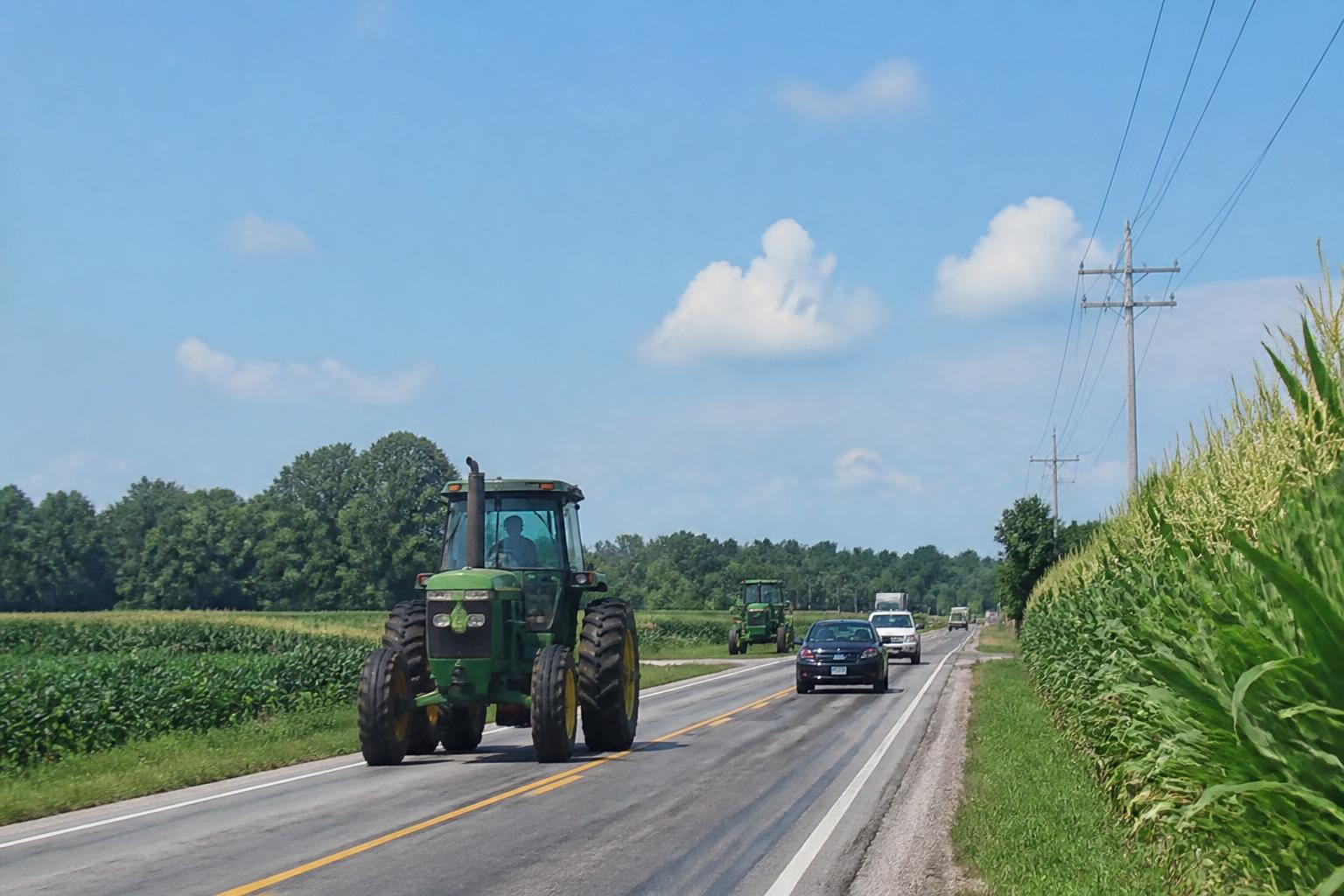
As summer activity reaches its peak across Indiana, growers are keeping a close watch on both their fields and the local roads. Effective crop protection this season requires a dual focus: monitoring early disease developments in the corn canopy while ensuring the physical safety of crews and machinery navigating rural highways.
With high-value crops filling out across the state, agricultural operations are balancing active field scouting with the logistics of moving heavy equipment. From the northern counties down to the southern river valleys, keeping a steady hand on management inputs and physical safety measures is key to protecting this season's yield potential.
Early Tar Spot Detection: Scout, Don't Panic
Recent field observations have noted early tar spot detection in Indiana. While plant pathologists emphasize that these early-season findings are not a cause for immediate concern or panic, they serve as a critical cue for growers to initiate systematic scouting protocols. Finding the signature black spots early allows operators to track disease progression and evaluate risk levels before significant canopy damage can occur.
Proactive monitoring is especially crucial for determining the timing and economic viability of fungicide applications. When balancing these high-stakes decisions, reviewing the Indiana grain outlook and strategic input choices can provide valuable context on cost-effectiveness and regional pressure trends. Growers are encouraged to prioritize fields with a history of the disease or those planted with susceptible hybrids, keeping spray plans flexible until local pressure justifies the expense.
Summer Roadway Safety: Protecting Crews and Equipment
Crop protection extends beyond chemical inputs to the physical safety of agricultural workers and the public. With summer maintenance, spraying, and field-to-field transport in full swing, motorists across Indiana are being urged to share the road and exercise extreme caution around slow-moving farm equipment.
Heavy sprayers, tractors, and tender trucks frequently travel narrow county roads and state highways to service fragmented fields. Because motorist impatience can lead to dangerous passing maneuvers, farm operators must take defensive measures. Ensuring that all slow-moving vehicle (SMV) emblems, reflective tape, and flashing hazard lights are clean and highly visible is a simple but critical line of defense for protecting valuable machinery and human lives.
Key Takeaways for Indiana Operators
- Scout early and often: Initial tar spot findings are a reminder to monitor high-risk fields, not an indicator of widespread crop failure.
- Maintain high road visibility: Double-check that all machinery lighting and safety markers are functional before moving equipment onto public roads.
- Adopt a measured response: Evaluate fungicide application costs carefully against actual field pressure and yield expectations rather than reacting to early rumors.
What it means for the market
For Indiana ag retailers, custom applicators, and grain handlers, these early summer dynamics highlight the value of logistical readiness. A measured, science-based response to early crop disease suggests that fungicide demand may remain steady and planned rather than spiking into a supply-chain bottleneck. Simultaneously, maintaining safe transport practices on local corridors ensures that field operations continue without costly downtime or liability issues. Protecting both the crops in the ground and the teams on the road will keep Indiana's supply chain moving smoothly toward harvest.
Comments
No comments yet — be the first to share your take.