
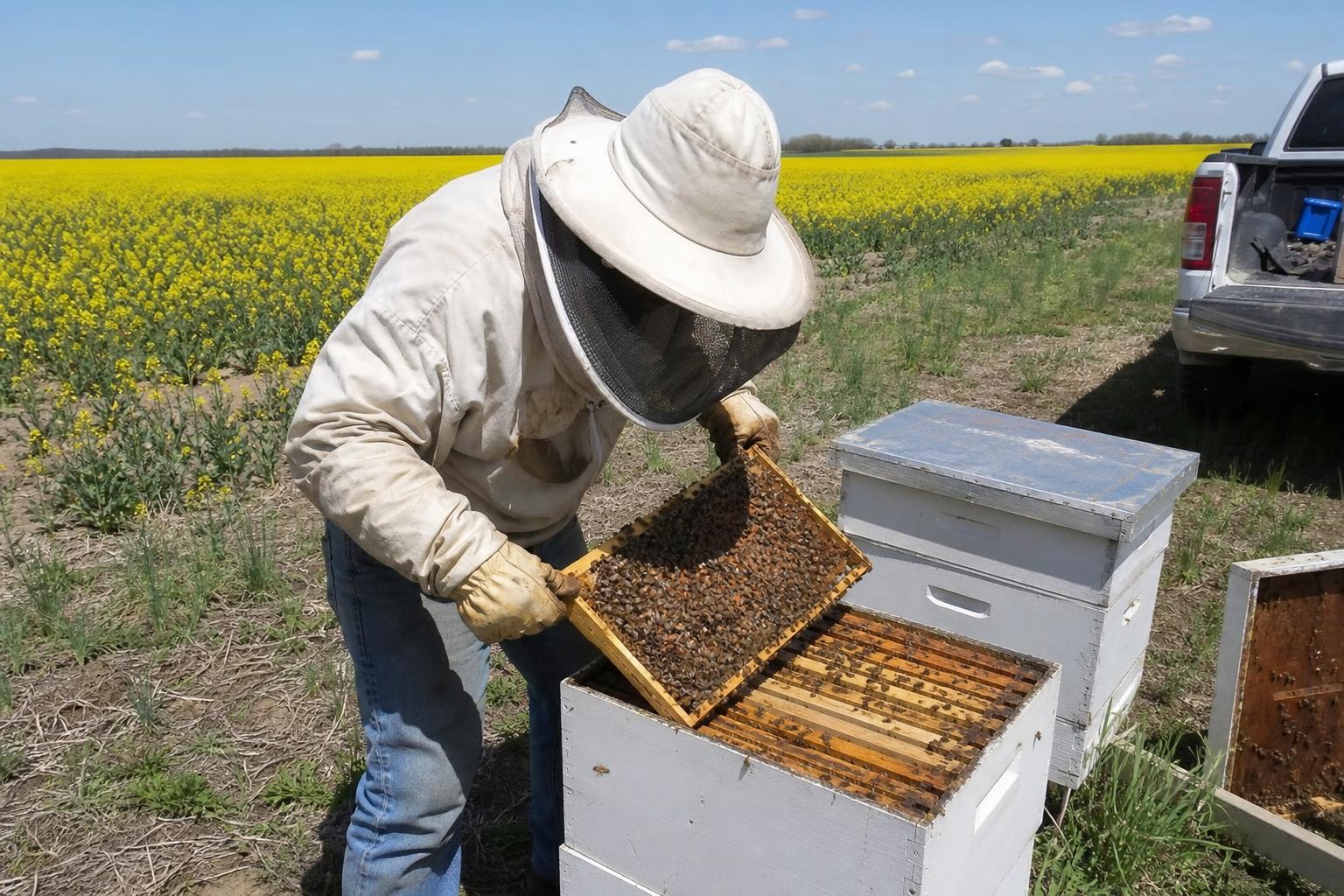
Pollination risk remains a practical crop protection issue for U.S. growers who rely on managed honey bees. USDA Agricultural Research Service work has shown that the honey bee parasite Nosema ceranae can interfere with how bees use iron, a micronutrient tied to immune function, development and reproduction.
For farmers, handlers and crop advisers, the market signal is straightforward: plant health planning is not limited to weeds, insects and disease in the field. Colony strength, beekeeper coordination and pesticide stewardship can influence how smoothly pollination windows are covered, especially in crops where timing is tight. AgroPost has also covered why honey bee parasite research keeps pollination risk on the crop protection watchlist.
What USDA research found
ARS entomologist Yan Ping "Judy" Chen reported that Nosema ceranae can divert iron from the honey bee host for its own spore reproduction. In the research, the parasite used the bee protein transferrin, which normally binds and transports iron from pollen out of the gut and through the bee.
As the infected bee produced more transferrin, the parasite gained more opportunity to capture iron, worsening the bee's deficiency. ARS reported that lowering transferrin production was associated with less iron loss, better immune function and improved survival in infected bees.
The finding matters because ARS described Nosema ceranae as a major parasite problem linked with colony losses, and noted that there is no truly effective treatment. The research points toward possible future approaches based on regulating iron availability or transferrin activity, but it does not create an immediate commercial control program.
Why this matters to crop protection decisions
Pollination is often scheduled alongside fungicide, insecticide and herbicide work. When bee health is under pressure from parasites, weather or nutrition, poor communication around field operations can add operational risk for growers and beekeepers.
That makes basic coordination more valuable. Before bloom, growers should confirm hive delivery timing, field access, application plans and any label restrictions that apply when pollinators are present. Crop advisers should keep pollinator exposure in mind when building spray programs, especially when overlapping pest pressure and bloom windows force quick decisions.
Key takeaways for growers and agribusinesses
- Pollination risk belongs in the crop protection file. Bee parasites are not a pesticide issue by themselves, but they can affect the reliability of pollination services.
- Do not treat the ARS finding as a field-ready cure. The iron and transferrin pathway is a research lead, not a replacement for beekeeper management or label-compliant pesticide use.
- Communication has market value. Growers, applicators and beekeepers can reduce avoidable disruption by aligning hive placement, spray timing and field access before bloom.
- Specialty crop planning should include contingency thinking. Where pollination windows are narrow, delays in hive movement or weak colonies can create practical risk even without a new pest outbreak.
Signals to watch next
For the crop protection sector, the next useful developments would be verified treatment options, clearer diagnostics for parasite pressure and practical recommendations that beekeepers can use at commercial scale. Until then, the strongest on-farm response is disciplined stewardship and early coordination.
Input dealers and custom applicators should expect pollinator questions to remain part of customer discussions, especially around bloom-season pest control. Grain producers may face fewer direct pollination service decisions than fruit, nut and seed growers, but the broader lesson still applies: plant health programs increasingly have to account for biological systems beyond the crop row.
What it means for the market
Bee parasite research does not change pesticide demand overnight, but it keeps pollination reliability on the crop protection risk list. Growers who depend on managed bees should budget time for beekeeper coordination, review spray plans before bloom and avoid assuming that colony health problems have a simple treatment fix.