
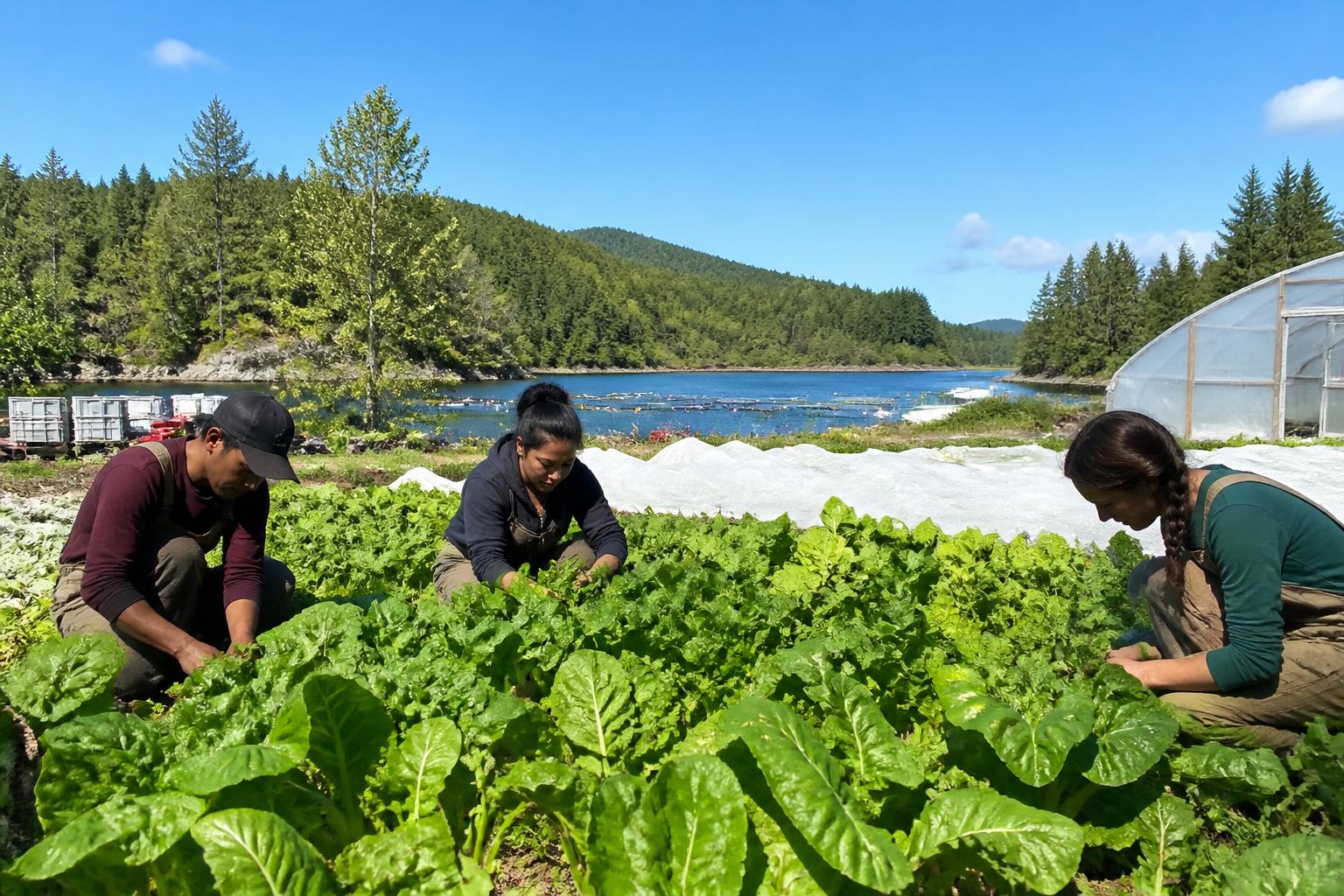
Alaska's summer season brings unparalleled daylight, pushing crops to grow at rapid rates in regions like the Mat-Su Valley and the Kenai Peninsula. However, this explosive summer growth requires a precise and immediate supply of nutrients. For growers in the Last Frontier, obtaining those nutrients is a constant logistical puzzle. With cold soils slow to release natural organic matter, managing fertilizers effectively is one of the most critical steps to ensuring local food security.
While the state has seen new efforts to bolster food self-reliance, including the creation of a dedicated state Office of Food Security, farmers still struggle with the high costs of transporting heavy agricultural inputs from the Lower 48. This summer, a mix of conservation programs, biological innovations, and ocean-derived soil amendments is reshaping how Alaska feeds its crops.
The High Cost of Importing Nutrient Inputs
For decades, Alaska's commercial agriculture has relied on synthetic fertilizers shipped via barge and rail. Because of the vast distances involved, the price of nitrogen, phosphorus, and potassium at local supply centers is heavily inflated by freight costs. Furthermore, shipping delays can miss the narrow planting window entirely.
Managing these logistics is a central challenge for northern operations, where finding efficient ways of navigating Alaska's summer ag logistics is a necessity for keeping production costs manageable. A delay of even a few weeks can derail an entire season's output, prompting many growers to order inputs months in advance or seek alternative, locally sourced options.
Mariculture and Microbiome Innovation as Local Solutions
To reduce dependence on long-distance supply chains, agriculturalists are tapping into Alaska's natural coastal abundance. The state's mariculture industry is expanding, bringing a renewed focus on using wild and farmed kelp as a natural fertilizer. Kelp and seaweed are packed with micronutrients and growth-promoting compounds that help plants thrive in cooler, high-latitude soils.
In addition to marine inputs, soil science is shifting toward microbiome engineering. Enhancing the native soil microbiome helps unlock existing minerals in the ground, allowing plants to access nutrients even when soil temperatures remain low. This biological approach is gaining ground among small-scale producers, especially as more growers explore the expanding opportunities in Alaska's organic farming sector to satisfy local consumer demand for fresh, sustainable food.
Conservation Programs and Efficient Application
To support sustainable practices on agricultural lands, federal initiatives like the USDA's conservation proposals are helping farmers implement smart nutrient management plans. In places like Homer and the broader Kenai Peninsula, family-owned farms are proving that high-yield production is possible on smaller acreages through targeted fertilizer applications and high-tunnel growing methods.
By using micro-dosing and incorporating organic materials like marine-derived amendments, farmers are minimizing runoff and protecting local watersheds. This integration of marine resources and innovative soil management shows how Alaskan agriculture adapts to summer demands through creative, localized practices that circumvent traditional shipping challenges.
Key Takeaways for Alaska Growers
- Diversify Nutrient Sources: Supplement conventional NPK fertilizers with local fish hydrolysate or kelp meal to buffer against shipping disruptions.
- Enhance Soil Biology: Utilize compost teas and microbial inoculants to stimulate root activity in cold soils early in the summer.
- Leverage Conservation Funding: Keep an eye on USDA programs focused on innovative soil health and nutrient management.
What it means for the market
The Alaska agricultural market is steadily moving toward self-sufficiency by substituting expensive, imported inputs with regional resources. While commercial synthetic fertilizers will remain a necessity for large-scale grain and forage production in the near term, the growth of the local mariculture sector and biological soil treatments offers a crucial safety valve. For fertilizer distributors and ag retailers, offering hybrid solutions that combine traditional nutrients with localized organic amendments will be key to capturing loyalty in the high-latitude market.
Comments
No comments yet — be the first to share your take.