
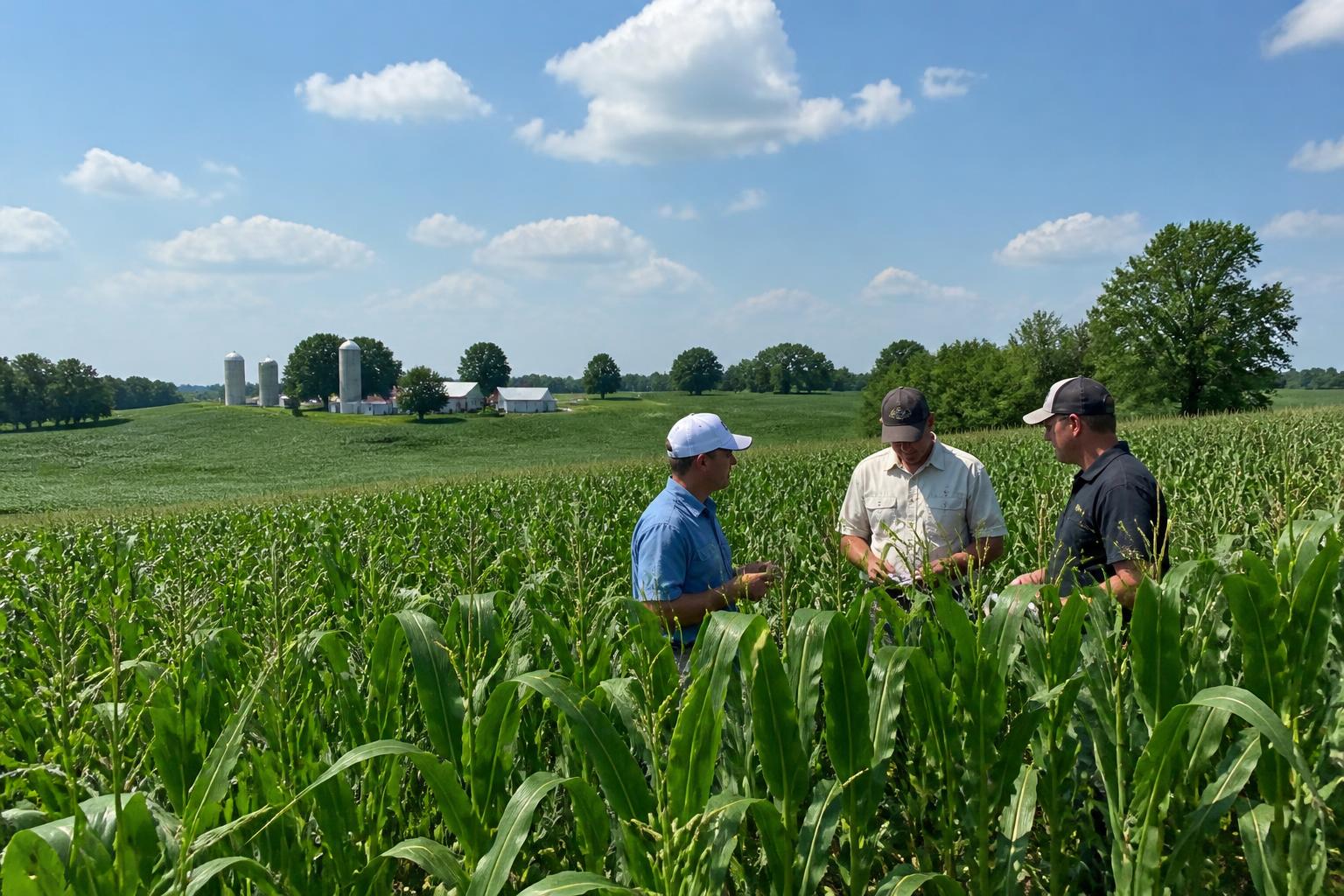
Hoosier grain producers are navigating a highly complex summer marketing environment. With geopolitical conflicts, such as tensions involving Iran, driving swift spikes in global market volatility, localized operational decisions are becoming the primary tool for protecting farm margins. Across Indiana, from the northern transport corridors near the Great Lakes down to the fertile river valleys in the south, grain handlers and growers are balancing volatile commodity prices with real-time agronomic challenges in the fields.
Successfully managing this volatility requires a combination of disciplined grain marketing, careful soil nutrient management, and aggressive scouting for crop diseases. Implementing practical risk management strategies this season may mean the difference between maintaining a profitable operation and facing severe capital constraints.
Strategic Grain Storage and Cost Management
With market prices fluctuating rapidly due to international events, rushing to sell grain during summer price dips can be costly. For many Indiana growers, utilizing on-farm storage or renting commercial bin space is a critical strategy to wait out downward market swings. However, renting storage facilities requires careful cost calculations. Growers must evaluate lease structures, energy costs for aeration, and potential shrink before committing to rental agreements.
To make informed marketing and agronomic decisions, growers can review the Indiana grain outlook and tar spot management strategies tailored for the current season. Calculating the exact cost per bushel for stored grain helps farmers determine their true break-even point and prevents hasty marketing decisions driven by temporary logistics bottlenecks or sudden global market moves.
Addressing Summer Crop Diseases: Tar Spot and Crazy Top
Crop health is directly tied to eventual grain quality and yield potential. Tar spot remains a persistent threat across Indiana corn fields, requiring producers to stay vigilant with late-spring and mid-summer scouting. The fungus can spread rapidly under favorable weather conditions, making timely fungicide applications critical for preserving leaf area and grain fill.
Additionally, some parts of the state that experienced early-season soil saturation are seeing localized occurrences of crazy top, a downy mildew disease that causes abnormal, leafy growth in place of tassels and ears. While crazy top is typically limited to low-lying, flooded areas of the field, its presence highlights the need for comprehensive field scouting to assess overall crop health and adjust yield expectations before harvest logistics begin.
Optimizing Inputs and Regenerative Practices
Input costs remain a major concern for keeping farms afloat. Some progressive Indiana growers are finding success by adopting regenerative agricultural practices, such as cover cropping and no-till, which can significantly improve soil health and reduce dependency on expensive synthetic fertilizers over time.
Input optimization is also critical for specialty grain crops. For example, popcorn producers are cautioned against over-applying nitrogen. While extra nitrogen might seem beneficial for yield, agronomic studies show that excess nitrogen can actually degrade the popping quality of the kernel, potentially harming the premium value of the crop. Tailoring fertilizer applications to specific crop needs is a direct way to save money while maintaining product quality.
Key Takeaways for Indiana Growers
- Evaluate storage economics: Compare the costs of renting local grain bins against potential price recovery timelines to avoid selling during market dips.
- Scout fields aggressively: Monitor corn fields for tar spot progression and watch wet, low-lying areas for signs of crazy top.
- Refine nitrogen plans: Avoid over-fertilizing specialty crops like popcorn to preserve premium grain quality and lower input expenses.
- Consider regenerative methods: Explore cover crops and targeted input reductions to build long-term soil resilience.
What it means for the market
For the broader Indiana grain market, the combination of global market instability and local crop pressures will likely keep basis levels highly variable throughout the summer. Elevators and processors will monitor local supply estimates closely as disease pressures develop. By managing storage facilities wisely and protecting crop quality through precise input and disease management, Indiana growers can put themselves in a much stronger position to capitalize on favorable pricing opportunities when the market spikes.
Comments
No comments yet — be the first to share your take.