
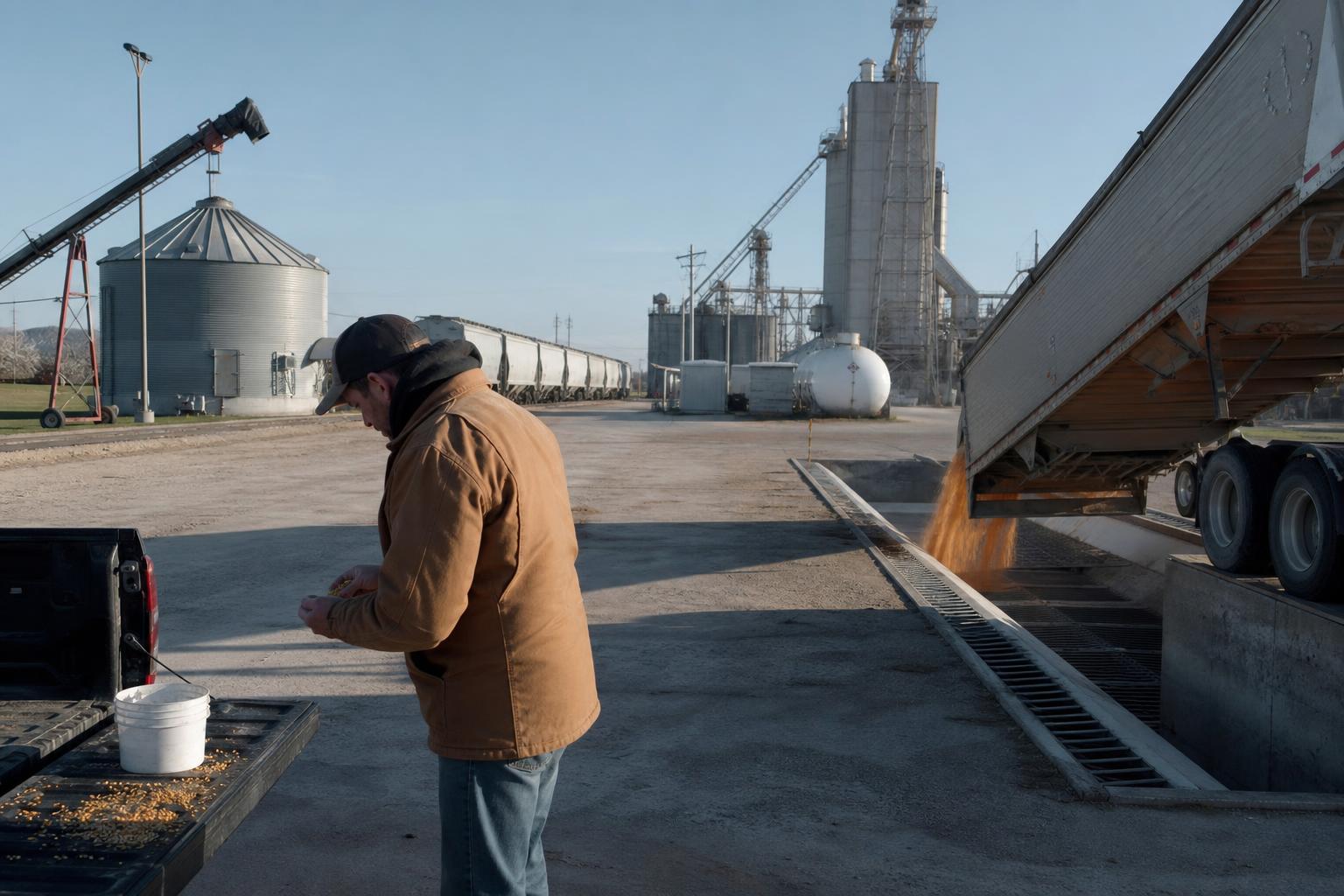
U.S. grain sellers are entering a market where the most useful signal may be local basis, not just the futures screen. Crop reports can reset production expectations quickly, while export movement and elevator space determine how much of that change reaches nearby cash bids.
For corn, soybeans and wheat, the practical question is simple: does holding grain create enough value to cover storage cost, quality risk and cash-flow needs? Producers comparing cash bids should separate futures direction from local basis so they can see whether the opportunity is coming from the board, the elevator, or both.
Basis deserves closer attention than usual
Basis is the link between national futures and the local cash price. It reflects freight, elevator demand, nearby processor needs, river logistics, export channels and available storage space. A futures rally can look attractive, but a weak basis may limit the cash result at the farm gate.
Grain handlers and producers should compare multiple delivery windows. Nearby bids can reveal whether elevators need grain now, while deferred bids can show whether the market is paying for patience. If the deferred premium is thin, on-farm storage may need a stronger basis improvement to make sense.
For growers in the Southeast, the same basis discipline applies even where local crop mixes differ from the Corn Belt. AgroPost has recently covered regional grain planning in Alabama's corn and soybean market outlook, which highlights why local demand and delivery access matter alongside national price moves.
Crop reports remain the main headline risk
USDA crop reports can shift expectations for acreage, yield, production and stocks. Those changes often show up first in futures, but cash markets may respond differently depending on local supply and transportation conditions.
Farmers should avoid treating a report day as a single yes-or-no pricing moment. A more practical approach is to set target prices, define basis levels that would trigger sales and decide in advance how much grain can be priced without creating delivery pressure.
- For sellers: know the cash price that protects margin before a report is released.
- For elevators: monitor farmer selling pace and space needs around report volatility.
- For carriers: watch whether export or processor demand changes nearby freight needs.
- For buyers: separate futures risk from local basis risk when booking coverage.
Exports can reshape local cash bids
Export demand matters most when it changes the pull on grain from river terminals, Gulf channels, Pacific Northwest movement, or interior shuttle markets. A stronger export program can support bids in connected regions, while slower movement can leave more grain competing for domestic outlets.
For corn and soybeans, export pace should be watched alongside processor demand and barge or rail availability. For wheat, class and protein needs can make the cash market more specific than the headline futures contract suggests.
Regional acreage choices also feed into grain flow. For example, AgroPost's recent look at corn strategy in Alabama points to the kind of local planning that can affect feed demand, storage needs and delivery timing.
Storage only pays when the math works
On-farm storage gives producers flexibility, but it is not free price protection. The value of holding grain depends on expected basis improvement, futures carry, interest cost, handling loss, aeration expense and the risk of quality deterioration.
Before filling bins for a longer hold, producers should compare the current cash bid with forward bids and realistic carrying costs. If the market is not paying enough carry, a partial sale or hedge-to-arrive style approach may reduce exposure while preserving some upside. Any pricing tool should be reviewed with a trusted merchandiser or risk adviser.
What it means for the market
The near-term grain market is best handled with a local, disciplined plan. Watch USDA report risk, export movement and basis changes, but make decisions from the cash bid back to the farm. The strongest opportunities may come from matching the right bushels to the right delivery window, not from waiting for futures alone to solve the storage decision.