
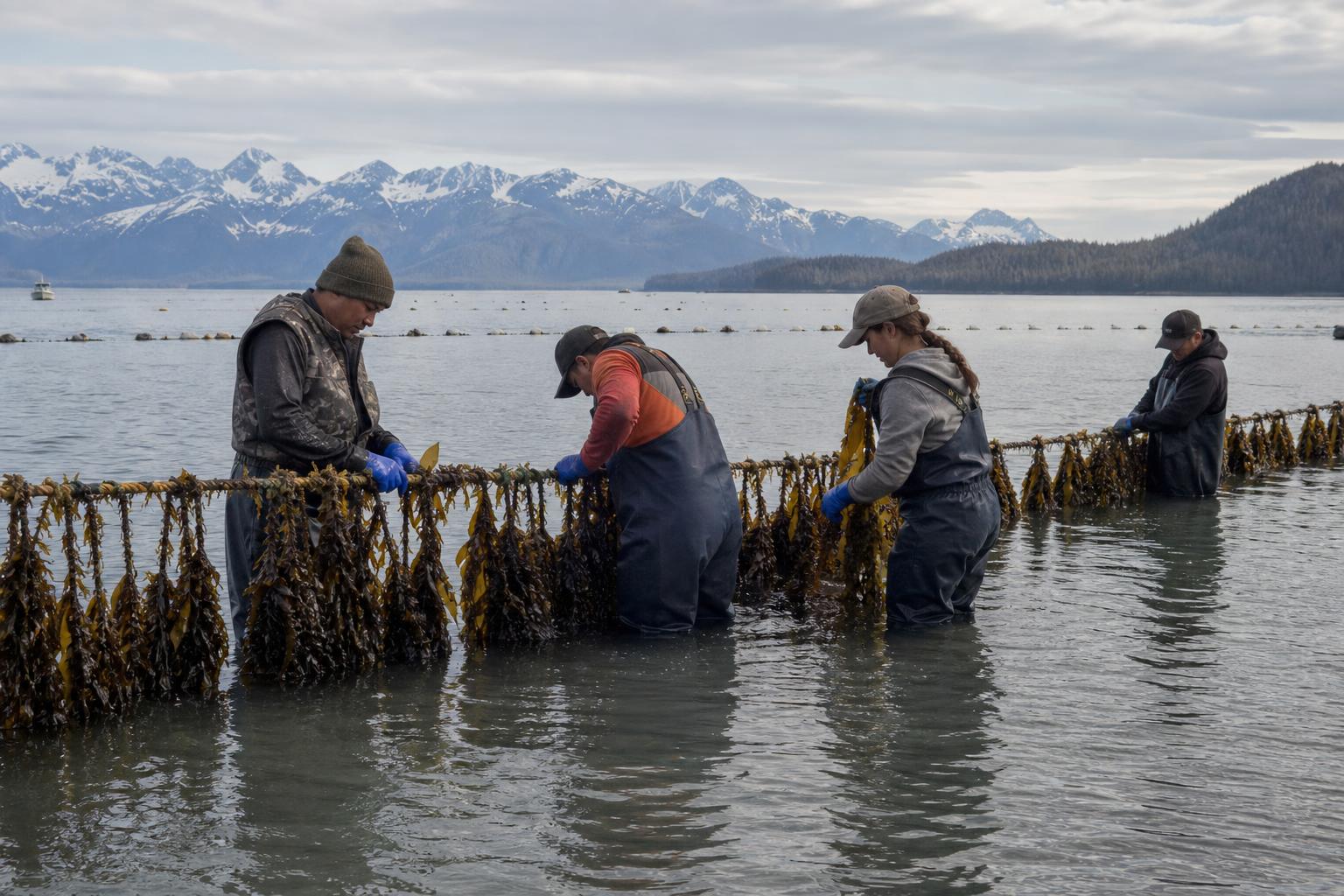
Alaska's agricultural market presents unique challenges and opportunities due to its geographical isolation and challenging climate conditions. As local farmers strive to maximize production, the state’s import needs and emerging sectors like kelp farming demand attention. With these factors in play, understanding Alaska's agricultural landscape is vital for stakeholders looking to make informed decisions.
Local Production and Challenges
Farming in Alaska is a testament to human resilience, with local farmers growing a limited range of crops suitable for the state's short growing season. The mainstays include barley, potatoes, and vegetables like carrots and lettuce. However, production scales are small, and the remote nature of the region increases costs, making reliance on imports necessary for meeting demand.
Import Dependencies and Trade Dynamics
The geographical isolation of Alaska means that it relies heavily on imports for a wide range of agricultural products. This dependency can make the state vulnerable to broader trade issues, such as tariff changes or disruptions in shipping routes. The current uncertainty around trade agreements with major partners like Mexico underscores the need for Alaska to develop more resilient supply chains.
To learn more about the strategies being employed to overcome these dependencies, consider exploring our article on the expansion of Alaska's kelp market, an exciting new frontier that is gaining traction.
Emerging Opportunities: Kelp Farming
Kelp farming is emerging as a promising sector within Alaska's agriculture. The state’s vast and pristine coastlines provide an ideal environment for seaweed cultivation. As global demand for sustainable and nutritious food sources rises, kelp offers an eco-friendly crop with multiple applications, ranging from food to fertilizers and biofuels. This burgeoning market may soon become a significant part of Alaska’s agricultural identity.
Local Innovations and Future Directions
Alaska is taking proactive steps to bolster its agricultural market through local initiatives focused on sustainability and innovation. Senator Hughes suggests there is reason for optimism, as initiatives encourage increased local production and reduced dependency on imports. Engage with our insights on Alaska's self-sufficiency efforts for further understanding.
What it means for the market
Alaska's agricultural market is positioned at a crossroads of challenge and opportunity. Stakeholders who understand the intricate dynamics of local production and the implications of import dependencies are more equipped to capitalize on emerging opportunities like kelp farming. As Alaska continues to innovate and adapt, embracing both its limitations and potentials will be key to ensuring a resilient agricultural future.