
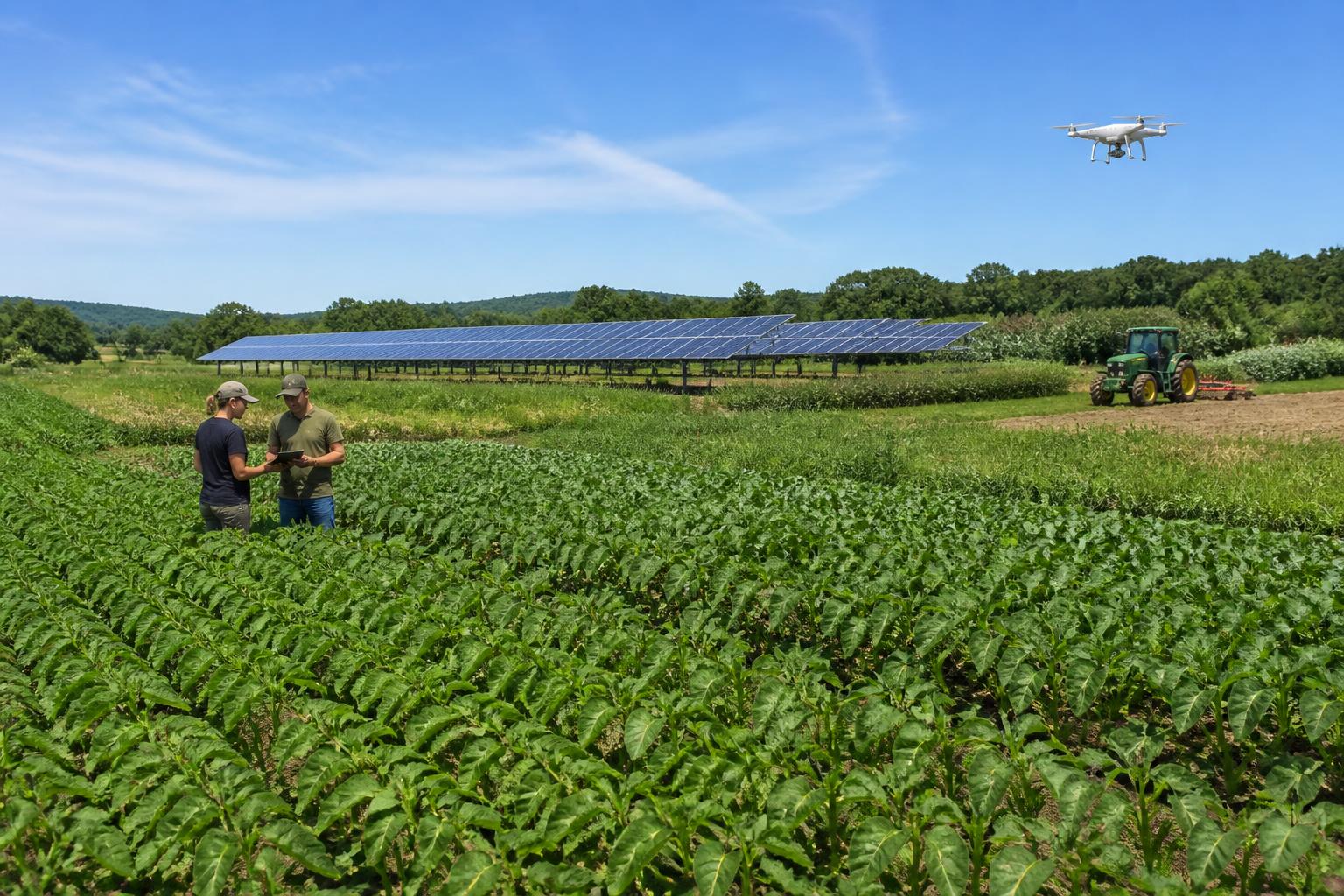
Summer 2026 has brought both familiar challenges and new operational realities to the Massachusetts agricultural sector. From managing invasive pests to navigating complex land-use regulations, local growers are deploying a combination of modern technology and state-supported preservation tools to protect their yields. These efforts are particularly critical as extreme weather and changing regional climates continue to test the resilience of Northeast farms.
For growers in the Commonwealth, safeguarding crops is no longer just about traditional spray schedules. It now involves long-term land security, regulatory compliance, and the integration of emerging technologies like precision drones and agrivoltaics. Farmers are actively balancing these tools against shifting local policies and regional pest pressures.
Targeted Pest Control and Technology Adoption
A primary focus for crop protection this summer is the containment of key invasive species. The United States Department of Agriculture (USDA) has continued its targeted eradication plans for the Asian Longhorned Beetle across Massachusetts, coordinating closely with state agencies to prevent the pest from threatening local hardwood stands and surrounding agricultural woodlots. These efforts mirror similar regional containment efforts, including active pest management strategies in New York designed to keep invasive species from crossing state lines.
To monitor and manage these biological pressures, more Massachusetts growers are turning to precision agricultural technology. Commercial drone utilization is rising, though operators face a steep learning curve. Drone pilots often spend hours prepping and calibration-checking for what amounts to just minutes of flight time. However, the precise crop scouting and ultra-targeted application capabilities they provide are proving essential for minimizing chemical inputs and reducing overall application costs.
Preserving the Land: The 1,000th Farm Milestone
Crop protection in Massachusetts is also deeply tied to securing the land itself from commercial development. The Healey-Driscoll Administration recently celebrated Massachusetts Agriculture Day by announcing $5.7 million in funding dedicated to farmland preservation. This milestone coincided with the state celebrating its 1,000th farm preserved through the Agricultural Preservation Restriction (APR) program.
By permanently protecting these acres from non-agricultural development, the state ensures that fertile soils remain available for food production. This preservation push is occurring alongside a growing interest in dual-use land systems. Many local operators are exploring agrivoltaics - co-locating solar panels with active crop production. A third-generation Massachusetts farm has recently embraced agrivoltaics, demonstrating that solar development and active farming can coexist when managed with proper spacing and crop selection. For comparison, managing these changing land standards is a shared priority across New England, as seen in New Hampshire's approach to crop protection and land-use adaptation.
Regulatory Adjustments and Livestock Protections
Massachusetts agribusinesses are also adjusting to shifting livestock regulations. State officials and local producers have been working to prevent disruptions related to animal housing rules, colloquially referred to by some in the industry as avoiding a local "Bacongate." At the same time, some local farmers and state representatives, such as those in Raynham, have raised questions regarding the practical necessity of specific cage protection mandates for farm animals, highlighting the ongoing dialogue between regulatory compliance and on-the-farm operational reality.
On the input side, while major new fertilizer infrastructure projects are being proposed in the Midwest, Massachusetts growers remain focused on localized input efficiency. Researchers at institutions like MIT continue to study how common fertilizer ingredients and innovative seed coatings can benefit plants, potentially allowing crops to thrive even on marginal lands or under intense summer heat.
Key Takeaways for Massachusetts Growers
- Pest Containment: Keep a close eye on USDA Asian Longhorned Beetle mitigation zones and report suspected sightings immediately.
- Farmland Preservation: Utilize available state APR funding to protect agricultural acreage from developmental pressures.
- Agrivoltaic Opportunities: Evaluate whether dual-use solar arrays fit your farm's layout to generate diversified revenue without sacrificing tillable acreage.
- Precision Application: Consider drone services for precise crop scouting, keeping in mind the regulatory and preparation overhead required for operation.
What it means for the market
The Massachusetts agricultural market this summer is defined by resource efficiency and land preservation. By securing agricultural land through state grants and exploring dual-use solar programs, local growers are creating a more stable financial foundation to buffer against climate-induced yield volatility. For broader context on regional crop patterns and marketing, growers can keep track of neighboring Massachusetts grain and wheat market developments. Ultimately, those who combine proactive biological pest defenses with innovative land stewardship are best positioned to maintain steady output through the remaining summer season.
Comments
No comments yet — be the first to share your take.