
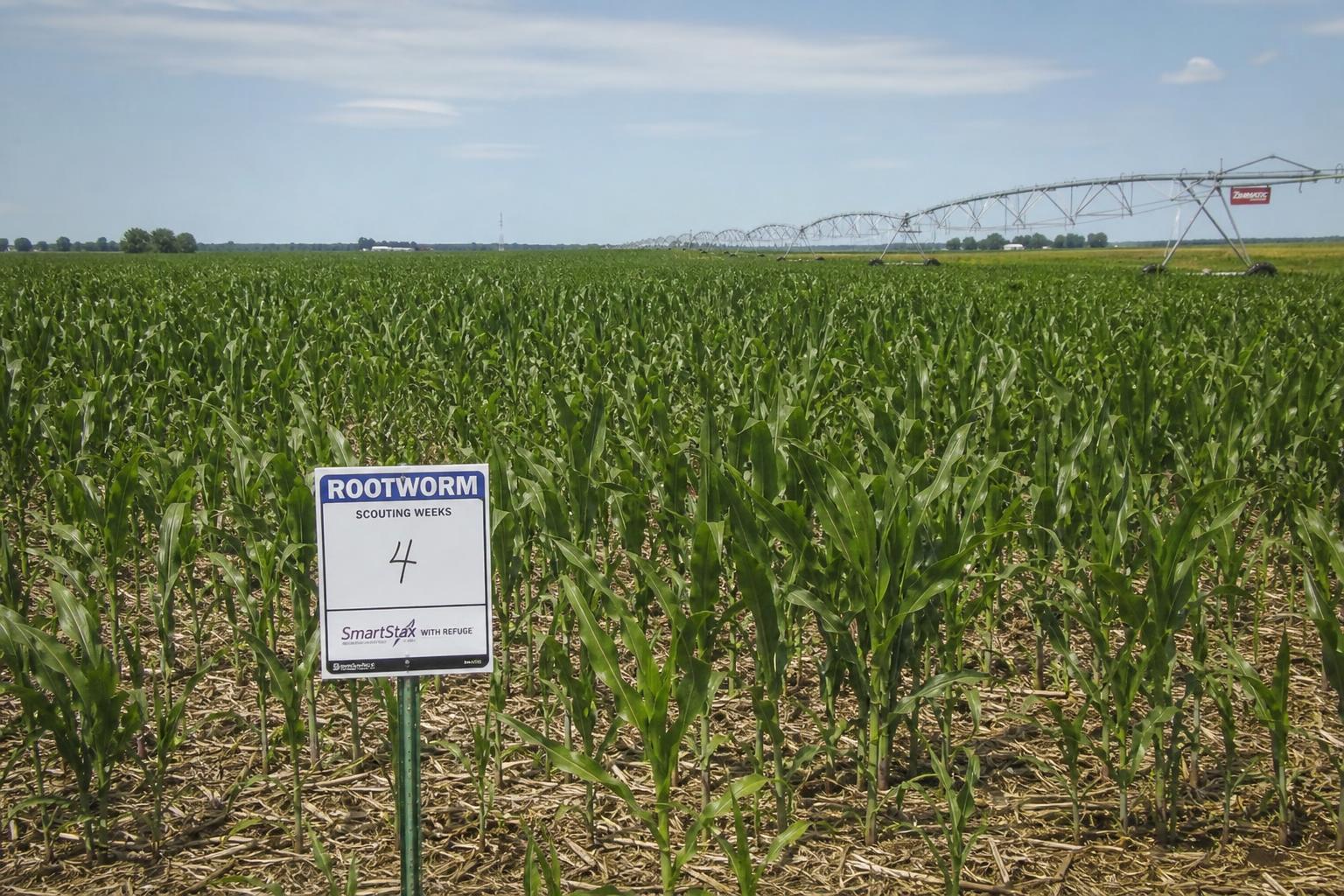
As summer heat settles over the Hoosier State, Indiana farmers are shifting their focus to peak-season crop protection. Managing insect pressures and securing chemical assets have become critical focal points for keeping Indiana's high-yielding fields on track. With local Certified Crop Advisers (CCAs) urging diligent scouting, growers are looking at both biological pressures and structural upgrades to protect their investments this June.
Between managing active pest threats and planning long-term logistics, crop management decisions made during the summer months carry heavy financial weight. Protecting these fields is vital for sustaining Indiana's growing corn and soybean market, which relies heavily on strong, healthy stands to meet both domestic and international demand.
Clearing the Air on Corn Rootworm
Indiana CCAs are actively advising growers to step up their scouting routines for corn rootworm. Rather than relying on guesswork or blanket treatments, crop advisors emphasize the importance of field-specific monitoring, including the use of sticky traps to count adult beetle populations during their summer emergence. Understanding rootworm pressure helps farmers make informed decisions about seed traits and soil-applied insecticides for the next planting cycle.
By pinpointing high-risk fields now, growers can avoid costly, unnecessary pesticide applications while preventing severe root lodging that complicates fall harvest. Additionally, careful pesticide application timing ensures that drift is minimized and that pollination health stays on the crop protection checklist during active foraging periods.
On-Farm Chemical and Fertilizer Storage Investments
Securing crop inputs is not just about purchasing products at the right price; it is also about how they are housed. Industry experts point out that investing in dedicated, secure on-farm fertilizer and chemical storage facilities is proving to be a smart business decision for Indiana operations. Having on-farm storage allows growers to buy in bulk when prices are favorable and ensures they have products on hand when tight application windows open.
Properly designed storage facilities with secondary containment guard against catastrophic spills, protecting both the farm's financial investment and the local watershed from chemical runoff. These structural improvements also help farms comply with safety regulations and maintain a professional, secure environment for handling crop inputs.
The Conservation Advantage: No-Till Protection
In addition to chemical and mechanical controls, cultural practices like no-till continue to deliver benefits both on and off the farm. In the heat of mid-summer, undisturbed soil holds onto precious moisture far better than conventionally tilled ground. The residue layer left by no-till practices acts as a natural barrier, suppressing weed seed germination and protecting the soil surface from erosion during intense summer thunderstorms. This natural defense reduces the pressure on post-emergent herbicide applications, saving fuel and chemical costs.
Key Takeaways for Indiana Growers:
- Scout Early and Often: Monitor corn fields with sticky traps to track adult rootworm beetle populations and plan future trait selections.
- Secure Your Inputs: Evaluate the long-term ROI of dedicated chemical and fertilizer storage to capitalize on off-season pricing and secure supply availability.
- Leverage Soil Health: Utilize no-till and conservation tillage to maintain soil moisture and suppress late-season weed flushes naturally.
What it means for the market
For Indiana grain producers and input suppliers, proactive crop protection and secure storage infrastructure serve as critical risk-mitigation tools. Effective rootworm management prevents yield drag, keeping local elevators supplied with high-quality grain, while advanced chemical storage helps stabilize farm operations against seasonal logistics bottlenecks. As summer progresses, the farms that balance active pest scouting with long-term infrastructure improvements will be best positioned to protect their bottom lines through harvest.