
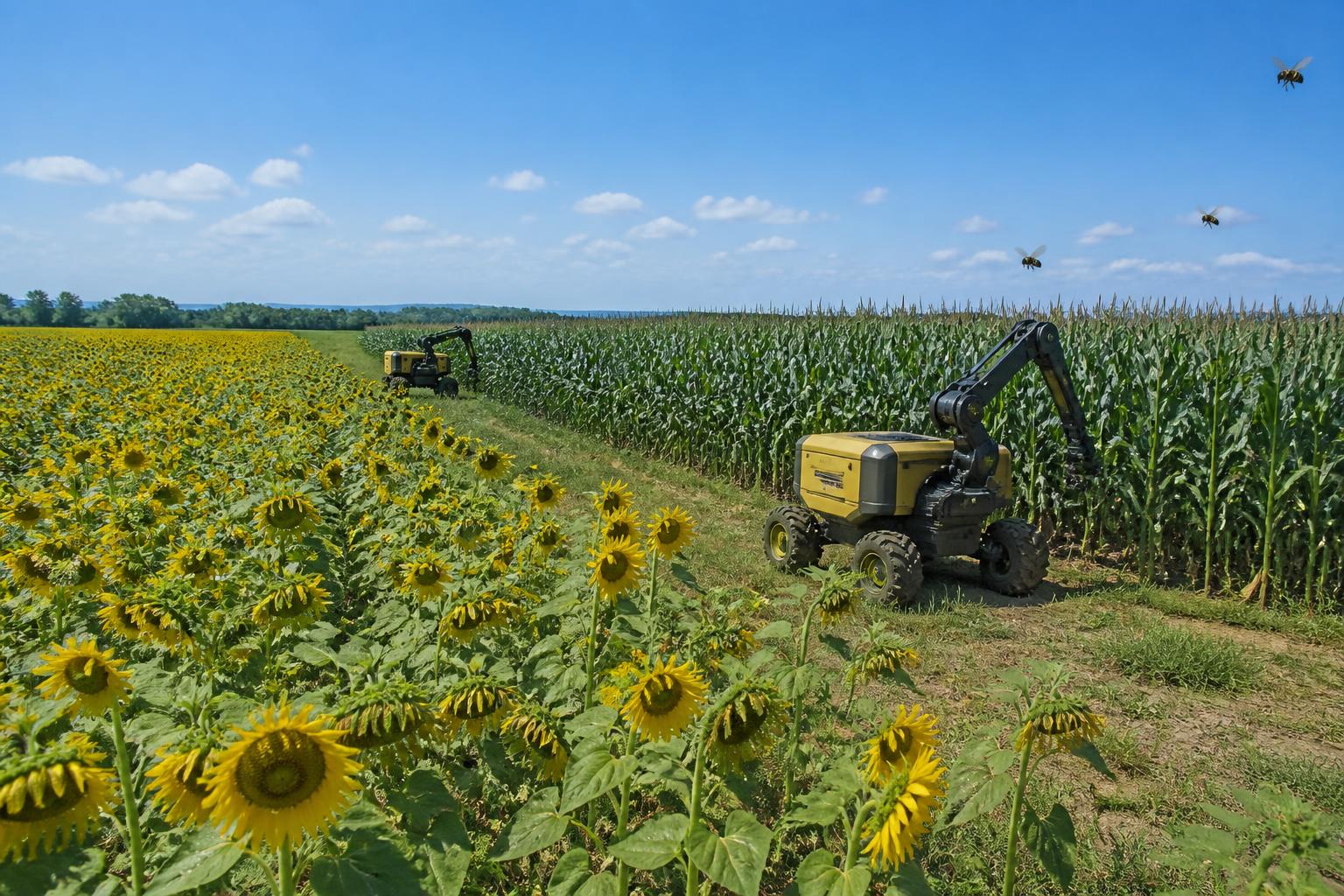
Massachusetts grain producers are experiencing a highly dynamic summer as they balance award-winning local yields with cutting-edge academic agtech developments. In Franklin County, Northfield-based Five Point Farm recently brought regional pride to the forefront by earning a top prize in a national corn growing contest, highlighting the high productivity potential of the state's soils. Meanwhile, on Martha's Vineyard, innovative growers are testing the boundaries of traditional regional crops with experimental rice cultivation trials, proving that the Commonwealth's grain potential extends beyond typical silage corn.
As the season progresses, growers are closely watching both regional climate impacts and shifting policy environments. From the Berkshires to the coastal islands, agricultural operations are leveraging new management strategies to maintain high crop quality amidst changing market dynamics.
Academic AgTech and Diagnostic Breakthroughs
Massachusetts is rapidly positioning itself as a key laboratory for computerized agricultural solutions. Researchers at the Massachusetts Institute of Technology (MIT) are pioneering several high-tech projects, including portable devices designed to quickly detect plant stress directly in the field. Furthermore, development of large-scale robotic machinery aimed at enhancing sustainable farming practices is underway, offering a glimpse into a more automated future for weed and crop management.
These technological advances arrive as growers face mounting environmental and regulatory discussions. Nationally, there is an active push by environmental advocates to restrict neonicotinoid-coated seeds to protect native bee populations. By utilizing local crop diagnostics and precision tools, Massachusetts farmers can better manage these inputs, which plays into the broader trend of navigating summer innovations and market pressures across New England.
Grain Storage and Local Demand Drivers
Beyond crop management, local grain producers face critical commercial decisions this summer. Choosing whether to invest in independent on-farm grain storage or to utilize regional cooperative options remains a major financial calculation. Proper storage planning is essential for capturing premium prices later in the marketing year, especially for those serving local feed markets.
Demand from the state's livestock sector is also adjusting to regulatory shifts. Massachusetts has delayed its voter-approved hog welfare law for a second time, giving regional livestock operations and feed suppliers more transition time. For grain growers looking to optimize their seasonal sales, exploring diverse avenues to sell grain in Massachusetts is vital. While local corn mazes and farm stands, such as Whitney's Farm Market in the Berkshires, secure strong direct-to-consumer foot traffic during the tourist seasons, commercial grain growers are increasingly focusing on specialized local milling and feed supply chains to secure steady margins.
Key Takeaways for Massachusetts Growers
- National Recognition: Northfield's Five Point Farm's national corn contest win underscores the excellent crop performance achievable in Massachusetts valleys.
- Academic Innovation: MIT-led research into plant stress sensors and robotics highlights the growing role of computerized diagnostic tools.
- Crop Diversification: Rice trials on Martha's Vineyard demonstrate a rising interest in specialty grain production.
- Policy Shifts: The second delay of the state's hog welfare law keeps local livestock feed demand structures stable in the short term.
What it means for the market
The Massachusetts grain sector is increasingly defined by high-value specialty production and high-tech efficiency. While traditional dairy silage and feed corn remain the bedrock of the local trade, producers who adopt advanced diagnostics and carefully weigh their storage options will be best positioned to maximize summer margins. As local consumer venues and specialized markets continue to expand, finding the right regional distribution channels will be key to long-term profitability.
Comments
No comments yet - be the first to share your take.