
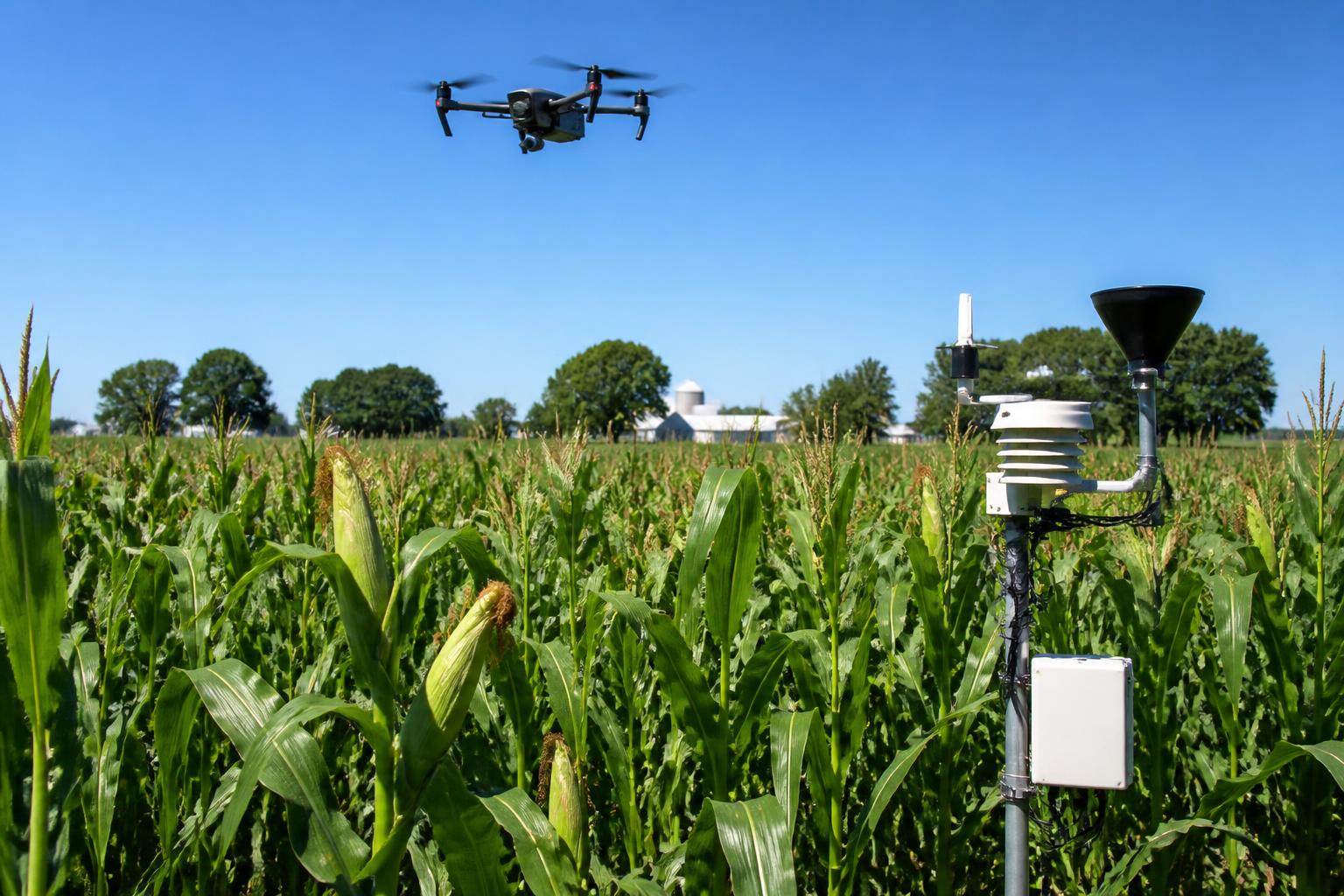
As the summer season progresses in Massachusetts, local agricultural producers are navigating a complex landscape shaped by rapid technological innovation and evolving biological pressures. From the fertile soils of the Pioneer Valley to the specialty crop operations across eastern counties, Bay State farmers are adopting sophisticated management strategies. The convergence of new regional biotech facilities, high-tech grain monitoring advancements, and localized pest developments is shifting how growers protect their yields and manage logistics.
With global supply chains facing renewed pressure, local efficiency has become paramount. Massachusetts agribusinesses are increasingly relying on regional innovations to buffer against international market volatility. Recent initiatives highlight a strong regional push toward sustainable inputs and advanced crop protection strategies, keeping Massachusetts at the forefront of agricultural adaptation.
Local Agtech and Biotechnology Milestones
In a major development for the region's sustainable input sector, biotechnology firm Kula Bio has established its new headquarters in Natick, Massachusetts. This move anchors vital soil-health and organic-nitrogen research right within the state, offering promising avenues for farmers looking to reduce their reliance on synthetic fertilizers. As local growers seek alternatives to volatile global chemical markets, developments in Massachusetts crop and soil protection are proving essential to maintaining yield stability.
Simultaneously, researchers at the Massachusetts Institute of Technology (MIT) are making strides toward the long-term goal of developing nitrogen-fixing cereal crops. If successful, these biotech breakthroughs could fundamentally alter fertilizer requirements for grain producers nationwide. In the near term, growers can also look to digital tools to protect grain quality. Recent research published in the journal Nature highlights how sensor networks and machine learning models are being deployed to monitor and predict corn quality during transport and post-harvest storage, reducing spoilage risks during hot summer transit along major highway corridors like Interstate 90 and Interstate 91.
Managing Invasive Pests and Crop Preservation
While tech solutions offer long-term optimism, immediate field challenges are demanding attention this summer. State agricultural specialists are monitoring the discovery of a breeding population of an invasive bug in Massachusetts. Invasive species present a direct threat to the state's diverse specialty crops, orchards, and regional farm operations. Managing these biological pressures requires timely intervention and coordinated field scout programs to prevent widespread crop damage.
Proactive pest management is particularly critical as growers balance high input costs with the necessity of protecting high-value crops. Integrating biological controls with targeted applications remains the cornerstone of modern Massachusetts crop protection and farmland preservation efforts. Growers are encouraged to leverage state extension resources to identify potential pest hotspots and implement localized containment strategies before the late-summer harvest begins.
Navigating Global Supply Chain Volatility
On the global stage, geopolitical tensions continue to introduce uncertainty into domestic markets. Ongoing disruptions in critical transit corridors, such as the Strait of Hormuz, have renewed concerns over global agricultural trade and fuel prices. While Massachusetts is not a primary grain exporter, global maritime bottlenecks indirectly impact local feed costs, machinery parts availability, and transport logistics. Keeping a close eye on the Massachusetts grain and input outlook is highly recommended for operations managing summer feed rations and fuel budgets.
Furthermore, shifts in the global fertilizer trade, such as recent strategic supply agreements between Saudi Arabia's Ma'aden and major importers like India for Di-Ammonium Phosphate (DAP), underscore the fluid nature of plant nutrient availability. These massive international shifts can dictate domestic fertilizer pricing structures well into the fall planning season, making local efficiency and precision application technologies more valuable than ever.
What it means for the market
For Massachusetts farmers and agribusinesses, the current market environment demands a dual focus on local precision and global awareness. The expansion of regional agtech players like Kula Bio in Natick, coupled with cutting-edge academic research, provides a strong foundation for future sustainable production. However, immediate threats from invasive pests and volatile global logistics require operators to remain agile. Securing inputs early, leveraging local sensor technology to prevent post-harvest spoilage, and maintaining strict biosecurity protocols will be key to safeguarding profitability through the remainder of the summer season.
Comments
No comments yet - be the first to share your take.