
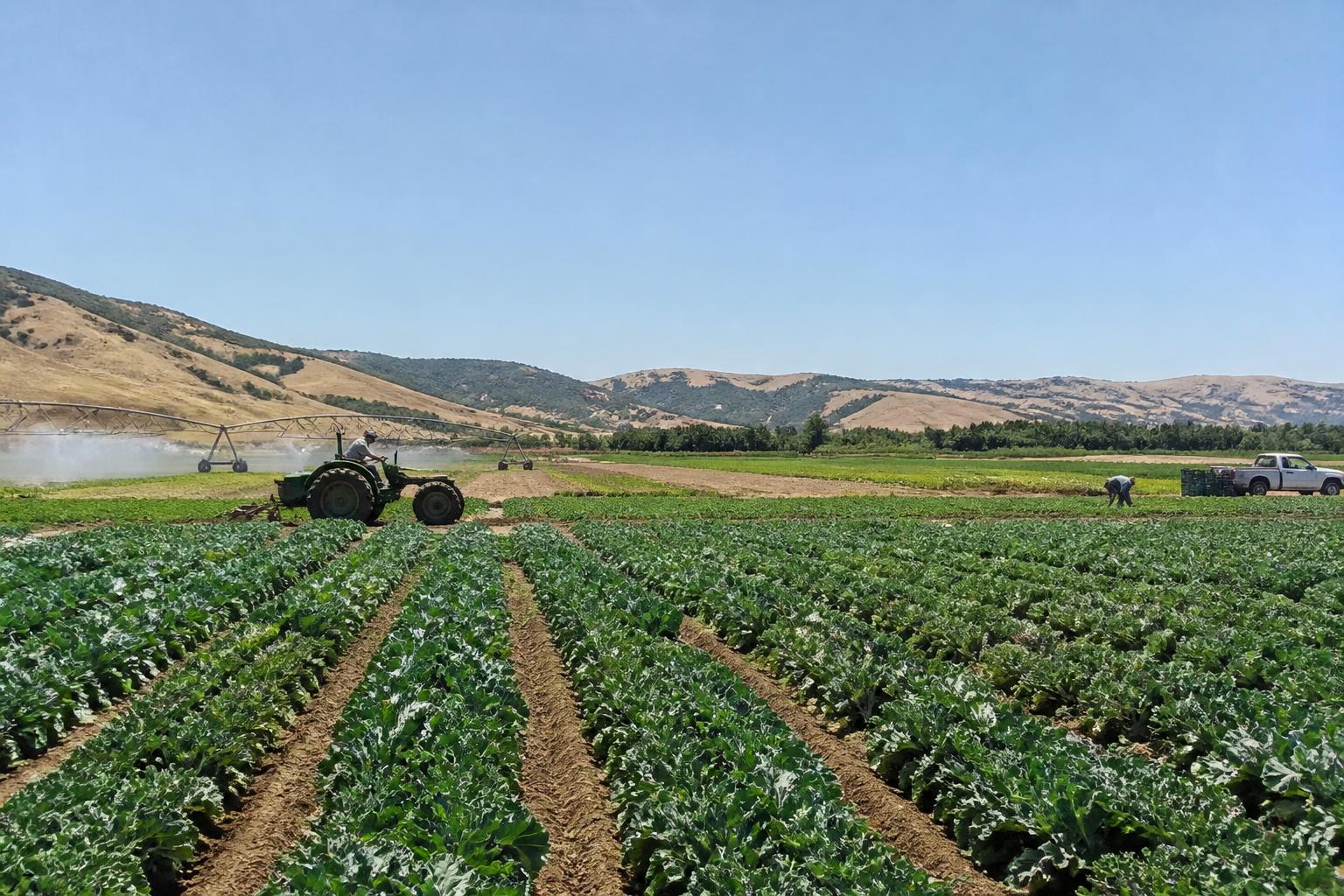
As summer settles over California, field crop and grain producers find themselves at a critical operational crossroads. From the Sacramento Valley down through the heart of the San Joaquin Valley, growers are working to balance tight water restrictions, shifting labor dynamics, and fluctuating international trade pressures. While high-value vegetables and specialty crops continue to dominate local acreage, field crops like dry beans and small grains remain vital rotational staples that require careful, data-driven management.
Securing sustainable yields this season means looking beyond regional borders. Producers must navigate new competition from South American suppliers while tracking evolving export avenues in Asian markets. Locally, the focus remains squarely on input efficiency and regulatory compliance.
Water Infrastructure and the Groundwater Data Push
Water management remains the primary challenge for California agriculture. Industry experts emphasize that finding innovative solutions to the state's ongoing water crisis is essential to keeping family farms viable. Implementing sound water policies requires precise groundwater tracking, making accurate aquifer data a critical tool for local irrigation districts and growers alike.
Because groundwater regulations continue to tighten under state-mandated sustainability goals, some farmers are forced to adjust their crop rotations. While dry beans typically require fewer inputs and offer excellent soil-health benefits, their viability relies heavily on predictable water deliveries. Without stable regional infrastructure, growers may increasingly find themselves shifting acreage away from traditional field crops to optimize their remaining water allocations.
Logistics, Inputs, and Regional Storage Solutions
In response to supply chain volatility, input providers are actively expanding their physical presence in the state to support local growers. A notable example is Yara North America's initiative to construct a new fertilizer storage and distribution facility in Stockton. Strategically located near major shipping corridors and regional rail networks, this terminal is designed to improve fertilizer availability and stabilize delivery times across northern and central California.
This expansion comes at a critical time. Local producers have faced intense cost pressures over the last several seasons, prompting many to focus on re-evaluating input strategies to protect thin profit margins. Improved distribution hubs, such as the Stockton gateway, should help mitigate localized supply bottlenecks during high-demand application windows.
Navigating Tariffs and Overseas Trade
On the global stage, West Coast grain and field crop exporters are closely monitoring trade relations. Rising concerns over potential import tariffs and shifting global partnerships are pushing regional ag groups to seek new marketing strategies. While South American crop production poses a growing competitive threat to West Coast ports, California businesses are actively seeking fresh partnerships with buyers in China and traditional premium markets like Japan.
Optimizing these trade channels is essential for managing domestic crop inventories. Understanding California's grain production and export capacity is vital for shippers attempting to capture high-value overseas demand while avoiding West Coast port congestion.
What it means for the market
For California grain and field crop producers, the current summer environment demands strict resource discipline and strategic marketing. Success this season will depend on leveraging localized input infrastructure, such as the expanding Stockton terminal, to keep production costs manageable. While water restrictions and international tariff threats present ongoing headwinds, maintaining a balanced rotation of dry beans and grains, paired with targeted export partnerships, will help growers sustain operational viability amid a highly volatile global market.
Comments
No comments yet — be the first to share your take.