
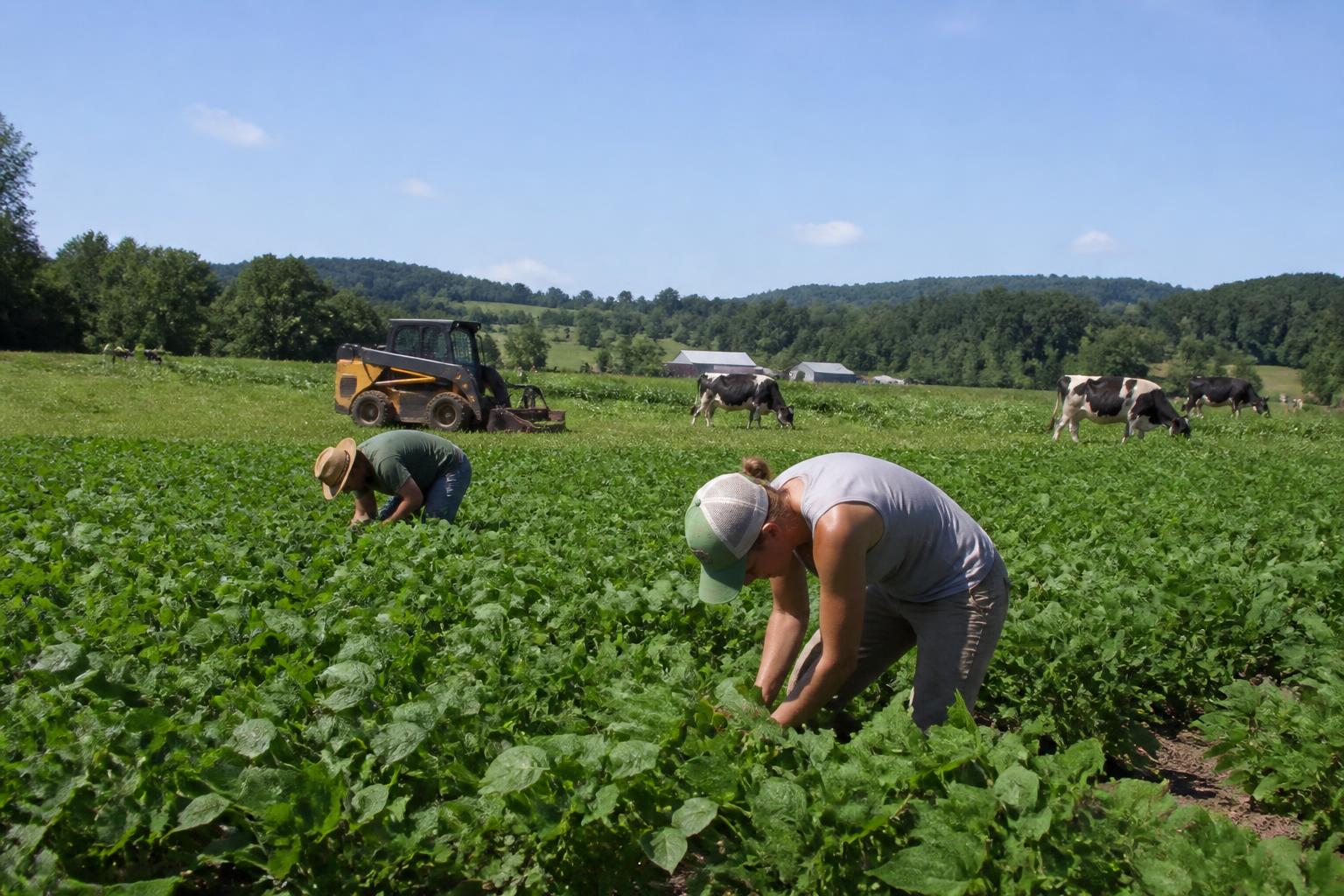
As summer settles over New England, agricultural operations across Vermont are facing a complex mix of dry weather and elevated operating costs. State officials have recently requested a statewide disaster designation due to an ongoing drought that has severely impacted pasture quality and feed availability. For Vermont's diverse farming landscape, which ranges from small-scale specialty homesteads to commercial dairy operations, managing feed grain reserves and input expenses has become the primary focus of the season.
While some growers are experimenting with specialty pulses and alternative dry beans, the lack of consistent rainfall has put a premium on high-quality forage and supplemental grains. Livestock producers are carefully calculating their feed strategies as northern farm finances remain under intense pressure from high energy, fertilizer, and seed costs.
Drought Triggers Feed Security Concerns
The lack of summer moisture has accelerated pasture depletion, forcing many dairy operators to reconsider their grazing strategies. While some Vermont farms have doubled down on intensive grazing systems, dry conditions mean pastures are not recovering as quickly as needed. This forage deficit is driving up reliance on stored feed and external grain purchases at a time when input costs remain stubbornly high.
To cope with these dry conditions, producers are focusing on feed efficiency and alternative yard management. For example, some farms are utilizing woodchip pads to manage animal high-traffic areas and preserve pasture soils, while others are investing in versatile compact track loaders to streamline feed and material handling. However, buying in extra feed grain from out-of-state is a costly alternative that threatens to erode tight margins.
Diversifying with Alternative Crops
In response to volatile weather and shifting market dynamics, some Vermont farmers are finding success by focusing on niche crops. Dry beans and specialized small grains are increasingly viewed as viable options for local rotation, providing both ecological benefits and high-value cash crops for regional consumer markets. This shift highlights the ongoing effort of local producers who are navigating growth challenges in Vermont's grain sector by diversifying away from traditional monocultures.
However, scaling up local grain production requires robust infrastructure. Without local milling and processing facilities, even successful dry bean or small grain harvests face logistics bottlenecks when moving from fields to consumer markets. Additionally, transport regulations, including recently issued livestock hauling guidelines in the state, require careful compliance from logistics managers moving animals and bulk feed across state lines.
Key Takeaways for Vermont Producers
- Drought pressure: The request for a statewide disaster designation underscores the severity of the dry spell on pastures and forage.
- Forage strategy: Dairy operations are balancing intensive grazing with the high cost of supplemental grain.
- Niche diversification: Specialty crops like dry beans offer premium market opportunities but require specialized handling and local marketing.
- Input management: Focus on fuel, fertilizer, and feed efficiency is critical to maintaining farm solvency this summer.
What it means for the market
For Vermont agribusinesses, grain buyers, and livestock producers, this summer is a test of operational resilience. Feed grain prices are expected to remain firm locally as regional pasture deficits drive up demand for commercial feed. Livestock operations should secure feed contracts early to hedge against potential regional supply squeezes, while grain handlers must monitor local quality and volume variations as the dry season progresses.
Comments
No comments yet — be the first to share your take.