
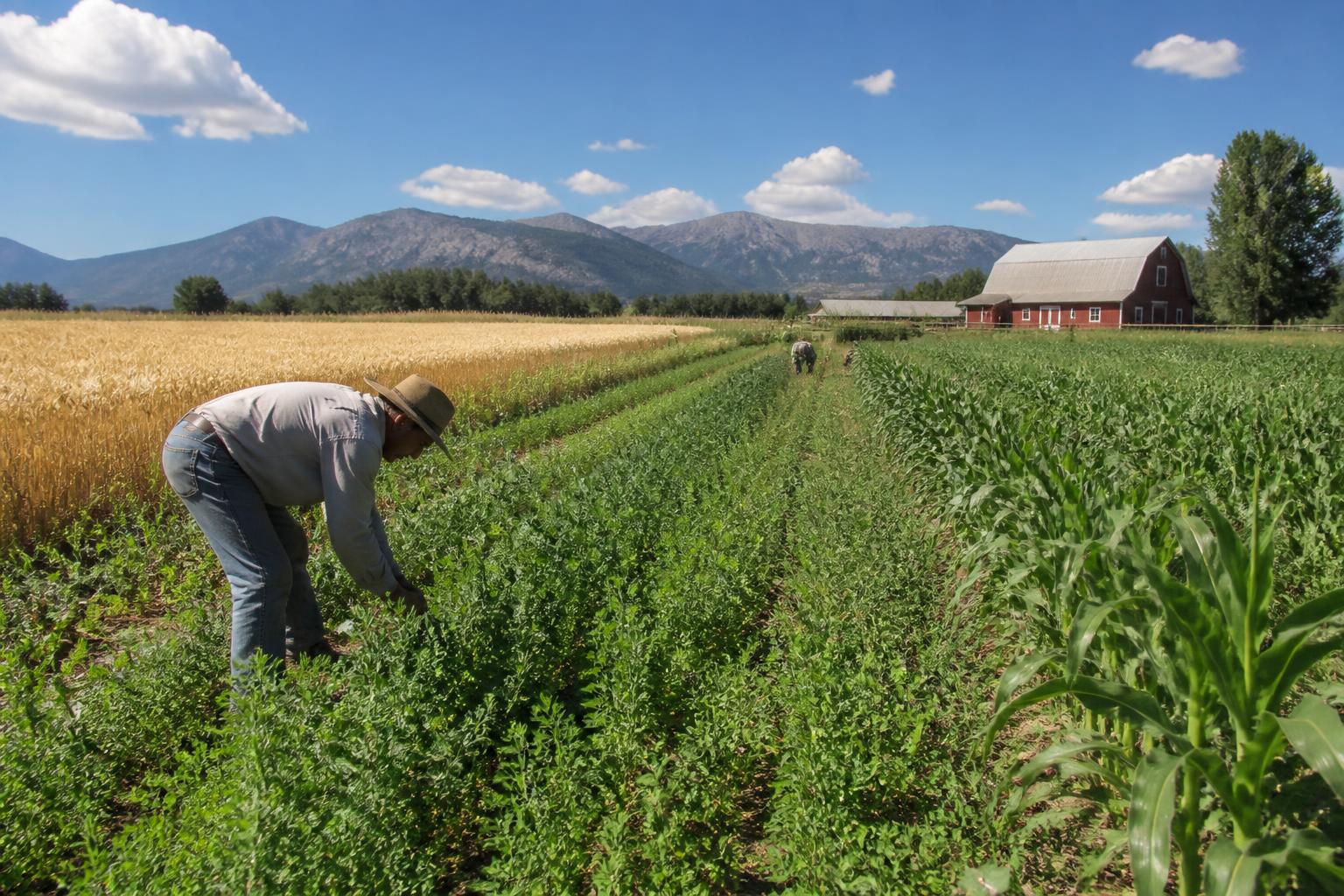
As summer temperatures climb across the western United States, Utah grain growers are facing a complex mix of intense seasonal heat, shifting regional livestock markets, and national financial headwinds. Managing crop health in these dry conditions requires precise resource allocation, particularly as water availability remains the single most critical factor for crop survival in the Great Basin region.
At the same time, local grain demand is experiencing significant changes. The combination of shifting livestock contracts and tightening farm credit nationwide is forcing Utah agribusinesses to look for creative ways to maintain crop yields and secure their financial footing.
The Critical Role of Irrigation Amid Extreme Heat
An intense summer heat wave stretching across the U.S. Plains and the West is testing the limits of western crop production. In Utah, where natural rainfall is scarce during the summer months, farming is almost entirely dependent on active irrigation networks. Agricultural experts note that without robust, functional irrigation systems, farming in Utah's arid valleys would simply not be viable.
To cope with these ongoing resource constraints, many growers are participating in state-level efforts aimed at Utah's agricultural sector and resource management. These programs help operators maximize water efficiency, ensuring that high-value silage corn and small grain fields receive adequate moisture during the hottest weeks of the summer.
Changing Feed Demand and Agronomic Innovations
The local market for grain and feed is also adapting to major changes in Utah's livestock sector. Recently, major integrator Smithfield ended its grower contracts with 26 hog farms across the state, a move that is expected to significantly alter local grain demand. With fewer active hog operations in the region, grain handlers and feed mills may need to seek alternative domestic buyers or adjust their local distribution channels.
To optimize feed production efficiency under these changing market conditions, some Utah producers are exploring new agronomic practices. Local field trials have focused on interseeding cover crops directly into silage corn. These trials demonstrate that establishing cover crops between corn rows can help protect soil quality, retain moisture, and potentially provide late-season forage options without reducing primary corn silage yields. Adapting these cultivation methods can help farmers protect their bottom line, especially when transporting feed through Utah's expanding transload networks to reach broader markets.
Financial Pressures and Farm Resilience
These local agronomic challenges are occurring against a backdrop of worsening farm credit conditions nationally. Data from the American Farm Bureau Federation highlights an upward trend in farm bankruptcies across the country, driven by high operating costs and tighter margins. In Utah, where many operations are multi-generational family farms, even modest financial assistance can make a substantial difference. For instance, a small, targeted grant of just five thousand dollars recently helped a century-old local corn farm implement diversification strategies to preserve its heritage and maintain operations.
Key Takeaways for Utah Grain Operators:
- Water Dependency: Continuous maintenance of irrigation infrastructure remains the absolute priority for crop survival during intense summer heat.
- Feed Market Shifts: The loss of local hog grower contracts requires grain marketers to diversify their buyer networks.
- Soil Innovations: Interseeding cover crops in silage corn offers a proven path to enhance resource efficiency and protect soil moisture.
- Credit Awareness: Tightening credit conditions highlight the value of small grants, agricultural programs, and alternative revenue streams for family farms.
What it means for the market
The Utah grain market is entering a period of transition where resource efficiency and market flexibility are paramount. With local hog feed demand softening, grain growers must actively explore regional transload options and alternative livestock buyers. Surviving the combination of extreme summer heat and tight credit will require a disciplined focus on irrigation management, innovative cropping systems like interseeding, and close attention to operating margins.
Comments
No comments yet — be the first to share your take.