
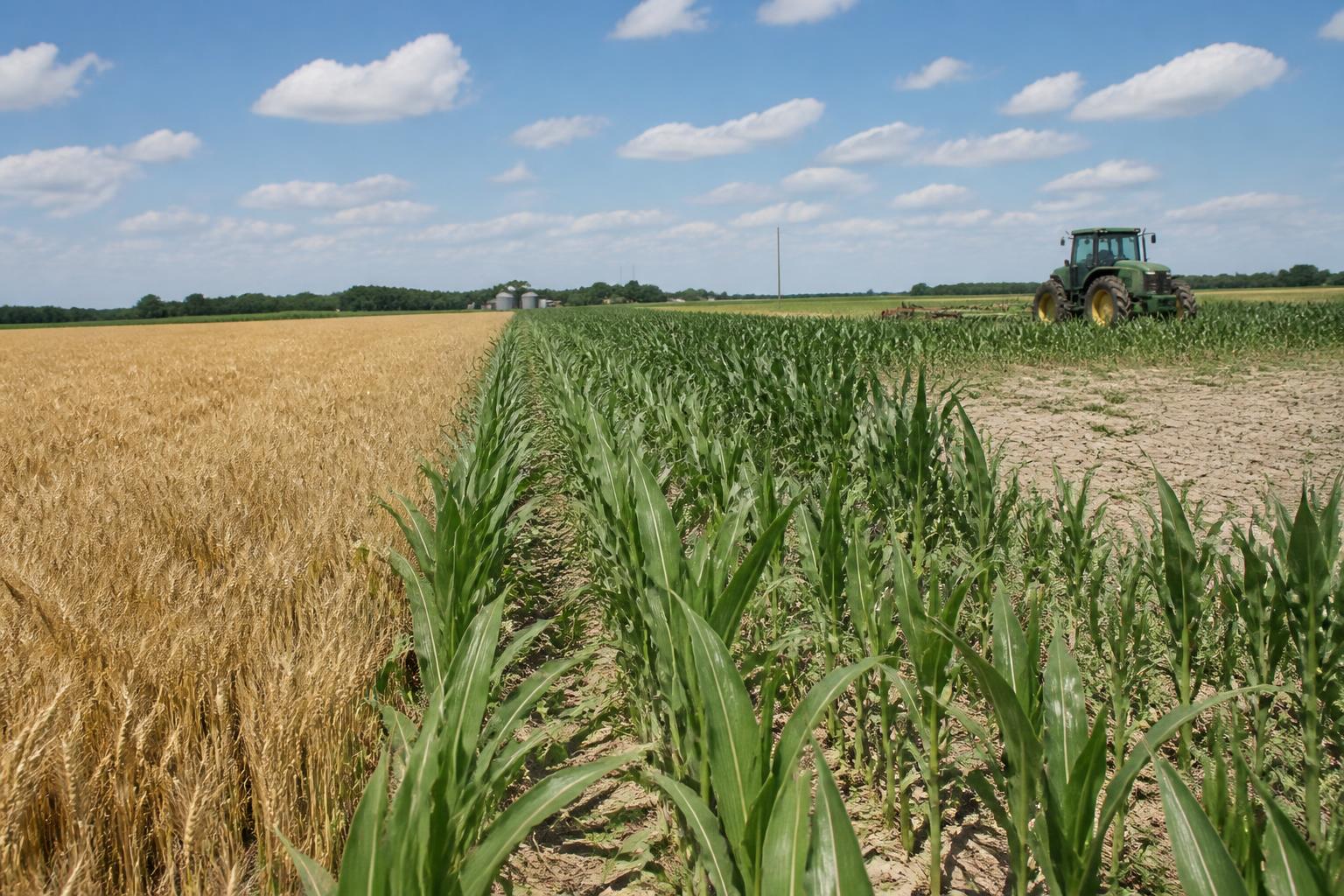
As the mid-summer heat settles over the Platte River Valley and across the state, Nebraska agricultural producers are facing a starkly divided economic landscape. While long-term asset values remain remarkably resilient, immediate weather pressures and persistent global supply chain disruptions continue to test the margins of local operations. From the dry fields of western Nebraska to the highly productive irrigated acres of the central counties, managing input costs and evaluating land assets are top priorities for agribusinesses this season.
Despite these challenges, structural investments in domestic fertilizer production and sustainable supply chain initiatives are offering new pathways forward. Producers are increasingly seeking strategies for navigating agricultural landscape challenges while positioning their operations for long-term viability.
Land Values Rise Despite Deepening Drought Pressures
According to recent market reports, Nebraska all-land values have risen by 6 percent, reflecting sustained demand for agricultural real estate across the state. This upward trend in land markets provides a solid equity base for established operations, but it also creates significant entry barriers for beginning farmers and increases cash rent pressures.
This rise in asset valuation stands in sharp contrast to the localized agronomic difficulties felt in some areas. Severe drought conditions in parts of Nebraska have taken a heavy toll on dryland crops, particularly wheat. The lack of moisture has decimated wheat fields and restricted forage availability, forcing some cattle producers to engage in herd sell-offs. While parts of the wider Midwest have received timely summer rains, Nebraska and Texas have continued to grapple with deep moisture deficits, highlighting the regional volatility of this growing season.
Domestic Input Initiatives and Biofuel Transitions
Input security remains a critical talking point in Senate hearings and local coffee shops alike. Geopolitical tensions continue to threaten international supply chains, driving up the cost of vital inputs and raising concerns ahead of future planting seasons. In response, local infrastructure projects are attempting to secure regional supply channels. The groundbreaking of the Iron Horse Ag project in Gothenburg highlights a major regional push to bolster domestic fertilizer availability and lower logistics costs for central Nebraska corn and soybean growers.
At the same time, Nebraska's energy landscape is evolving. A new renewable diesel plant is slated for construction, further diversifying the state's liquid fuel output. This development occurs alongside leadership transitions in the state's traditional biofuel sector, following the retirement of the long-time administrator of the Nebraska Ethanol Board, Todd Sneller. Producers looking to manage these shifting energy and input costs can find valuable strategies in the latest Nebraska summer market outlook.
Adapting Through Innovation and Diversification
To mitigate market volatility, Nebraska commodity groups and research entities are emphasizing sustainability and resource management. The Nebraska Corn Board recently joined Field to Market, a national initiative focused on tracking and improving supply chain sustainability. This move aligns with growing grain buyer demand for verified, environmentally conscious production practices.
Additionally, the Testing Ag Performance Solutions (TAPS) program, managed by the University of Nebraska, is expanding. By introducing new crop categories and testing locations, the program helps farmers benchmark irrigation and fertilizer efficiency in real-world scenarios. Beyond major row crops, some local producers are finding success in niche markets, such as securing new domestic and international channels for Nebraska-grown lavender, proving that diversification can happen even in traditional grain territory.
Key Takeaways for Nebraska Operators
- Land Assets: Nebraska all-land values have jumped 6 percent, supporting balance sheet equity but tightening the market for rental acres.
- Drought Impacts: Persistent moisture deficits continue to pressure western dryland crops and have triggered localized cattle liquidations.
- Supply Security: Gothenburg's Iron Horse Ag project represents a significant step toward localizing fertilizer distribution and reducing import dependencies.
- Sustainability Focus: Participation in programs like Field to Market and TAPS is vital for farmers seeking to optimize input efficiency and meet modern supply chain requirements.
What it means for the market
For Nebraska's agricultural market, the combination of high land values and intense localized weather stress creates a highly polarized economic environment. While asset-rich landowners benefit from rising equity, active producers must navigate tight operating margins exacerbated by high input prices and crop losses. The development of regional fertilizer projects and renewable fuel infrastructure will offer medium-term relief and new demand channels, but short-term survival will depend on strict input management, participation in efficiency-focused programs, and adaptive marketing strategies.
Comments
No comments yet — be the first to share your take.