
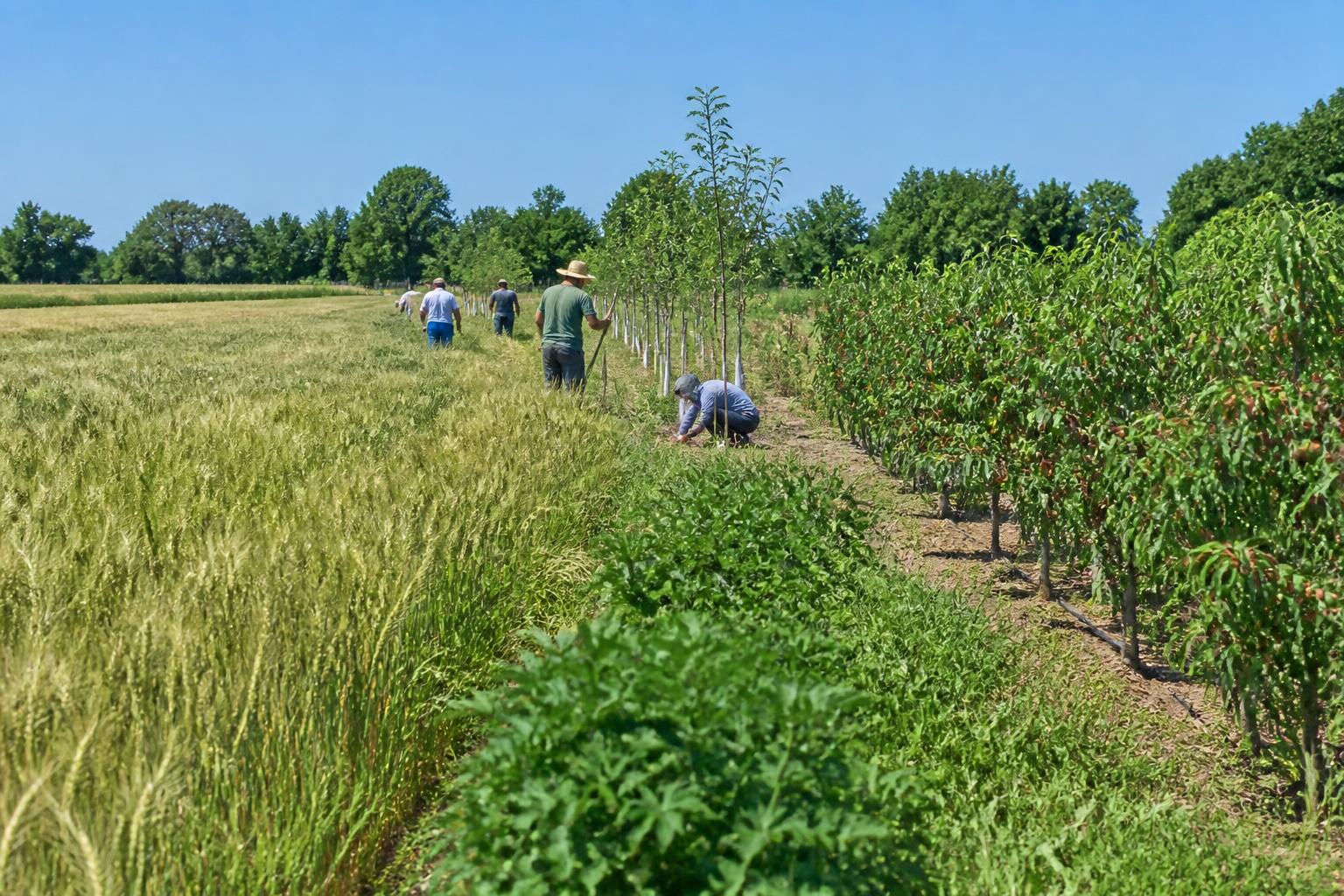
As summer heat settles across Maryland, the state's agricultural community is actively pivoting to address both environmental pressures and shifting economic realities. From the sensitive ecosystems of the Chesapeake Bay watershed to the flat stretches of the Eastern Shore, local growers are looking beyond traditional commodity cycles. Facing challenges like saltwater intrusion and high input costs, Maryland farms are increasingly adopting regenerative strategies, testing new cropping options, and exploring regional processing partnerships.
Success in this changing landscape requires balancing environmental stewardship with solid financial planning. Producers are increasingly relying on regional nutrient management strategies to maintain soil health while shielding themselves from volatile global input markets.
Mitigating Saltwater Intrusion and Climate Risks
On the Eastern Shore, saltwater intrusion has become a growing threat to productive farmland, transforming previously high-yielding fields into marginal acreage. To combat this, institutions like the University of Maryland Eastern Shore (UMES) are actively working with local producers to research salt-tolerant crops and management tactics. This research is vital for maintaining the agricultural viability of low-lying coastal tracts.
To offset these environmental risks, Maryland growers are also leveraging conservation incentives. Programs offering bonuses for planting trees and establishing buffer zones help improve water quality in the Chesapeake Bay while providing landowners with guaranteed secondary revenue streams. Additionally, organizations like The Nature Conservancy are working alongside growers to expand regenerative agriculture practices, focusing on soil health as a key defense against extreme summer weather patterns.
Exploring New Crop Outlets and Diversification
To protect their bottom lines, many operations are diversifying their crop rotations and marketing channels. Agricultural economists recently highlighting Southern Maryland's diverse farms noted that flexibility is key to navigating modern market volatility. This flexibility is visible in the region's robust summer produce markets, which supply local communities with fresh berries, peaches, and vegetables, as well as in more niche ventures like craft beverage inputs and specialty crops.
There is also growing interest in alternative industrial uses for local grains. For instance, winter barley is being closely examined as a potential feedstock to fuel a regional ethanol plant, which could offer small-grain growers a reliable, close-to-home market. This is particularly valuable as growers manage their summer crop schedules and evaluate how to integrate small grains alongside Maryland's summer wheat harvest, which remains a cornerstone of the regional farm economy.
Adapting to High-Tech Courting and Input Realities
Technology providers are increasingly focusing on Mid-Atlantic operations, with tech industry representatives courting Maryland farmers to adopt precision agriculture platforms. Agritech startups are working to deliver tools that optimize yields, though many local operations must carefully weigh these high-tech investments against persistent equipment and operating cost pressures. To make these systems pay off, regional operators are focusing on logistical integration, ensuring that new field data directly supports faster grain movements and improved shipping coordination through improving grain shipping and transloading options across the state.
Key Takeaways for Maryland Operators:
- Leverage Soil Programs: Explore tree-planting bonuses and conservation buffers to secure steady incentive payments on marginal land.
- Diversify Crop Outlets: Monitor developments in regional processing, such as potential barley-to-ethanol pathways, to secure alternative market contracts.
- Manage Salinity Risks: Work with local extension specialists, including UMES, to monitor saltwater intrusion and adapt cropping plans on vulnerable Eastern Shore acreage.
What it means for the market
For Maryland's agricultural sector, the current summer season highlights a shift toward high-value diversification and environmental adaptation. Relying solely on standard corn-and-soybean rotations is becoming riskier, especially in coastal zones facing salinity issues. Growers who successfully blend conservation incentives with alternative crop contracts, local nutrient planning, and selective agritech investments are best positioned to build a resilient, profitable business model for the seasons ahead.
Comments
No comments yet — be the first to share your take.