
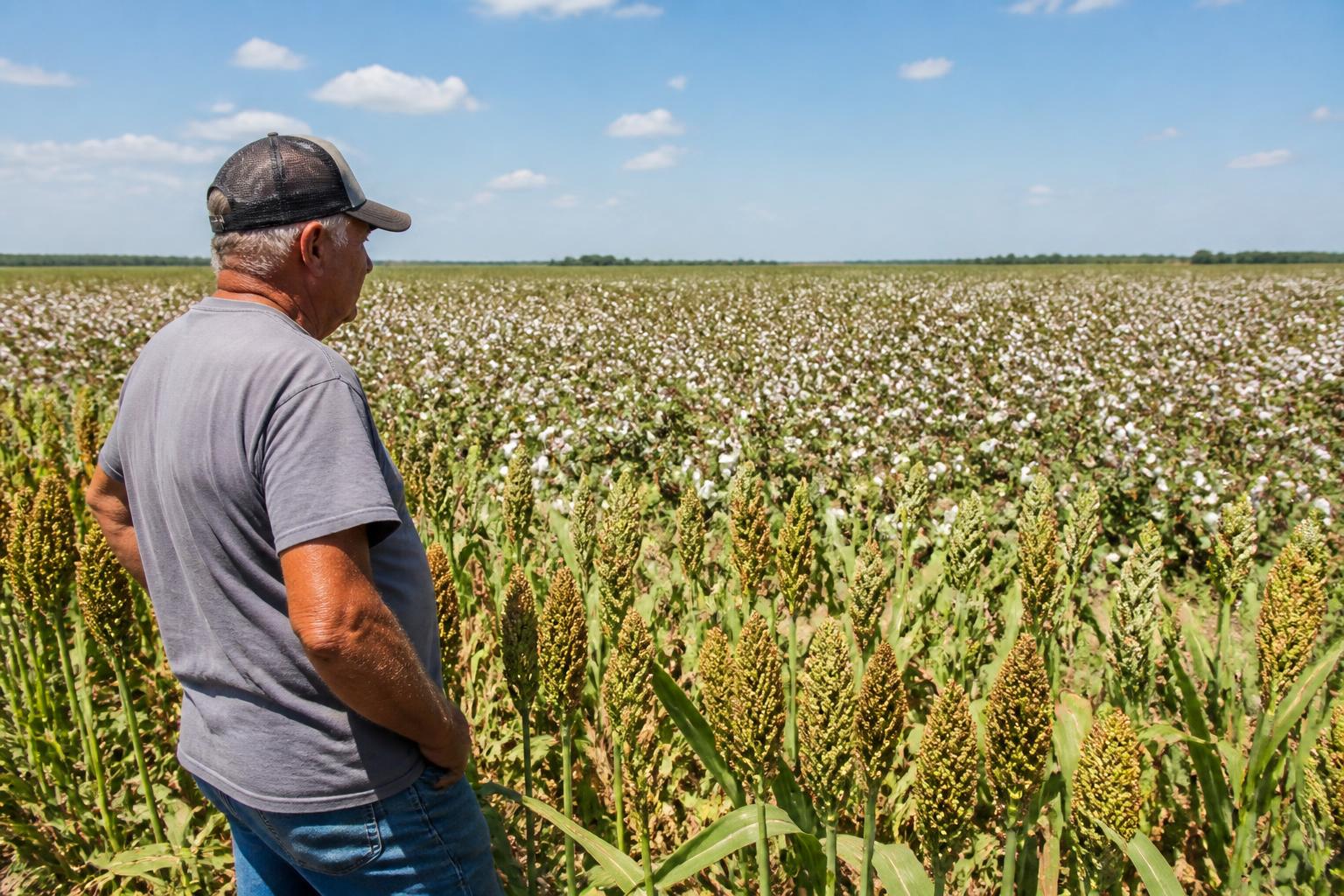
As summer heat intensifies across Oklahoma, crop protection has become a top priority for growers. Farmers managing fields from the panhandle down through the southwestern counties are keeping a close watch on dry weather patterns and rising insect pressure. With heat stress compounding crop vulnerability, active scouting and precise application timing are critical to preserving yield potential across the state.
Dry conditions have shaped much of this growing season, leaving fields vulnerable to invasive pests. Entomologists and regional agronomists are urging producers to inspect their fields regularly, particularly as changing insect populations begin to shift and expand across key production zones.
Managing Aphid Pressure in Oklahoma Sorghum
A primary concern for Oklahoma grain producers this summer is the expanding range of destructive aphids in grain sorghum. The pests have been active across Southwest sorghum-growing regions, creating an urgent need for chemical and biological management. Unchecked infestations can quickly sap plant energy, compromise grain development, and make harvesting difficult due to sticky residue.
Sorghum has remained an important rotation and alternative crop, particularly as farmers look to diversify after challenging winter wheat outcomes in dry western counties. According to the Oklahoma grain outlook detailing sorghum gains, managing these emerging pest threats is crucial to securing the crop-saving benefits sorghum offers to regional rotations.
Drought Stress and Cotton Protection Strategies
In Southwestern Oklahoma, cotton producers are also navigating tough environmental conditions. Growers in counties such as Jackson, Tillman, and Kiowa are managing crops under the threat of another dry season, which marks a third consecutive year of drought concerns for some dryland operations. Extreme heat and lack of moisture typically limit a plant's natural defense mechanisms, making targeted pest and weed management even more essential.
To support local producers through these complex agronomic decisions, Oklahoma has recently hired a new state Extension cotton specialist. This addition to the state's agricultural support network aims to provide growers with localized research on pest management, defoliation timing, and irrigation efficiency. Proper pesticide selection and timing can help producers protect their inputs while dealing with volatile regional yield splits across irrigated and dryland fields.
Key Takeaways for Oklahoma Growers
- Regular Scouting: Weekly inspections of sorghum fields are vital to catch expanding aphid populations before they reach economic damage thresholds.
- Targeted Chemistry: Use selective insecticides where possible to preserve beneficial predatory insects that help naturally control aphid numbers.
- Extension Guidance: Leverage local Extension updates and specialist recommendations to match crop protection efforts to current drought-stress levels.
What it means for the market
For Oklahoma agribusinesses, input suppliers, and grain handlers, active crop protection this summer is key to stabilizing regional supply. Effective management of aphids and cotton pests helps prevent sudden yield drops, ensuring a more predictable flow of local grain and fiber. As chemical control decisions are made, local input suppliers should prepare for shifting demand for targeted insecticide applications, ensuring Oklahoma farmers have the tools needed to combat pests under severe weather stress.
Comments
No comments yet — be the first to share your take.