
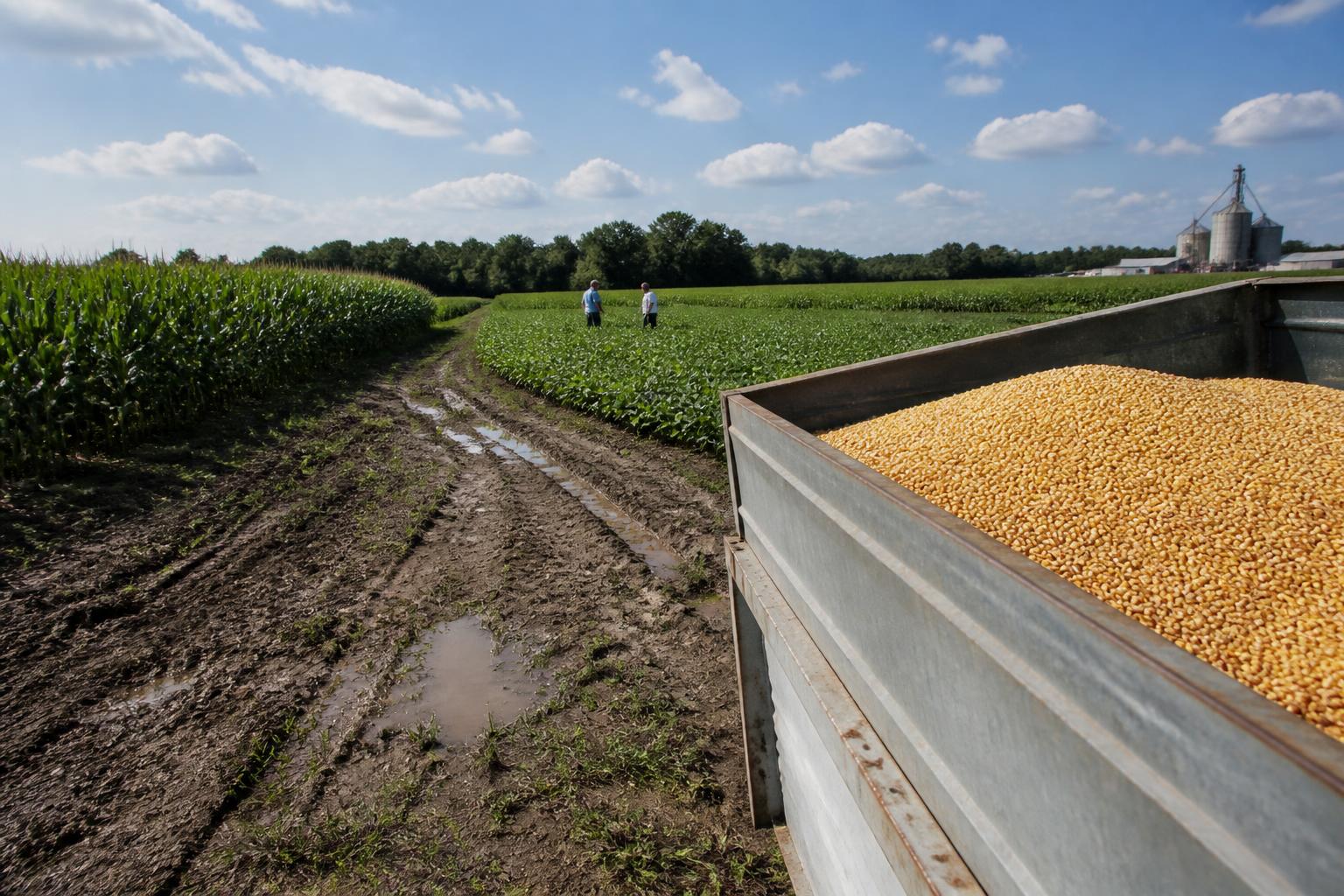
North Carolina agricultural producers are steering through a complex summer landscape as they balance high yield expectations with severe logistical constraints. Early projections suggest a potential record-setting corn crop across the state, but translating that field success into profitable sales is proving difficult. Growers are facing localized crop damage from heavy rains, persistent inflation on essential inputs, and a looming bottleneck in regional storage capacity.
For grain handlers and farmers alike, the physical limits of local infrastructure are moving to the forefront of operational planning. With high volumes expected, securing adequate bin space has become a critical priority before harvest activity accelerates in the coming months.
Yield Potential Met with Heavy Rains
Excellent early-season conditions set the stage for historically high corn yields in many of North Carolina-s key growing regions, including the coastal plains and Piedmont. However, the summer has also brought intense, heavy rains that have caused localized flooding and crop damage in low-lying fields. While some areas benefited from the moisture, others are assessing drowned-out acres and potential nutrient leaching.
This weather volatility has complicated management plans, particularly as growers attempt to protect their crops from late-season diseases and pests. The upcoming Northeast Ag Expo field day, scheduled for July 25, is expected to offer local growers critical insights on regional crop management, seed performance, and crop protection strategies to handle these challenges.
The Storage Bin Squeeze
Perhaps the most immediate operational hurdle for the upcoming crop is a shortage of storage space. North Carolina-s storage bin capacity issues are threatening to slow down the pace of the corn harvest. Local elevators and on-farm storage facilities are under immense pressure, forcing some producers to seek alternative marketing channels or delayed delivery options.
As growers navigate these infrastructure challenges, developments in North Carolina ag transport systems will play a pivotal role in keeping grain moving from fields to regional feed mills, poultry operations, and coastal shipping ports. Elevators may need to coordinate tightly with logistics providers to prevent gridlock at dump pits during peak delivery weeks.
Rising Input Costs and Regulatory Shifts
Adding to these physical logistics challenges is the persistent economic pressure of inflation. North Carolina farmers continue to report that input prices - ranging from equipment parts to specialized chemicals - remain sky-high, tightening profit margins even in a high-yield year. This economic reality is forcing agribusinesses to be highly selective with their crop protection programs and machinery upgrades.
On the policy front, a sweeping state agriculture bill was recently signed into law, aiming to streamline regulatory processes and protect farming operations across the state. This legislative support arrives at a crucial time as communities work to strengthen local food systems and secure land for future generations, highlighted by educational initiatives like Union County-s new ag education spaces.
Key Takeaways for Producers
- Audit Storage Capacity: Clean and repair on-farm bins immediately to maximize available space before harvest begins.
- Monitor Weather Trends: Keep a close eye on field drainage and potential disease pressure following summer rain events.
- Evaluate Marketing Strategies: Secure delivery contracts early to avoid getting shut out of local elevators during peak harvest.
What it means for the market
The combination of massive crop potential and tight regional storage will likely keep local cash prices under pressure during the heart of the harvest. Farmers who have flexible on-farm storage or pre-arranged transport agreements will hold a distinct marketing advantage. Over the longer term, addressing storage infrastructure gaps will be essential to supporting North Carolina-s expanding poultry and livestock sectors, which rely heavily on steady, localized grain supplies.
Коментарі
Коментарів ще немає — будьте першим.