
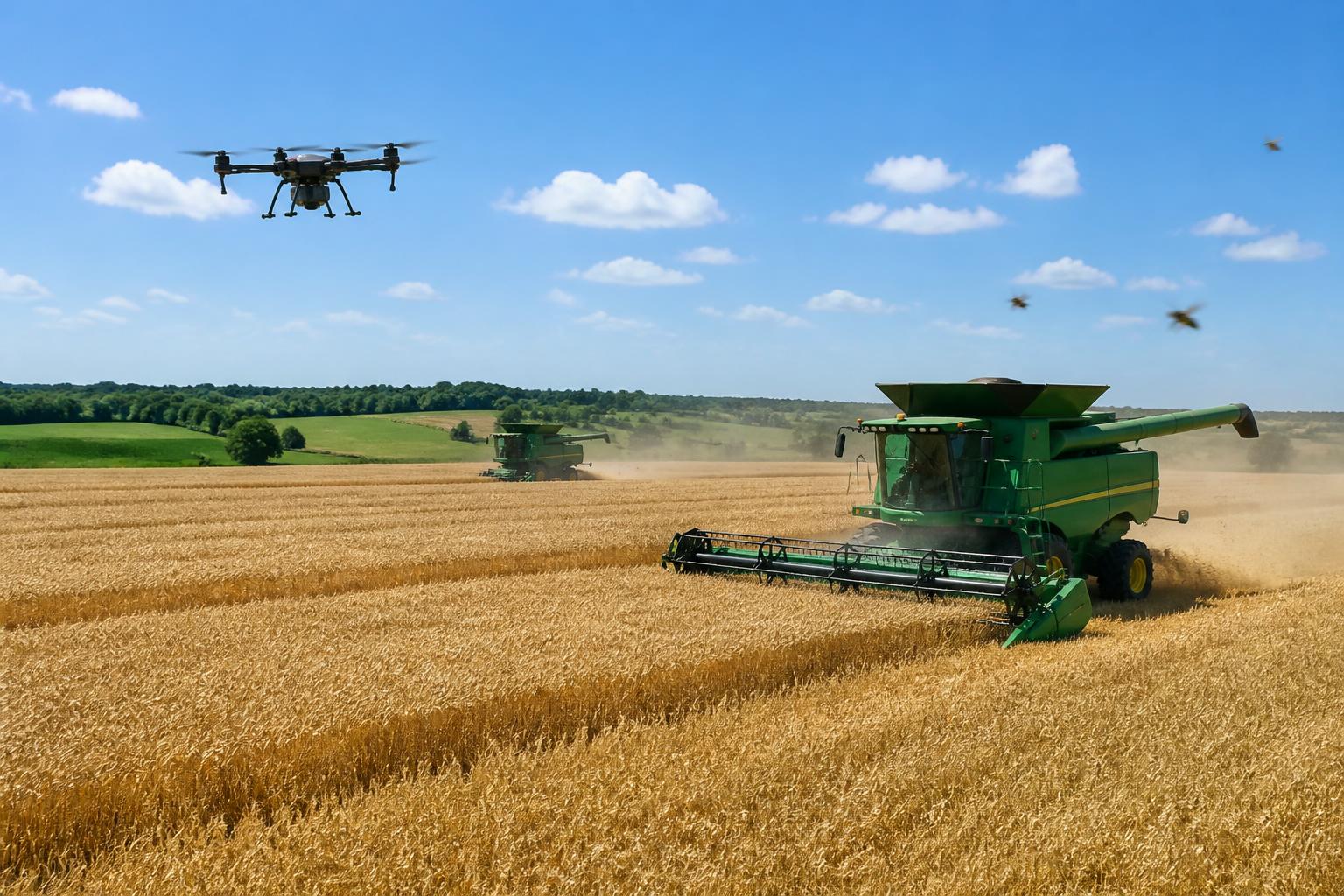
Texas grain producers are navigating a complex summer landscape marked by promising local wheat harvests, rapidly depleting soil moisture, and a sudden surge in global fertilizer costs. As field operations shift from harvest to late-season maintenance, managing input expenses while protecting yield margins has become the top priority for agribusinesses across the state.
With logistics and market pressures mounting, growers are closely monitoring regional crop conditions. Adapting to these shifts requires a deep understanding of local logistics and price trends, much like the strategies discussed in our review of summer grain harvest logistics across Texas.
Wheat Harvest Delivers Yields Amid Drying Soils
The Central Texas wheat harvest has progressed with reports of strong yields, providing a welcome boost to local grain elevators and producers. In areas like Denton County, innovative wheat cropping experiments have proven highly profitable, demonstrating that adaptive management can pay off even in volatile seasons. However, the optimism surrounding the harvest is tempered by a sobering outlook for soil moisture. Soil moisture conditions are expected to worsen across Texas as summer heat intensifies, threatening double-crop systems and dryland crops that rely on late-season rains.
Fertilizer Price Spikes Tighten the Squeeze
Compounding the threat of dry weather is a sharp reversal in input costs. Recent market data shows a broad rise in crop nutrition expenses, with all eight major fertilizers heading higher. Five of these fertilizers have seen significant price jumps, led by a dramatic 34 percent spike in urea compared to the previous month. This rapid inflation in nutrient costs limits the purchasing power of grain farmers preparing for fall seeding.
Additionally, Texas growers are facing new risk-management hurdles regarding soil health and alternative fertilizers. A recent lawsuit filed by several Texas farms has detailed PFAS contamination linked to biosolids fertilizer, highlighting the potential long-term liabilities and safety standards associated with recycled waste products.
Tech Innovation and Land Conservation
In response to rising operational costs and labor challenges, the agricultural sector is turning to advanced technology. Autonomous helicopters are gaining traction as highly precise tools for spraying and crop monitoring, helping operators cut down on input waste. Furthermore, a recent 3 million dollar funding package from the USDA targeting Texas agricultural and natural resource projects is expected to support conservation and efficiency efforts across the state.
At the same time, physical infrastructure expansion continues to clash with rural preservation. Ongoing legal battles over highway expansions encroaching on historic Texas family farms highlight the persistent loss of productive agricultural land to urbanization.
Key Takeaways for Texas Growers
- Strong Wheat Yields: Central Texas wheat producers report solid yields, though drying soils threaten subsequent crops.
- Fertilizer Inflation: Urea prices surged 34 percent in a month, forcing a re-evaluation of nutrient budgets.
- Evolving Risks: Biosolids litigation over PFAS contamination adds a new layer of risk management for soil amendments.
- Efficiency Drives: USDA-funded resource projects and autonomous helicopter technologies are helping farmers counter high input costs.
What it means for the market
The combination of high wheat yields and surging fertilizer costs means Texas grain producers must focus on cost control to protect their bottom lines. While the immediate harvest has delivered solid volume, the rising cost of nitrogen fertilizers like urea will heavily impact margins for the next crop cycle. Growers should use the summer months to lock in necessary inputs, explore high-efficiency application technologies, and closely monitor soil moisture levels to guide their planting and marketing decisions for the fall.
Comments
No comments yet - be the first to share your take.