
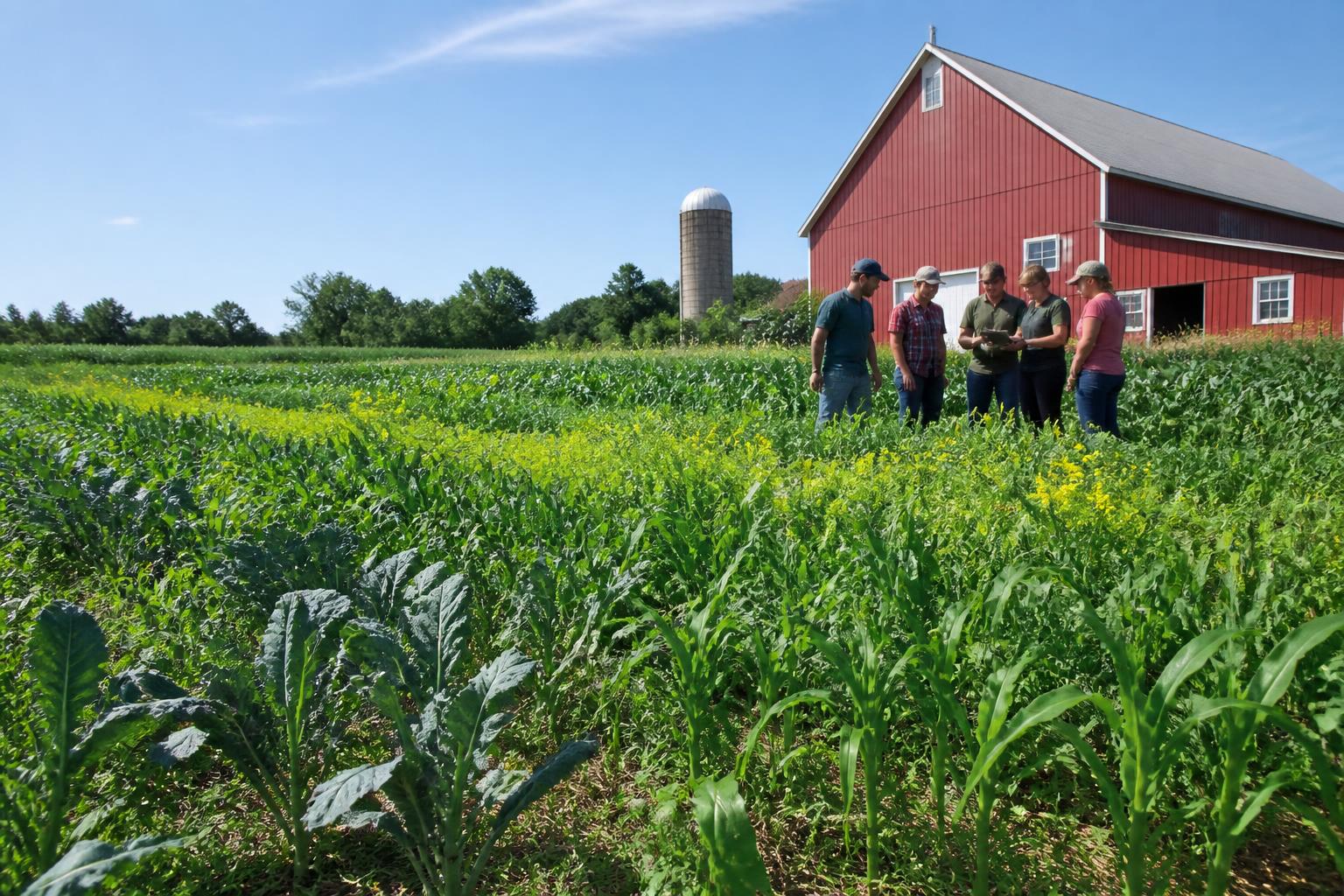
As Pennsylvania growers navigate the peak of the summer production season, managing fertilizer budgets has become a primary focus for keeping operations profitable. With global geopolitical tensions, particularly conflicts in the Middle East, continuing to disrupt energy and chemical supply chains, commercial fertilizer prices have faced renewed upward pressure. For family farms across the Commonwealth, these volatile retail prices require a strategic shift in how nutrients are sourced, stored, and applied.
Global Geopolitics and the Pennsylvania Fertilizer Squeeze
The direct connection between global energy markets and local retail fertilizer prices is felt acutely this summer. Because the manufacturing of nitrogen-based fertilizers relies heavily on natural gas, any international conflict that threatens energy corridors can quickly drive up production costs. Pennsylvania farmers, already dealing with broader inflationary pressures and a tightening credit market, find that traditional synthetic fertilizers are eating up a larger share of their operating capital.
In diverse agricultural regions like Lancaster, Berks, and Lehigh counties, high input costs have historically driven up farm expenses and, in severe cases, contributed to financial strain. To cope with these volatile market dynamics, many growers are actively seeking ways to maximize the efficiency of every pound of plant food they apply.
Leveraging Cover Crops and Alternative Nutrients
One of the most practical long-term solutions for reducing reliance on commercial synthetic fertilizer is the strategic use of cover crops. As winter wheat and early summer crops are harvested, planting cover crops like clover, rye, or vetch can help scavenge leftover soil nutrients and naturally fix nitrogen for the next cash crop. Agronomists in the region emphasize that maintaining active root systems during late summer and fall improves soil biology, which ultimately makes applied fertilizers more effective.
Furthermore, many Pennsylvania producers are turning to alternative nutrient management strategies. In previous seasons, exploring alternative nutrient sources to offset steep diesel and fertilizer costs has proven to be a viable way to bypass premium commercial retail rates. Utilizing locally sourced manure, compost, and organic byproducts not only supports local circular economies but also helps insulate operations from sudden global price spikes.
Precision Ag and On-Farm Storage Policy Developments
On the policy front, federal discussions continue to emphasize support for advanced nutrient management. Recent provisions debated in the Senate Farm Bill highlight a push for precision agriculture technology and improved on-farm fertilizer storage infrastructure. For Pennsylvania grain and livestock operations, expanding on-farm storage could allow managers to purchase bulk nutrients during seasonal price dips, rather than being forced to buy at peak retail rates during spring planting or summer sidedressing.
Additionally, precision agriculture tools enable variable-rate applications, ensuring that fertilizer is only placed where soil tests indicate a clear agronomic need. Integrating these technologies can help lower overall application volumes without sacrificing crop yields.
Key Takeaways for PA Producers
- Monitor Global Energy Trends: Keep a close eye on natural gas and oil markets, as these remain the primary drivers of nitrogen fertilizer manufacturing costs.
- Plan Summer Cover Crops: Use the post-harvest summer window to plant cover crops that capture residual nutrients and reduce synthetic fertilizer requirements for next spring.
- Explore Storage Options: Evaluate on-farm storage solutions to take advantage of off-season buying opportunities when commercial prices soften.
What it means for the market
The current volatility in the fertilizer sector demonstrates that relying solely on just-in-time commercial chemical deliveries is a risky strategy for Pennsylvania agribusinesses. By combining precision application technologies, expanded local nutrient storage, and biological strategies like cover cropping, growers can better protect their margins. Expect regional demand for cover crop seed and alternative organic nutrients to remain strong as operators look to hedge against unstable global fertilizer supply chains heading into the autumn planning cycle.
Comments
No comments yet - be the first to share your take.