
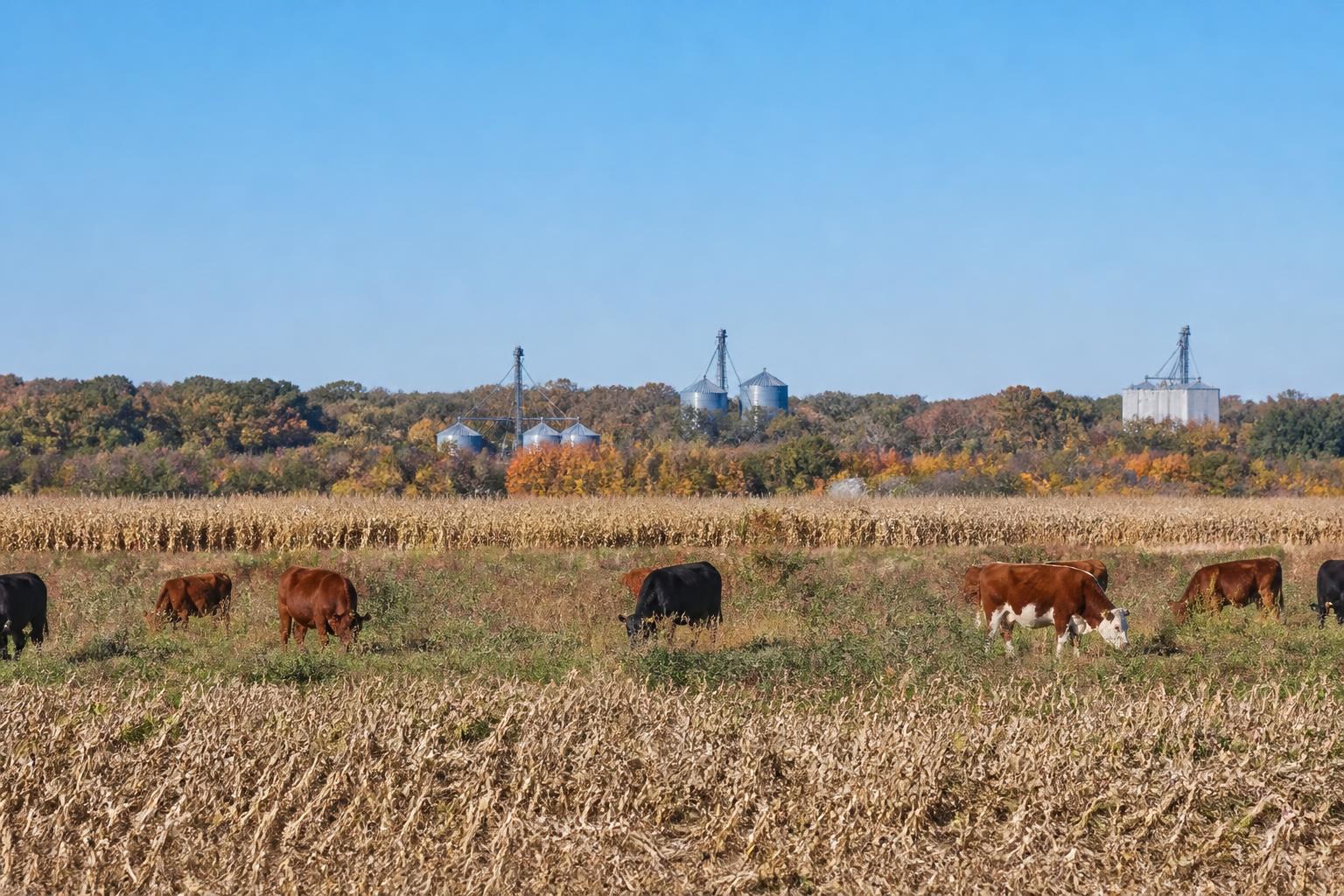
Kentucky Grain Outlook: Managing Late Summer Harvest Strains
Kentucky producers are balancing shifting crop schedules and evolving input costs as the summer season progresses toward the fall harvest window.
We collect original digests and analytical notes based on facts, market signals and verified sources.
As Minnesota corn harvest accelerates, farmers are navigating shifting infrastructure capacity and rising input costs, particularly for fertilizers.
Kentucky producers are balancing shifting crop schedules and evolving input costs as the summer season progresses toward the fall harvest window.
As late-summer conditions persist across South Dakota, producers are shifting focus to harvest readiness, optimizing equipment, and monitoring field conditions for the upcoming season.
As Wisconsin moves toward the peak of harvest, farmers and agribusinesses are balancing production adjustments with evolving logistical and supply chain considerations.
Wyoming producers are balancing the need for operational efficiency with persistent inflationary pressures on inputs as they move through the late summer season.
As Texas growers navigate a complex summer, rising fertilizer costs and broad economic consolidation remain significant hurdles for regional agricultural profitability.
As August nears its end, Iowa producers are balancing high crop quality with emerging disease threats, emphasizing the need for targeted late-season protection strategies.
As South Dakota farmers move through late summer, changing weather patterns and infrastructure developments are shaping the upcoming harvest season.
State agricultural regulators are preparing for a major overhaul of commercial fertilizer storage policies, signaling a shift in operational requirements for local agribusinesses and grain handlers.
As West Virginia producers navigate late-summer market pressures, focusing on operational efficiency and risk management remains vital for long-term viability.
As summer production hits its peak, Vermont farmers are leveraging new food hub initiatives and state support to streamline logistics and navigate shifting supply chain dynamics.
As North Dakota producers look toward upcoming cycles, recent shifts in regulatory oversight and rising input expenses are forcing a re-evaluation of farm management strategies.
Utah farmers face a challenging late-summer period marked by unseasonal weather losses and broader global economic volatility affecting crop inputs.
Sign in to manage requests, save contacts and respond to market offers quickly.
Continue with Google Continue with MicrosoftSign in to manage requests, save contacts and respond to market offers quickly.
Continue with Google Continue with MicrosoftEnter your email and we will send a password reset link.
Don't have an account?
We value your privacy
We use cookies to run the site and, with your consent, to measure traffic (Google Analytics) and personalize ads. You can accept, reject, or choose. Privacy Policy