
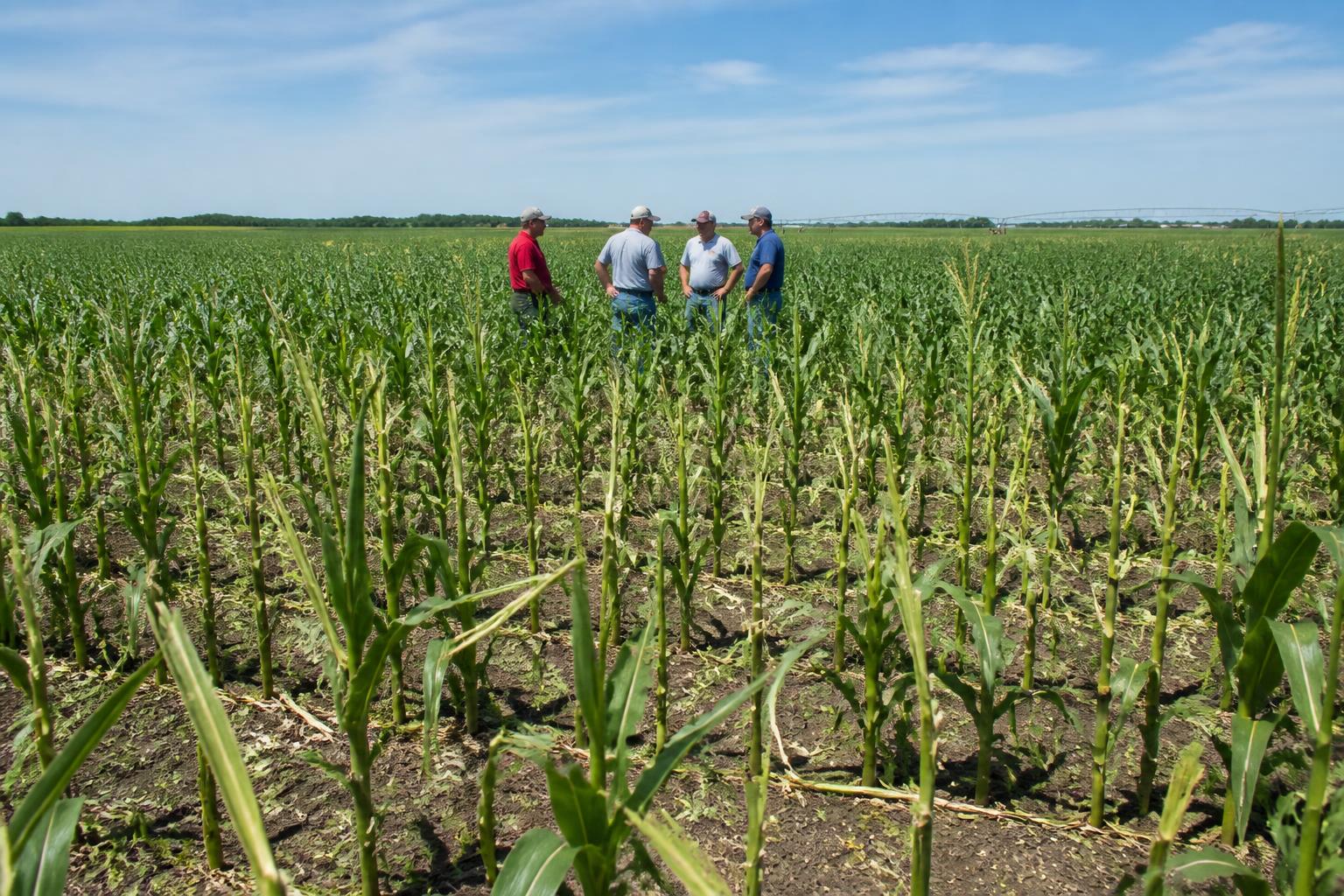
Late June in Iowa brings both rapid crop development and the volatile weather typical of a Midwestern summer. While corn and soybean fields across the state are progressing, localized severe weather, including recent heavy hailstorms, has introduced early yield anxiety. Concurrently, broader commodity market sell-offs are keeping pressure on farmgate prices, forcing producers to watch both the skies and the marketing boards closely.
For grain handlers, elevator operators, and livestock feeders along major shipping corridors like Interstate 80 and the Mississippi River, these physical and financial disruptions require a highly adaptive approach. Managing inputs, monitoring local basis shifts, and participating in regional risk management discussions have become essential strategies for navigating the summer squeeze.
Weather Interruptions and Localized Yield Hits
Summer storms in Iowa are notoriously unpredictable, often leaving one county pristine while adjacent fields suffer severe damage. According to regional agronomists, a recent hailstorm has cut the yield potential of affected corn by 10% to 15% in storm-damaged pockets of the state. While this does not represent a statewide catastrophe, the localized loss of leaf area and physical plant damage can disrupt regional grain supplies and alter local cash basis as processors adjust to shifting crop conditions.
These weather events complicate what was already a delicate production year. Producers in hard-hit areas must now decide whether to apply mid-season crop enhancers or conserve capital. For those looking to protect their remaining yield potential, understanding Iowa crop protection and input dynamics is critical, especially when balancing summer supply margins and evaluating biological or traditional recovery tools.
Market Sell-offs and Risk Management
On the financial front, grain markets have experienced notable pressure, highlighted by a sharp sell-off at the end of the week. This drop has intensified the financial squeeze on Iowa growers, many of whom are already operating on very tight margins due to high equipment, land, and input costs. The ongoing threat of lower cash prices has renewed interest in market alternatives, such as the potential expansion of year-round E15 fuel standards, which advocates suggest could help support domestic corn demand.
To assist producers in navigating these choppy economic waters, organizations like the Iowa Farm Bureau are hosting local meetings. These sessions are designed to help farmers understand the complex market pressures on Iowa corn, explore alternative marketing strategies, and find pathways to profitability despite global and domestic price downward trends.
Logistics and Broader Agribusiness Shifts
Beyond the fields, Iowa's agricultural support sectors are also adapting to the current economic climate. Strategic acquisitions in the logistics space, such as recent consolidations among regional pallet suppliers, highlight how agribusinesses are trying to streamline the supply chains that move grain and processed agricultural goods. Additionally, the steady growth of organic agriculture across the state offers an alternative path for some growers, though it requires strict management of organic inputs and specialized storage channels.
Key Takeaways for Iowa Producers
- Localized Yield Impact: Recent hailstorms have reduced corn yield potential by 10% to 15% in specific storm-damaged areas, requiring careful crop monitoring.
- Market Pressure: Recent broad grain market sell-offs highlight the need for active risk management and structured marketing plans.
- Educational Support: Local Farm Bureau meetings offer critical resources to help growers evaluate pricing options and manage input costs.
- Input Efficiency: Mid-season crop protection and recovery tools should be carefully budgeted to protect yields without overextending summer operating capital.
What it means for the market
The combination of localized weather damage and macro market sell-offs highlights the thin margins Iowa grain producers face this summer. While the overall state crop remains in play, localized adjustments to yield forecasts could tighten regional basis, particularly near key river terminals and ethanol processing centers. Managing inputs and staying flexible with marketing plans will be crucial as the critical pollination window approaches.
Comments
No comments yet — be the first to share your take.