
Local Fertilizer Infrastructure and the Retail Battle
In a timely development for regional logistics, EuroChem recently cut the ribbon on a new fertilizer distribution facility in Keokuk, Iowa. Located near key transit corridors in Lee County, this facility is positioned to streamline the movement of essential crop nutrients into the heart of the Corn Belt. Localized distribution hubs can help reduce transport bottlenecks during critical summer top-dressing windows, though broader market access remains a point of contention.
This local expansion arrives amidst intense national scrutiny of fertilizer supply chains. National corn grower groups have continued to press the Attorney General regarding what they term a fertilizer "duopoly" following critical remarks from the USDA. For growers working to manage expenses, these high-level market battles highlight the critical need for regional supply alternatives. Successfully mitigating market pressures on Iowa corn requires both strategic marketing and a careful eye on fluctuating nutrient costs.
Protecting the Soil: Behavioral Science Meets Cover Crops
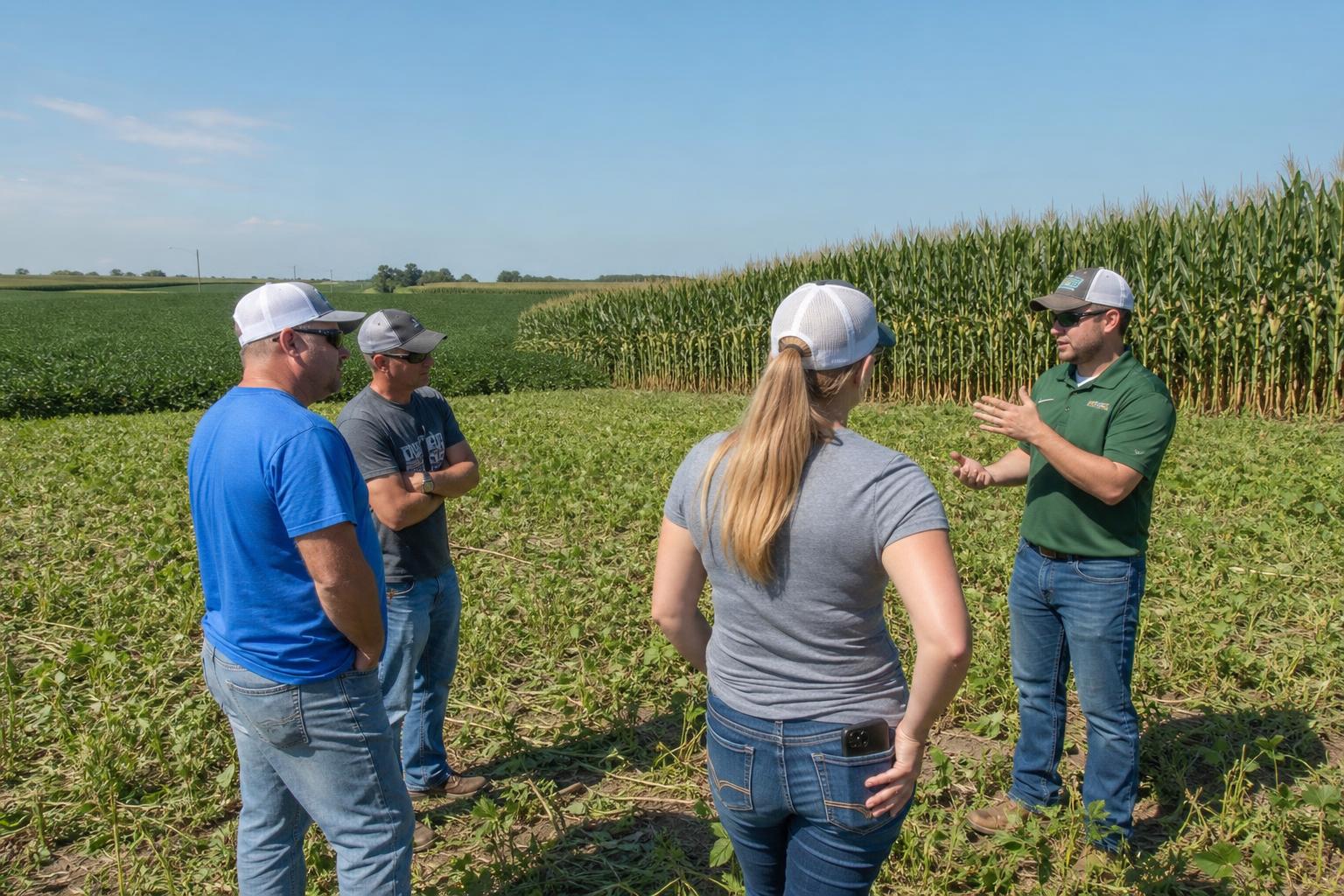
As farmers seek to protect their soil from summer erosion and nutrient runoff, the conversation around cover crop adoption is shifting. A recent study highlighted by the Walton Family Foundation suggests that behavioral science can play a key role in helping farmers overcome the social and logistical hurdles of adopting cover crops. Rather than relying solely on financial incentives, understanding peer-to-peer networks and community farming practices can accelerate conservation efforts.
This behavioral approach aligns with the experiences of local leaders like Elyssa McFarland, an Iowa farmer who has advocated for resilient, soil-first management practices. For many operations, integrating cover crops serves as a biological shield, protecting soil structure and moisture levels during dry summer spells while reducing reliance on intensive chemical inputs. Implementing these practices can complement traditional regional crop protection strategies by building long-term soil health and productivity.
Acreage Projections and Market Trajectory
Recent market surveys keep the pressure on crop protection efficiency. A Farm Futures survey projects national plantings at 93.6 million acres of corn and 88.5 million acres of soybeans. This massive production potential means that crop protection must be highly cost-effective to protect thin margins. Even as corn futures have shown short-term upward movement, the threat of a supply-heavy autumn keeps the focus on maximizing yield per acre through precise input applications.
- New Logistics: The Keokuk facility improves local nutrient availability.
- Policy Battles: Producer groups continue to advocate for fairer fertilizer pricing models.
- Biological Focus: Soil protection through cover crops is gaining behavioral and peer traction across counties.
What It Means for the Market
For Iowa agribusinesses and growers, the combination of new localized fertilizer facilities and evolving conservation strategies represents a dual approach to risk management. While policy advocates fight to break up supply-chain duopolies, farmers should focus on localized logistics advantages, such as the Keokuk facility, to secure timely summer inputs. At the same time, integrating cover crops can act as a natural defense system for soil moisture, offering a reliable buffer against volatile input pricing and changing seasonal weather patterns.
Comments
No comments yet - be the first to share your take.