
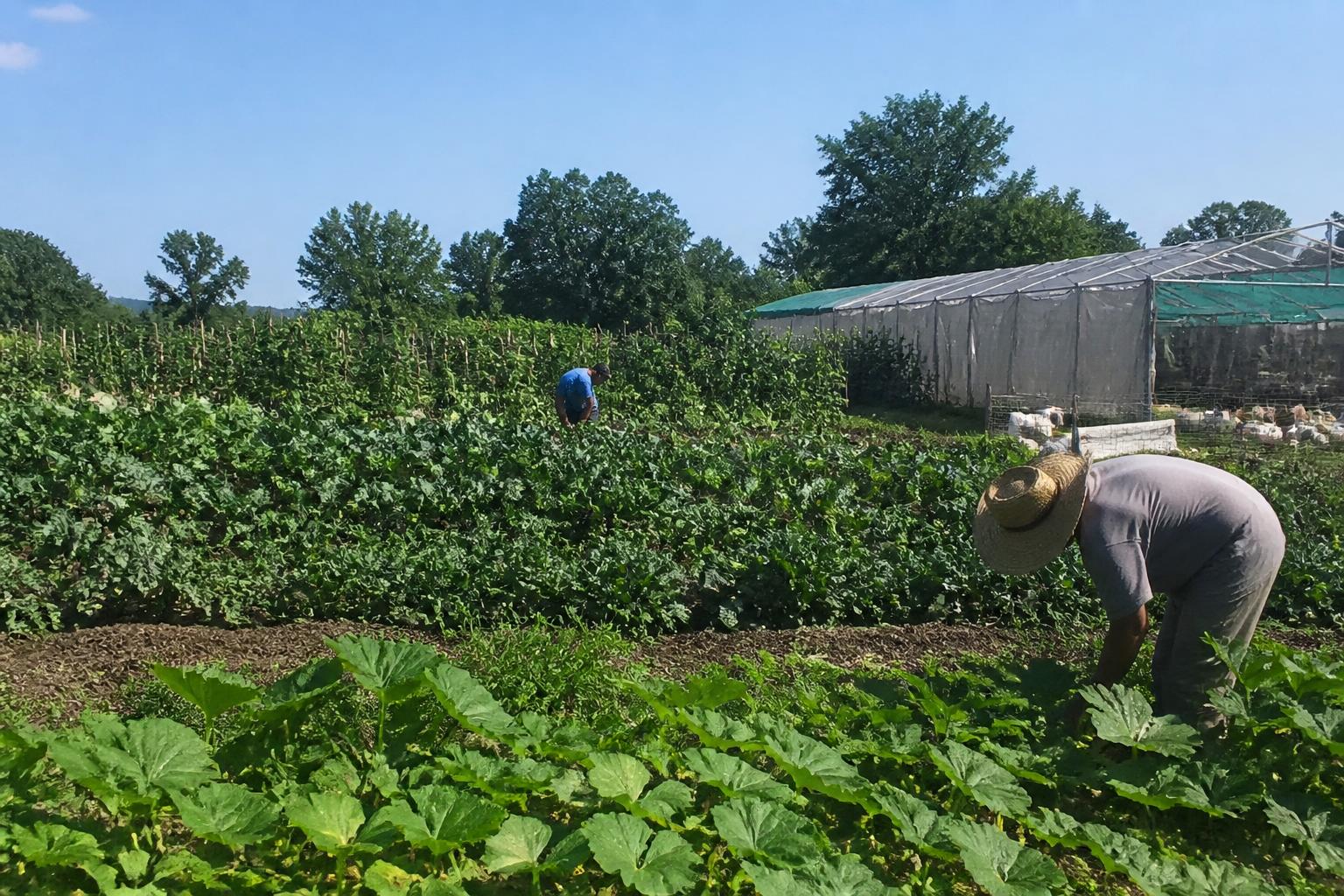
As summer heat settles over Virginia, agricultural operators are navigating a complex environment of nutrient management, local community relations, and shifting national agricultural policy. With summer crop development in full swing across the Commonwealth, local farmers are working to secure and apply vital nutrients while managing the logistical and social challenges that often accompany summer fertilizer applications.
From the fields of the Eastern Shore to the rolling poultry tracts of the Shenandoah Valley, managing fertilizer inputs is a precise science. Local agribusinesses are currently balancing the cost-effectiveness of organic nutrients, such as poultry litter, against local community standards and evolving conservation priorities.
Navigating the Local Dynamics of Poultry Litter
Poultry manure, commonly referred to as poultry litter, remains an invaluable and cost-effective organic fertilizer source for many Virginia grain and forage producers. However, its summer application can sometimes lead to localized friction. Residential complaints regarding the odor of chicken manure highlights the delicate balance farmers must maintain when applying organic nutrients near developing rural-suburban borders.
To mitigate these concerns, many producers are utilizing precision incorporation methods and paying close attention to wind patterns and weather forecasts. Navigating these community relations is increasingly critical as Virginia poultry growers face evolving regulatory rules surrounding nutrient management planning and application windows. Proper timing not only preserves volatile nitrogen in the soil but also helps maintain goodwill with non-farming neighbors.
Policy and Conservation Boost Fertilizer Innovation
On the national stage, policy updates are aiming to streamline how farmers access and utilize advanced fertilizer options. The Fertilizer Institute (TFI) has recently voiced strong support for provisions within the Senate Farm Bill that focus on conservation, innovation, and market transparency. These provisions are designed to help farmers adopt innovative nutrient technologies and improve the efficiency of their fertilizer applications.
For Virginia growers, these policy developments could ease the transition toward advanced fertilizer formulations, including enhanced-efficiency fertilizers and biological soil additives. This legislative support comes at a critical time as Virginia growers balance rising fertilizer costs with climate-smart nutrients to protect both their operating margins and local water quality, particularly within the sensitive Chesapeake Bay watershed.
Practical Management for Summer Application
During the hot summer months, fertilizer logistics and application require heightened attention to detail. High temperatures can accelerate ammonia volatilization from surface-applied urea and manure, reducing the economic value of the input. Farmers can benefit from several key management practices:
- Rapid Incorporation: Injecting or tilling solid manure and urea into the soil quickly after application to minimize nitrogen loss to the atmosphere.
- Using Stabilizers: Employing urease inhibitors when surface applications are unavoidable, especially during dry mid-summer spells.
- Logistical Efficiency: Planning transportation routes along major corridors like Interstate 81 or Interstate 64 while keeping local seasonal weight limits and transport regulations in mind.
What it means for the market
The push for greater market transparency and conservation funding in the Farm Bill, paired with local nutrient regulations, is driving Virginia agriculture toward high-efficiency fertilizer alternatives. While poultry litter remains a critical regional nutrient source, growers will likely need to adopt more rigorous storage, application, and odor-mitigation practices to comply with evolving local standards. In the long term, federal support for innovative fertilizers should improve supply-chain transparency and give Virginia farmers better tools to stabilize input costs during critical growing seasons.
Comments
No comments yet - be the first to share your take.