
Summer in Alaska brings nearly endless daylight, fueling a rapid and intense growing season across the state. From the traditional fields of the Matanuska-Susitna (Mat-Su) Valley to the coastal waters of Ketchikan, local producers are adopting innovative strategies to feed local markets and tap into global demand. However, operating in the Last Frontier comes with steep challenges, including high land acquisition costs and the rising prices of imported inputs like urea fertilizer.
To overcome these barriers, Alaskan growers are increasingly turning to intensive season-extension tools, conservation-minded soil practices, and aquaculture. These developments are reshaping how high-latitude agribusinesses plan their summer operations and logistics.
High Tunnels and No-Till Conservation Redefine Soil Farming
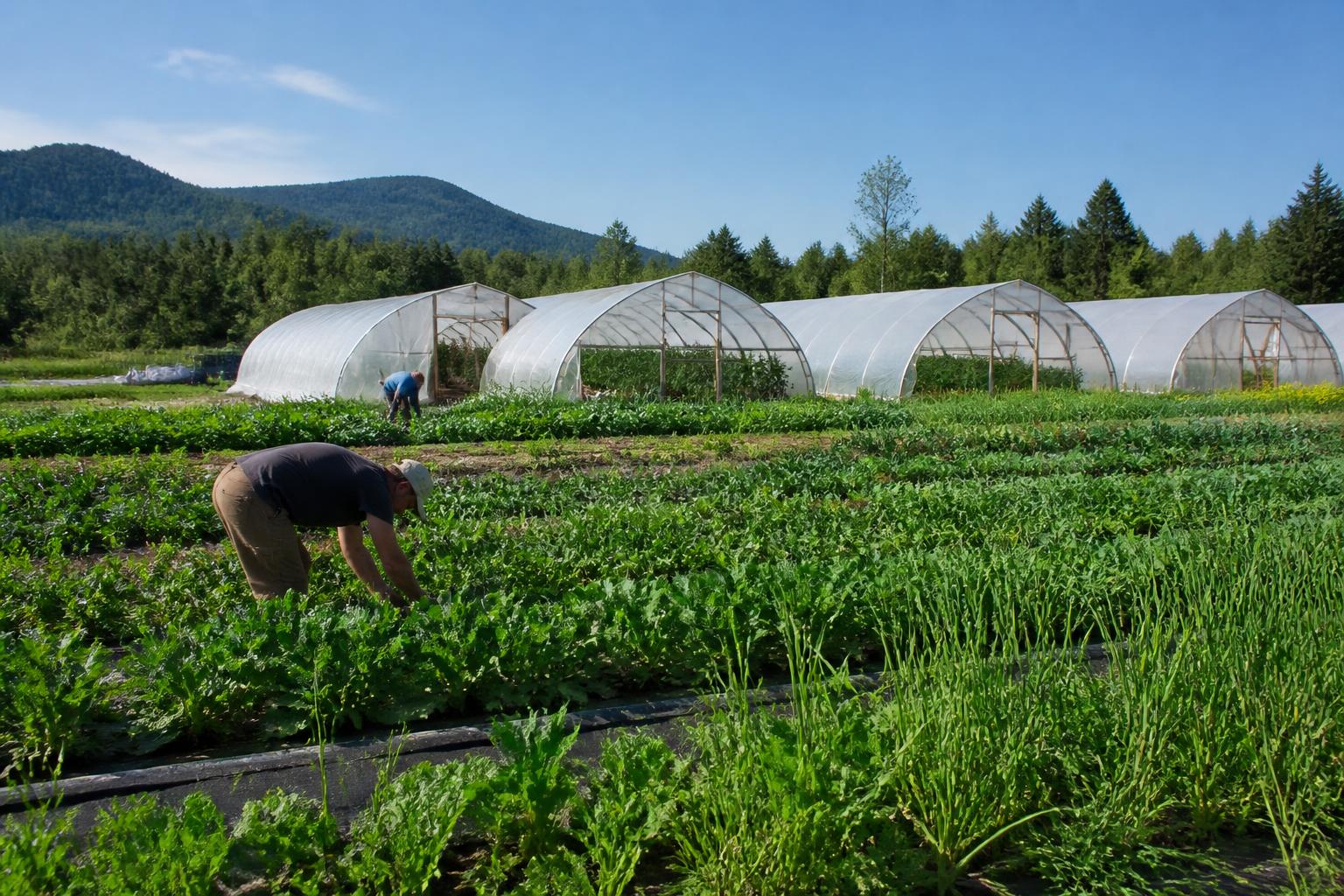
Because traditional growing seasons in high-latitude regions are brief, high tunnels have become a cornerstone of modern Alaskan agriculture. These unheated, plastic-covered structures protect warm-weather crops from cold northern winds and early frosts, allowing farmers to successfully harvest vegetables like tomatoes, peppers, and cucumbers that would otherwise struggle in the open air. This localized production helps buffer Alaskans against high shipping costs for fresh produce.
Simultaneously, grain and forage growers are looking closely at soil preservation. Nationwide trends show a steady upward trajectory for no-till and cover crop acreage, and Alaska is no exception. Due to the state's remote geography, getting specialized equipment to local fields is a massive undertaking. Recent efforts to transport no-till drills thousands of miles to Alaska underscore a growing local commitment to protecting delicate sub-Arctic topsoil from erosion while conserving fuel and moisture during the dry early summer months.
Coastal Kelp and the Blue Economy Face New Hurdles
Beyond dry land, Alaska's cold, nutrient-rich coastal waters are proving to be fertile ground for aquaculture. Kelp farming has emerged as a promising frontier, with new companies launching in places like Ketchikan to kick-start a commercial seaweed industry. Global demand for kelp is high, driven by its uses in food, bioplastics, and organic fertilizers.
Despite this strong demand, seaweed pioneers in Alaska are encountering complex regulatory and operational hurdles. Processing seaweed quickly after harvest requires specialized coastal infrastructure, and finding affordable processing facilities close to wild harvest sites remains a bottleneck for local growers trying to scale up to meet commercial volumes.
Navigating High Costs and Logistics
For prospective and expanding farmers, finding affordable land in Alaska is notoriously difficult. With limited infrastructure and high demand for real estate near major hubs like Anchorage and Fairbanks, startup costs can be prohibitive. Additionally, because much of the state's farm inputs must be shipped up from the lower 48 states, global fertilizer price spikes directly pressure local margins.
Managing these input shipments requires careful coordination. Producers must balance their seasonal supply needs while navigating Alaska's summer ag logistics, which often compete with tourism, construction, and resource extraction for limited barge and road transport capacity.
Key Takeaways for Alaskan Agribusinesses
- Season Extension: High tunnels remain essential for expanding the variety of fresh produce available for local markets.
- Conservation Tech: Interest in no-till drills and cover crops is rising as growers seek to protect soil health and reduce fuel inputs.
- Aquaculture Hurdles: While kelp farming holds immense potential, processing bottlenecks and regulatory hurdles continue to limit rapid expansion.
- Input Costs: High global fertilizer prices make efficient localized farming practices even more critical for maintaining profitability.
What it means for the market
Alaska's agricultural sector is transitioning toward high-efficiency, intensive production models. Because land is expensive and logistics are complex, success in the local market depends on maximizing yields per acre through tools like high tunnels and minimizing soil disturbance through no-till practices. For input suppliers and logistics providers, there is a clear, growing demand for specialized, high-efficiency equipment and localized processing solutions tailored to the unique transport realities of the sub-Arctic summer.
Comments
No comments yet — be the first to share your take.