
Weather Delays Wheat as Summer Crops Gain Soil Moisture
Recent generous rainfall across Arkansas has dramatically improved soil conditions, providing a welcome reprieve for corn, soybean, and rice fields. In many regions, the moisture has fueled rapid plant development and lightened the immediate demands on irrigation infrastructure. However, the timing of these rains has not been universally beneficial.
For winter wheat producers, intermittent rainfall has slowed harvesting progress. Wet fields have prevented combines from running consistently, raising concerns about potential quality degradation for grain left in the field. Additionally, while the rains have brought optimism to many, some low-lying areas in the state are still recovering from severe spring floods that ravaged farmland, leaving some growers facing long-term recovery challenges.
Strategic Management and Technological Solutions
With market projections from reports like the May WASDE indicating a mix of optimism and supply pressure for corn, soybeans, cotton, and rice, managing operational risk is more critical than ever. Arkansas rice and soybean farmers are actively employing diverse marketing and crop insurance strategies to mitigate price volatility. Key to this effort is maximizing input efficiency through all-inclusive fertilizer recommendations and targeted pest management.
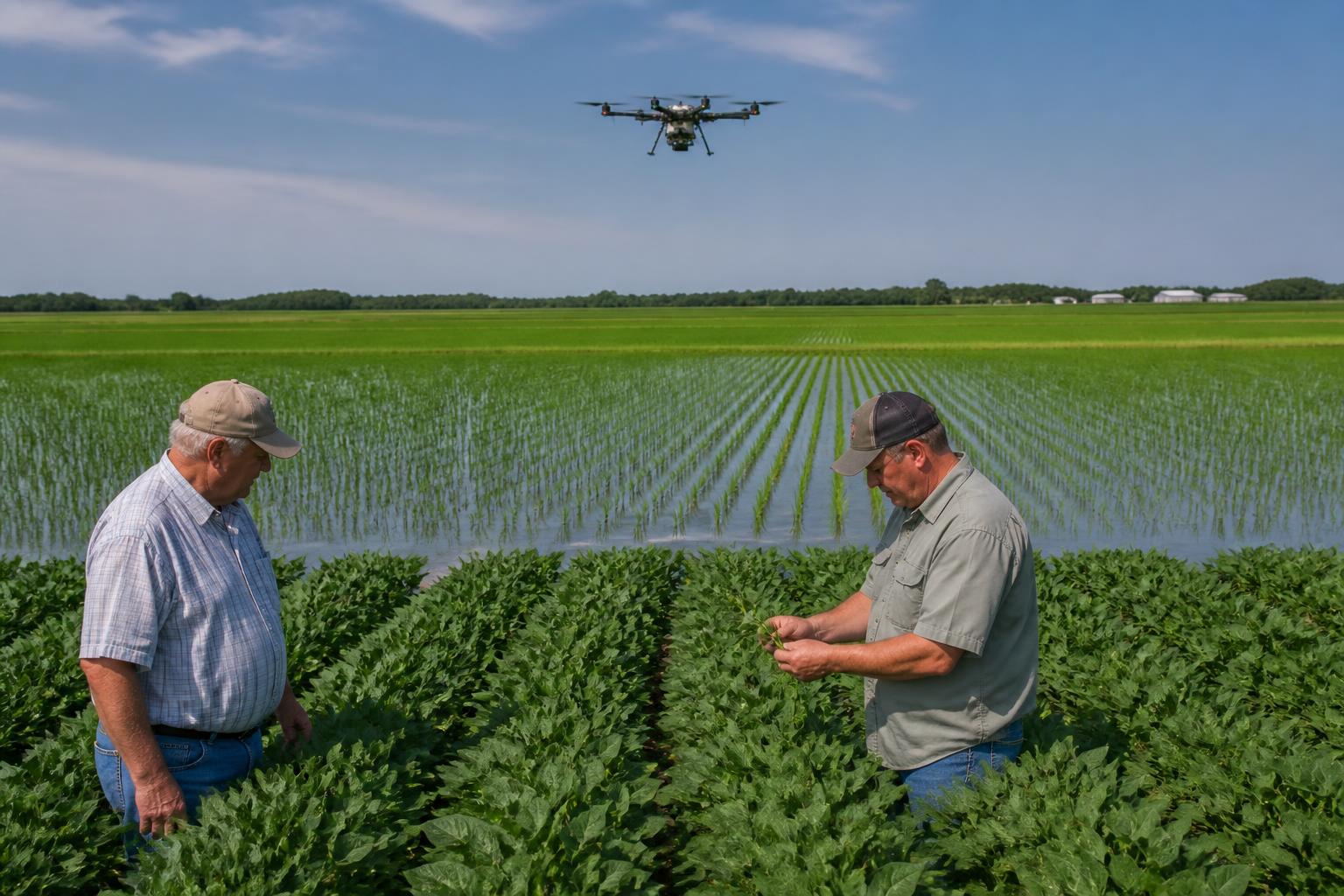
In addition to traditional management, researchers and growers are turning to new technologies to address systemic yield threats. For instance, recent scientific breakthroughs targeting the food supply of the destructive soybean cyst nematode offer fresh hope for long-term pest control. However, adopting new tech is not without regulatory hurdles; drone spraying applications, for example, have recently hit operational limits due to rigid pesticide label restrictions that have not yet caught up to unmanned aerial vehicle capabilities.
To cope with high input costs and complex regulations, growers are increasingly focusing on implementing high-tech agronomy in the Delta to ensure every acre remains profitable.
Policy, Bridge Payments, and Infrastructure Support
On the policy front, agricultural organizations are continuing to advocate for immediate financial stability. Farm groups have been actively pushing for bridge payments to help producers manage cash flow challenges before broader federal support measures, such as those related to the proposed OBBBA legislation, are fully enacted. These payments are seen as vital lifelines for operations dealing with both the immediate aftermath of flood damage and the sustained high costs of diesel, seed, and chemical inputs.
Key Takeaways for Arkansas Growers
- Moisture Balance: Generous summer rain has boosted corn and soybean potential but continues to delay the state's winter wheat harvest.
- Input Precision: Drone application limits and precise fertilizer planning require careful adherence to label guidelines and soil test recommendations.
- Pest Breakthroughs: Emerging research targeting nematode food sources could provide new biological tools for future soybean rotations.
- Policy Watch: Industry groups are lobbying heavily for near-term bridge payments to support farm liquidity during a volatile market cycle.
What it means for the market
The Arkansas grain market is operating in a tight window where weather patterns and operational execution will dictate final crop success. While positive demand signals exist for Delta crops, localized yield losses from earlier floods and ongoing wheat harvest delays emphasize the high-risk nature of this growing season. Buyers and grain elevators will likely monitor local crop progress closely as shipping lanes and river logistics adjust to summer volume expectations.
Comments
No comments yet - be the first to share your take.