
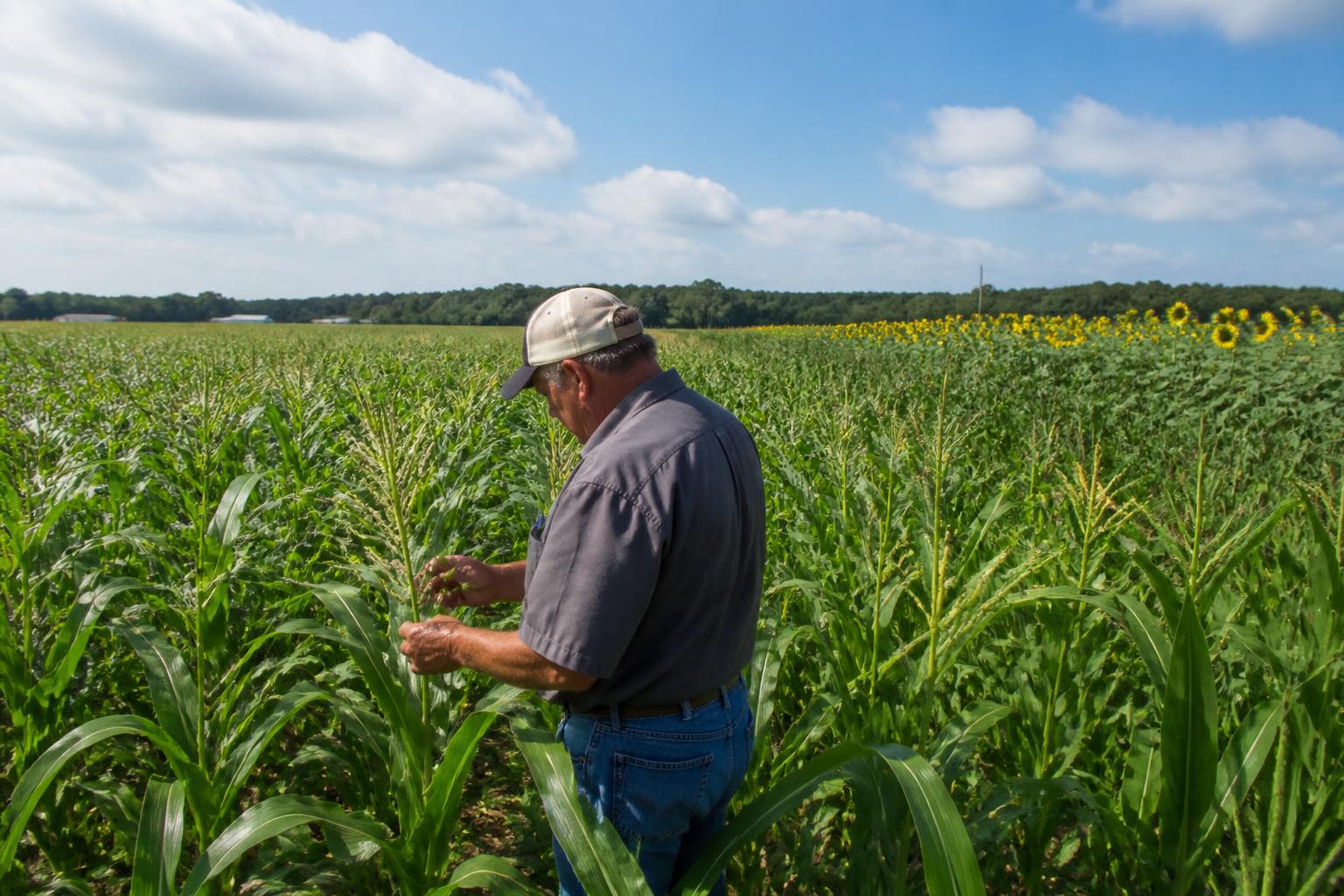
As summer temperatures rise across Georgia, grain producers are entering a critical phase of the growing season. With the state's diverse agricultural geography, spanning from the heavy clay soils of the Piedmont down to the sandy loam of the coastal plains, managing high-yield corn, sorghum, and wheat requires precise agronomic and post-harvest strategies.
Georgia growers have consistently demonstrated that the state's soils can support exceptional yields with the right management. Balancing crop nutrition, weed control, and post-harvest drying is essential to protect profit margins as the summer season progresses.
Maximizing High-Yield and Dryland Corn
Georgia corn growers have repeatedly made headlines in national yield contests, with top producers shattering regional records by exceeding 500 bushels per acre. These massive yields have sparked discussions about whether traditional soil fertility guidelines still hold up under such intense production. Agronomic research indicates that standard fertilizer recommendations remain remarkably valid and efficient, even for fields pushing toward these ultra-high yield levels.
For dryland corn growers who operate without the safety net of center-pivot irrigation, managing moisture stress is the primary challenge in the summer heat. Implementing best management practices, such as optimizing planting depth and population control, can help dryland crops withstand dry spells. Growers are also weighing the economic benefits of insect control; utilizing Bt corn and targeted pesticide applications typically pays off more clearly during periods of favorable commodity prices.
Protecting Crops from Pests and Weeds
Summer weed management remains top of mind, particularly for those using dicamba-based herbicides in corn. Growers utilizing these chemistry options must navigate strict application guidelines, buffer zones, and temperature considerations to prevent off-target drift. Additionally, managing insect pressure is critical to preserving grain quality as ears mature.
Beyond the fields, insect awareness has taken on a unique biosecurity dimension this season, with reports of Africanized honeybees detected in Georgia. While not a direct threat to grain yields, field workers, crop scouts, and equipment operators are urged to remain cautious when operating near structures, old equipment, and field edges where feral swarms may nest.
Post-Harvest Drying and Emerging Grains
Given the high humidity typical of Georgia's coastal plains and southern counties, proper grain drying and storage are critical to preventing spoilage and mold. Local growers have recently tested innovative solutions, including quieter, highly portable grain dryers that offer greater flexibility during the busy harvest window. Preparing storage bins ahead of time helps secure grain quality before it reaches regional distribution hubs. To understand how these local supply chain dynamics are shifting, growers can follow updates on how Georgia ag logistics expand to accommodate changing regional feed demands.
While corn remains a dominant focus, Georgia is also leading international research efforts to improve sorghum production and resilience. Additionally, winter wheat crops in South Georgia have demonstrated high yield potential, offering farmers valuable rotational options. For a deeper look at local marketing options, check out our analysis of the Georgia corn market.
Key Takeaways for Georgia Growers
- Input Efficiency: Standard fertilizer guidelines remain highly reliable even under high-yield management systems.
- Weed and Pest Management: Proper herbicide application timing and Bt trait selection help mitigate mid-summer crop stress.
- Storage Readiness: Investing in efficient, portable drying technology protects grain quality against humid southeastern conditions.
What it means for the market
For Georgia's grain market, the combination of high-yield potential and improved on-farm logistics means growers are better equipped to handle summer harvest pressure. By refining fertilizer efficiency and adopting advanced grain drying systems, farms can lower their cost of production per bushel. This operational efficiency is vital for maintaining competitiveness, especially as local feed mills and regional poultry producers navigate changing logistics and grain demand patterns in the southeastern United States.
Comments
No comments yet — be the first to share your take.