
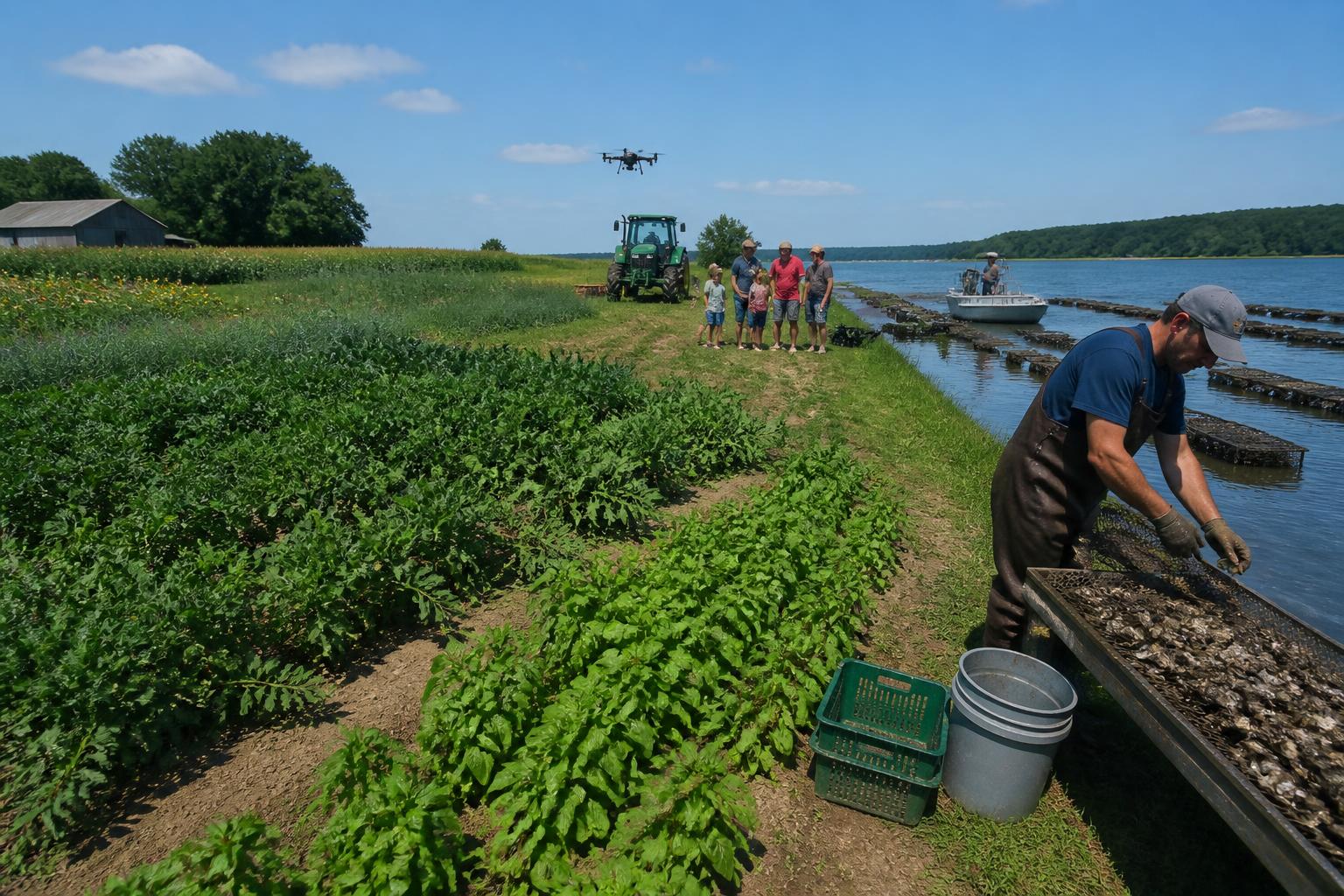
Maryland crop growers are navigating the mid-season summer stretch with a keen eye on input costs and nutrient efficiency. Following recent regulatory decisions on fertilizer tariffs that favored agricultural buyers, the pressure on synthetic input budgets has eased slightly. However, maximizing every pound of nitrogen and phosphorus remains a priority to protect margins and meet strict regional environmental standards.
A Policy Reprieve for Crop Nutrients
Farmers across the Mid-Atlantic have welcomed trade rulings that rejected or lowered duties on key imported fertilizer components. These tariff decisions have helped prevent further retail price spikes during critical application windows. For grain growers in Maryland's major production areas, such as Caroline County and the wider Eastern Shore, stable commercial input prices are essential to maintaining profitability alongside shifting poultry and grain market conditions.
To stay competitive, local producers are also monitoring Maryland agricultural transport developments, which directly impact the efficiency of moving both inputs and harvested crops through regional hubs.
Precision Placement in the Chesapeake Watershed
Summer heat and unpredictable rainfall patterns underscore the value of precision agriculture. By adopting advanced data-driven tools, Maryland farmers can optimize their side-dressing and foliar applications, using less to grow more. Precision systems help growers apply nutrients in variable rates, ensuring crops receive target nourishment without excess runoff. This is particularly vital in Maryland, where nutrient management plans are heavily scrutinized to protect local waterways. Next-generation biostimulants are also emerging as a complementary tool to enhance plant uptake and resilience.
Leveraging Regional Poultry and Dairy Nutrients
Maryland's diversified agricultural footprint provides unique opportunities for circular nutrient economies. In poultry-dense areas like Caroline County, chicken litter serves as a valuable and cost-effective organic fertilizer alternative for nearby corn and soybean fields. Similarly, local dairy farms, which frequently diversify their operations to remain resilient, contribute valuable organic manure. Utilizing these local resources helps buffer growers against global supply chain disruptions while supporting regional agricultural sustainability.
Key Takeaways
- Recent tariff rulings have brought some relief to commercial fertilizer budgets.
- Precision agriculture technology allows targeted summer nutrient application, lowering costs and reducing runoff risks in the Chesapeake Bay watershed.
- Diversified local systems, such as utilizing poultry litter on the Eastern Shore, provide vital nutrient alternatives.
What it means for the market
For Maryland agribusinesses and growers, the focus this summer is on efficiency rather than volume. Lower tariff pressures and strong local nutrient supplies mean that while synthetic input markets remain highly dynamic, growers have more leverage and tools to optimize their margins. Maintaining close relationships with local suppliers and leveraging precision data will be key to managing bottom-line risks through the remainder of the 2026 growing season.
Comments
No comments yet - be the first to share your take.