
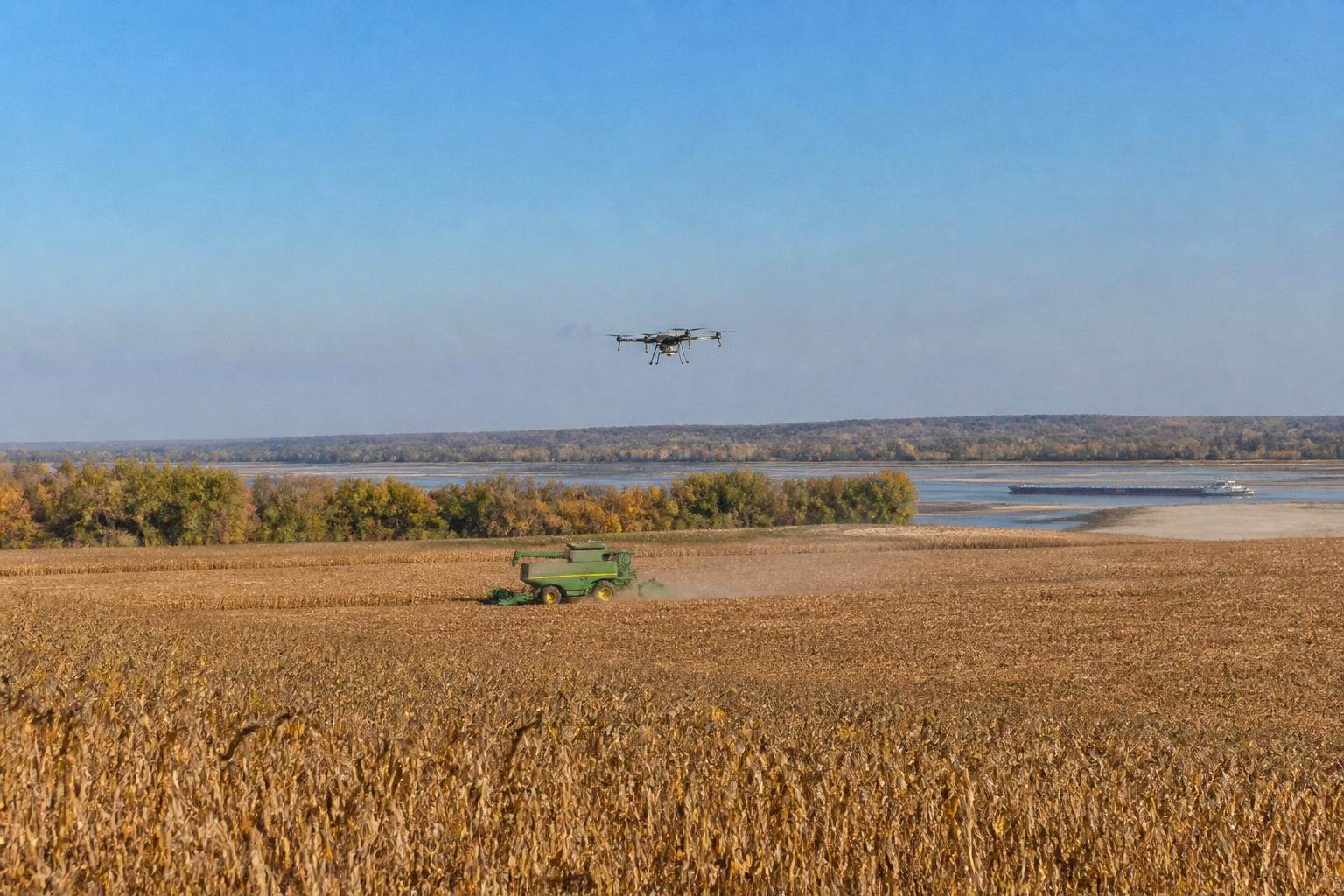
As Mississippi producers prepare for the peak of the fall harvest, the condition of the lower Mississippi River remains a critical factor for local grain markets. While recent weather patterns have provided some moisture for summer crops, the logistical pathways essential for moving bulk commodities toward export markets continue to face operational hurdles.
For growers and elevators across the Mississippi Delta, managing the flow of grain is compounded by restricted river depths. These low-water conditions often necessitate reduced barge loadings, which can create a bottleneck at regional port facilities. When river transit slows, the ripple effect on local grain basis levels is frequently felt, as elevators adjust to the increased costs of moving product to market.
Understanding Regional Logistics Risks
The reliability of river transit is essential for maintaining competitive export capacity, particularly when regional supply chains are under pressure. Historical data suggests that persistent, shallow river conditions can lead to increased freight volatility, forcing agribusinesses to consider alternative storage solutions or different transit timelines. It is advisable for producers to maintain close communication with their local grain handlers to understand how specific port capacities might shift as the harvest reaches its full pace.
Strategies for Operational Resilience
Beyond the river, the broader Mississippi agricultural landscape is increasingly leveraging data and technology to manage these logistical gaps. With regional academic institutions further cementing their roles in precision agriculture and drone-based monitoring, there is a growing trend toward using real-time information to optimize field efficiency and input management. Furthermore, for those looking to protect their financial standing amid market uncertainties, proactive financial planning and working with regional credit institutions remain foundational strategies to safeguard equity through the volatile autumn months. For more on navigating these complex logistics, see our guide on low river flows and their impact on harvest logistics.
What it means for the market
The outlook for the remainder of the season suggests that while crop potential remains, logistical precision will be the primary driver of profitability. Farmers should prioritize liquidity and monitor local basis closely as river levels fluctuate. Because river-based export channels often set the tone for regional pricing, any further contraction in transit capacity could sharpen the divergence between local cash bids and broader market benchmarks, making warehouse management and storage capacity more valuable than in typical years.
Comments
No comments yet - be the first to share your take.