
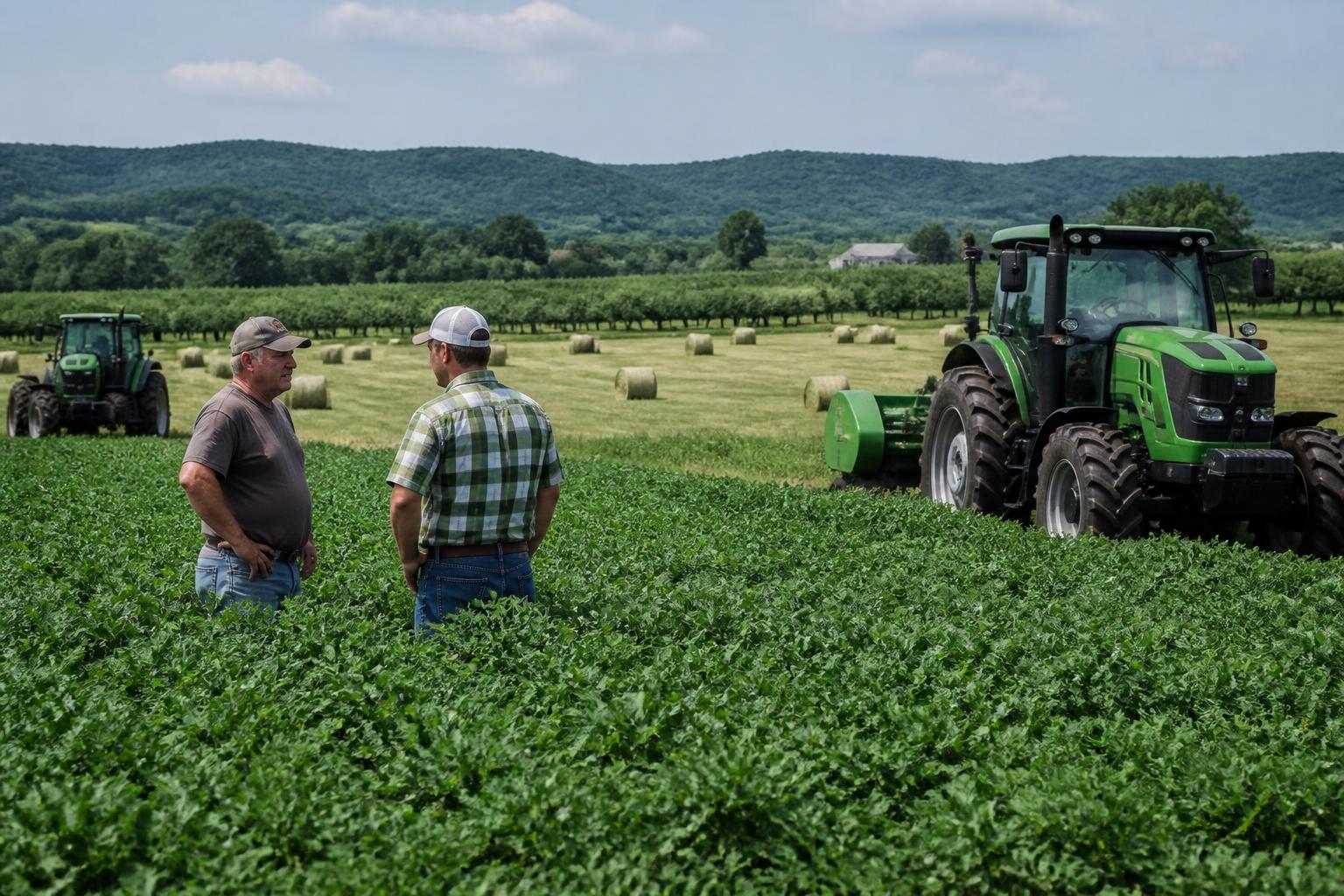
Summer transport patterns in West Virginia are undergoing significant shifts as local operators adjust to changing forage needs and modified harvest volumes. With regional logistics navigating the state's winding highway corridors, such as Interstate 79 and Interstate 64, agribusinesses are actively recalibrating their hauling strategies.
A tightening regional forage supply, combined with the aftermath of early-season weather events, is placing a premium on flatbed and specialized transport services. To manage these shifts, many operations are focusing on agricultural adaptations in West Virginia amid weather and market fluctuations to keep supply chains fluid.
Hauling the Hay: Forage Logistics Take Center Stage
West Virginia livestock producers are facing a looming hay shortage, which is driving up demand for long-distance forage transport. Typically, much of the state's hay is moved locally, but tighter local yields mean carriers are increasingly hauling hay from neighboring states into key cattle-producing counties.
This surge in flatbed activity comes at a time when fuel and driver availability remain critical variables. Agribusinesses must coordinate early with regional carriers to secure reliable lanes, particularly when navigating rural secondary roads that may have seasonal weight limits or challenging terrain.
Reduced Specialty Crop Volumes Ease Panhandle Reefer Demand
Conversely, the regional refrigeration and dry-van shipping landscape is seeing unexpected changes. A severe April freeze caused major crop losses for West Virginia orchard producers. With reduced fruit volumes to move from the state's traditional orchard regions, such as the Eastern Panhandle, local refrigerated transport demand is softer than usual for this time of year.
However, nursery and garden transport remains active, though it comes with strict biosecurity protocols. With the USDA detecting boxwood blight in West Virginia gardens, transporters hauling horticultural stock must prioritize trailer cleanliness and compliance to prevent spreading the pathogen across state lines.
Alternative Fuel Infrastructure and Input Planning
The broader logistics sector is also keeping an eye on new technology. For instance, the West Virginia University (WVU) research farm recently integrated new tractors powered by methane, highlighting a growing interest in alternative fuel models within the state's agricultural hubs.
While diesel remains the primary driver of heavy ag transport, these pilot projects represent long-term shifts in farm-level energy logistics. In the short term, securing conventional inputs remains a priority, and growers are utilizing specialized West Virginia fertilizer strategies to optimize pasture health while coordinating bulk deliveries during peak summer freight windows.
What it means for the market
For West Virginia farmers and transport coordinators, the summer of 2026 demands high flexibility. Tight hay supplies will keep flatbed logistics busy with incoming feed shipments, while reduced orchard yields shift local freight balances. Carriers and shippers who coordinate early, maintain strict trailer biosecurity, and monitor regional weight regulations will be best positioned to navigate these seasonal disruptions smoothly.
Comments
No comments yet - be the first to share your take.