
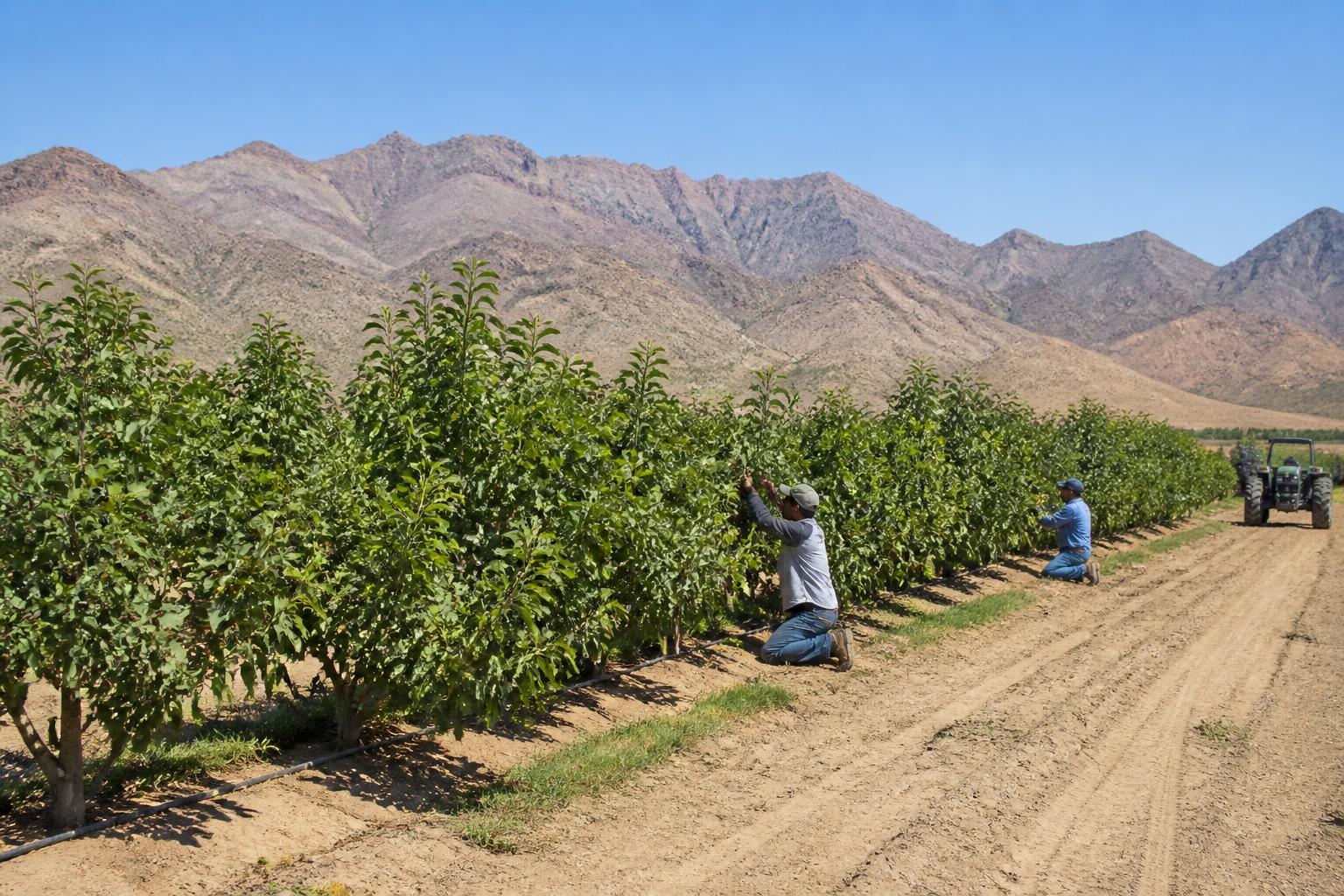
Arizona's intense summer heat is in full swing by late June, demanding highly strategic management of soil inputs and water resources. For desert growers in productive regions like Maricopa, Pinal, and Yuma counties, balancing high fertilizer costs with efficient application is crucial for sustaining crop yields in hyper-arid conditions. Managing nitrogen and specialty amendments during the hottest months requires precise timing to prevent volatilization, a key consideration for maintaining Arizona desert ag fertilizer efficiency in the June heat.
Alkaline Soil Challenges and Specialty Amendments
Desert soils across Arizona are typically alkaline, which can restrict the availability of essential micronutrients to crops. To combat this, growers frequently rely on sulfur-based soil amendments, including sulfuric acid and gypsum, to temporarily lower soil pH and improve nutrient uptake. This is especially vital as Arizona tree nut plantings, such as pistachios and pecans, continue to expand and require highly specific nutrient profiles to establish strong root systems.
In addition to tree nuts, desert durum wheat and summer forage crops require carefully calibrated nutrient programs. Because water management is strictly monitored by the Arizona Department of Water Resources, fertilizer application is often tied directly to irrigation schedules. Fertigation, the practice of running liquid fertilizers through drip or sprinkler systems, helps minimize waste but requires highly stable, soluble product formulations that resist breaking down under high temperatures.
Logistics Bottlenecks and Regional Infrastructure Challenges
Securing bulk fertilizers in the Southwest requires a robust transportation network, but local infrastructure friction can complicate supply chains. For instance, the Surprise City Council recently voted unanimously to oppose a planned BNSF railroad hub in Maricopa County, citing community concerns. While railroad developments are critical for the bulk transport of agricultural inputs like potash, urea, and liquid ammonia, local resistance highlights the ongoing logistical challenges of moving heavy materials into rapidly growing suburban-agricultural zones.
Without centralized regional distribution hubs, distributors and agribusinesses must rely more heavily on long-distance trucking, which can increase freight costs during peak summer shipping seasons. Weight restrictions and driver availability can further strain the movement of inputs from coastal ports or major manufacturing centers into rural Arizona farm gates.
Managing Volatile Input Costs
Input cost volatility remains a primary concern for farm advocates and agricultural economists nationwide. High fertilizer and seed costs continue to squeeze margins, leaving little room for application errors. In desert systems, where water is costly and evaporative losses are high, over-applying nitrogen not only hurts the bottom line but can also lead to environmental runoff and crop stress.
To mitigate these risks, many Arizona producers are turning to precision agriculture tools. Soil testing, variable-rate application, and crop-monitoring technologies allow growers to apply fertilizers only where and when they are needed most, optimizing every dollar spent on inputs.
Key Takeaways for Arizona Growers:
- Coordinate Fertigation: Time liquid applications precisely with irrigation cycles to maximize nutrient delivery and minimize evaporative loss.
- Monitor pH Levels: Utilize sulfur-based amendments to manage high-pH desert soils, unlocking bound-up nutrients for high-value tree crops and grains.
- Plan Logistics Early: Localized opposition to rail infrastructure developments suggests that truck-freight reliance will remain high; secure fertilizer volumes ahead of seasonal application windows to avoid shipping delays.
What it means for the market
The Arizona fertilizer market is defined by a delicate balance of water availability, high desert temperatures, and logistical realities. As global input prices fluctuate, local growers must prioritize application efficiency and regional transport availability over bulk buying. Agribusinesses that can offer stable specialty amendments, reliable delivery schedules, and precision application services will remain highly competitive in the desert Southwest throughout the summer season.
Comments
No comments yet - be the first to share your take.