
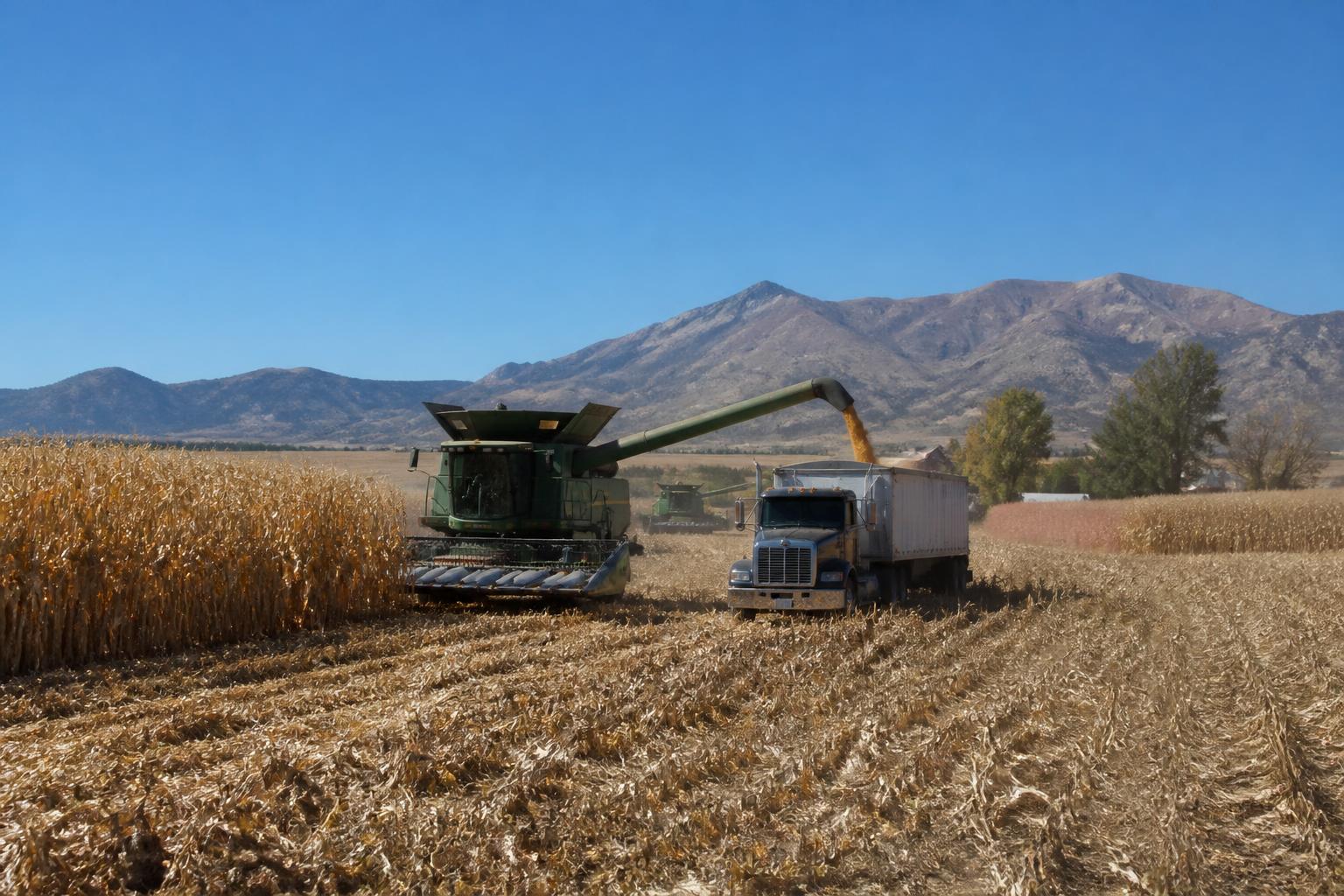
As the fall harvest moves into full swing across Utah, producers are contending with a persistent set of logistical challenges. While many operations are focused on maximizing yields during these critical weeks, the overhead associated with moving grain from the field to storage or local buyers remains a primary concern for the agribusiness sector.
High diesel prices continue to ripple through the agricultural supply chain. In regions stretching from the fertile lands fed by the Colorado River to operations near the Salt Lake City corridor, the cost of hauling grain is placing significant pressure on profit margins. For farmers managing the complexities of volatile input costs, these high fuel expenditures are often forcing a reevaluation of traditional transport and storage strategies.
Managing Storage and Transport Efficiency
For many local grain handlers and growers, the strategy for this season involves careful calculation regarding storage and market timing. With the high cost of machinery and transport, finding ways to mitigate expenses is becoming a priority. Some producers are exploring the use of financial tools, such as call options, as a way to offset the costs associated with extended grain storage during periods of market uncertainty.
Additionally, the regional labor market remains tight, impacting the speed at which some operations can process and transport their harvest. As agricultural businesses seek to optimize their workflows, there is an increasing interest in leveraging technology for fleet orchestration, though the primary focus for most remains the immediate logistical hurdle of getting grain safely into bins before the onset of more severe seasonal weather.
What it means for the market
The convergence of high fuel prices and logistical constraints suggests that Utah producers will continue to prioritize efficiency this season. Those who can navigate the current transport bottlenecks while effectively managing their storage strategies may find a clearer path to profitability. For the broader market, this underscores the necessity of lean operational management as producers head into the final stages of the harvest cycle.
Comments
No comments yet - be the first to share your take.