
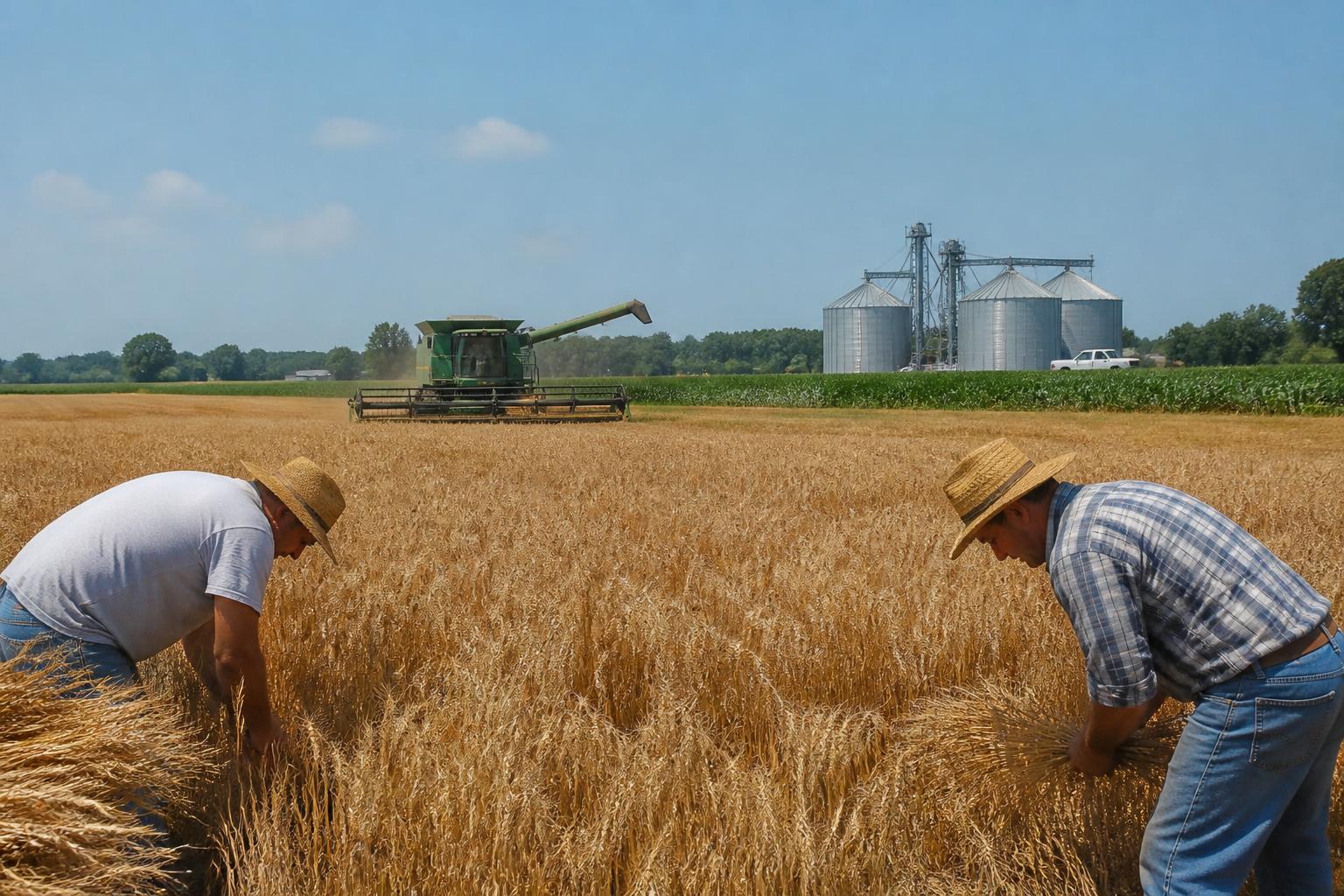
Maryland grain growers are navigating a complex summer harvest season as a mix of high yield potential and disruptive weather patterns creates both opportunities and logistical bottlenecks. From the Eastern Shore to the rolling hills of Carroll County, local farms are working through tight harvest windows to bring in this year's winter wheat crop before quality degrades.
While early yield reports remain highly encouraging across the Mid-Atlantic region, persistent rain events have slowed field progress to a crawl in many parts of Maryland. For local agribusinesses and grain handlers, managing moisture levels and coordinating transportation routes have quickly become top priorities for the summer season.
Yield Potential vs. Summer Weather Bottlenecks
Despite a wet spring that raised concerns about potential crop diseases, Mid-Atlantic wheat yields have returned surprisingly strong numbers. Many Maryland growers are reporting robust bushels-per-acre averages, reflecting resilient crop genetics and effective management strategies. However, the transition from field to bin has been anything but smooth.
Heavy summer downpours have repeatedly interrupted harvesting machinery, forcing farmers to wait out wet field conditions to avoid soil compaction and grain damage. High moisture content in harvested grain not only increases drying costs at the cooperative but also elevates the risk of storage mold and sprout damage, making weather monitoring a daily necessity for local operators.
The Storage and Marketing Dilemma
With grain prices experiencing volatility, Maryland farmers are carefully weighing their post-harvest marketing options. Deciding whether to store unpriced grain or sell directly from the field is a critical financial puzzle. While on-farm storage offers flexibility to wait for potential market rallies later in the year, it also carries risk, particularly when wet crops require extensive conditioning.
Additionally, storing grain demands strict attention to infrastructure safety. As grain handling equipment, bins, and augers run at maximum capacity during the summer rush, safety experts urge operators to maintain rigorous maintenance schedules to prevent farm accidents and preserve grain quality throughout the storage cycle.
Logistics and Regional Ag Infrastructure
Efficient transportation remains the lifeblood of Maryland's agricultural economy, especially when wet conditions compress harvest schedules. Moving grain from local fields to regional processing hubs requires a highly coordinated network of roads, trucks, and rail terminals. Utilizing a new transloading facility in Maryland is helping some growers diversify their marketing channels and ease local bottleneck pressures.
Moreover, keeping an eye on broader infrastructural developments is essential for long-term planning. Adapting to shifts in Maryland ag transport and logistics changes allows local grain handlers and carriers to optimize their routes and manage transit times effectively, even during peak delivery windows when highways and port corridors are heavily congested.
Key Takeaways for Maryland Producers
- Monitor Moisture Closely: Prioritize fields that are vulnerable to lodging or quality loss from repeated rain delays.
- Evaluate Drying Costs: Calculate the trade-off between commercial drying fees and the risks of delaying harvest for field-drying.
- Review Safety Protocols: Ensure all augers, power take-offs, and bin sweep systems are fully inspected before handling large grain volumes.
What it means for the market
The combination of strong local yields and weather-related harvest delays is creating localized supply pressures. While overall grain volumes are supportive of regional demand, temporary logistical slowdowns may cause short-term fluctuations in local basis delivery bids. Farmers who maintain flexible delivery options and secure adequate drying capacity will be best positioned to protect their profit margins as the summer double-crop planting window closes.
Comments
No comments yet — be the first to share your take.