
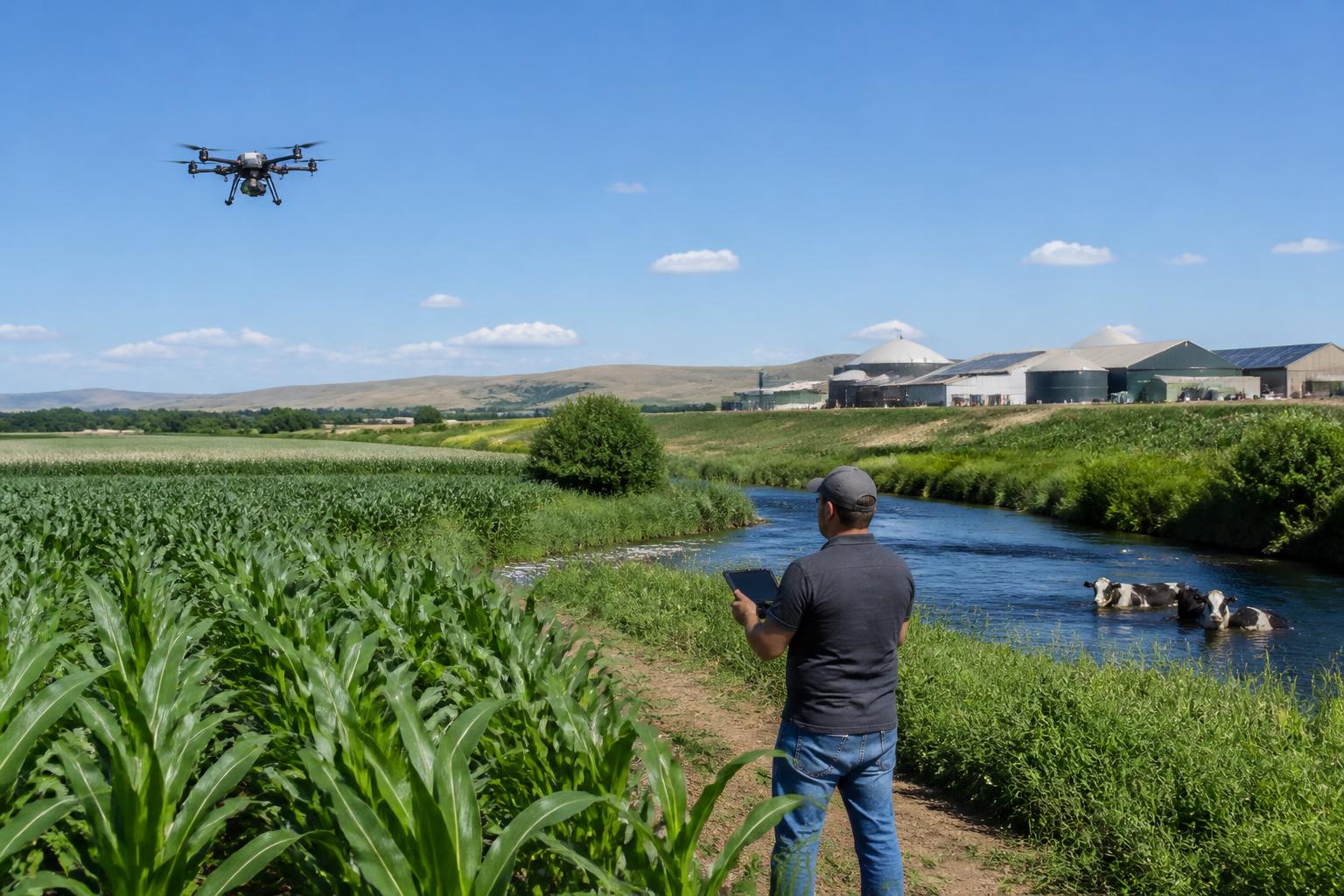
Idaho's dairy and agricultural sectors are experiencing a significant shift toward circular economy practices, driven by a growing integration of waste management, bioenergy production, and nutrient recycling. As dairy operators seek new revenue streams and grain and potato growers look to stabilize input costs, anaerobic digestion has emerged as a key bridge between these two vital industries.
A major milestone in this transition was reached with Clean Energy Fuels launching renewable natural gas (RNG) production at a major Idaho dairy farm. While these projects are primarily celebrated for their energy yields and greenhouse gas reduction, they also play an increasingly important role in the regional fertilizer market by generating high-quality organic digestate and recycled nutrients.
The Intersection of Methane Capture and Soil Nutrients
When large-scale Idaho dairies process manure through anaerobic digesters, the process extracts methane to create RNG. However, the valuable plant nutrients—specifically nitrogen, phosphorus, and potassium—remain in the digestate. This byproduct can be separated into liquid and solid fractions, offering local crop producers a highly consistent, pathogen-free, and nutrient-dense fertilizer alternative.
In many of Idaho's primary farming regions, such as the Magic Valley, utilizing digested dairy nutrients helps reduce dependency on volatile synthetic nitrogen and imported potash. Because digestate contains organic matter, its application also assists in improving soil structure and water-holding capacity, which is vital during dry summer months.
Logistical Benefits for Idaho Growers
Logistics often dictate the true cost of fertilizer in the Pacific Northwest. Idaho growers, particularly those located far from deep-water ports or major domestic manufacturing hubs, frequently face steep trucking and freight surcharges. Localized nutrient distribution from regional dairy digesters offers a partial buffer against these supply chain bottlenecks.
Furthermore, as the Idaho summer ag outlook remains focused on precision input management, the availability of processed organic fertilizers allows for highly targeted application strategies. This is especially useful for growers managing specialized potato, sugar beet, and wheat rotations where precise nutrient timing is critical to final crop quality.
Key Takeaways for Idaho Agribusinesses
- Local Nutrient Security: Regional RNG digester projects provide a consistent, locally sourced supply of organic digestate, shielding growers from international fertilizer market volatility.
- Freight Efficiencies: Utilizing manure-derived nutrients produced within county lines lowers transportation costs and simplifies logistics during peak summer application windows.
- Soil Health and Compliance: Processed digestate provides organic matter that improves soil biology, aligning with growing consumer and corporate demands for regeneratively grown crops.
What it means for the market
The expansion of RNG projects at Idaho dairy facilities is more than an energy play; it represents a structural shift in how regional nutrients are managed and distributed. For fertilizer buyers, grain elevators, and agricultural suppliers across the state, these developments signal a maturing market for bio-based inputs. As more digestion facilities come online, the availability of localized, predictable, and soil-friendly nutrients will likely become a cornerstone of Idaho's seasonal fertilizer supply chain, helping to insulate local producers from global market shocks.
Comments
No comments yet - be the first to share your take.