
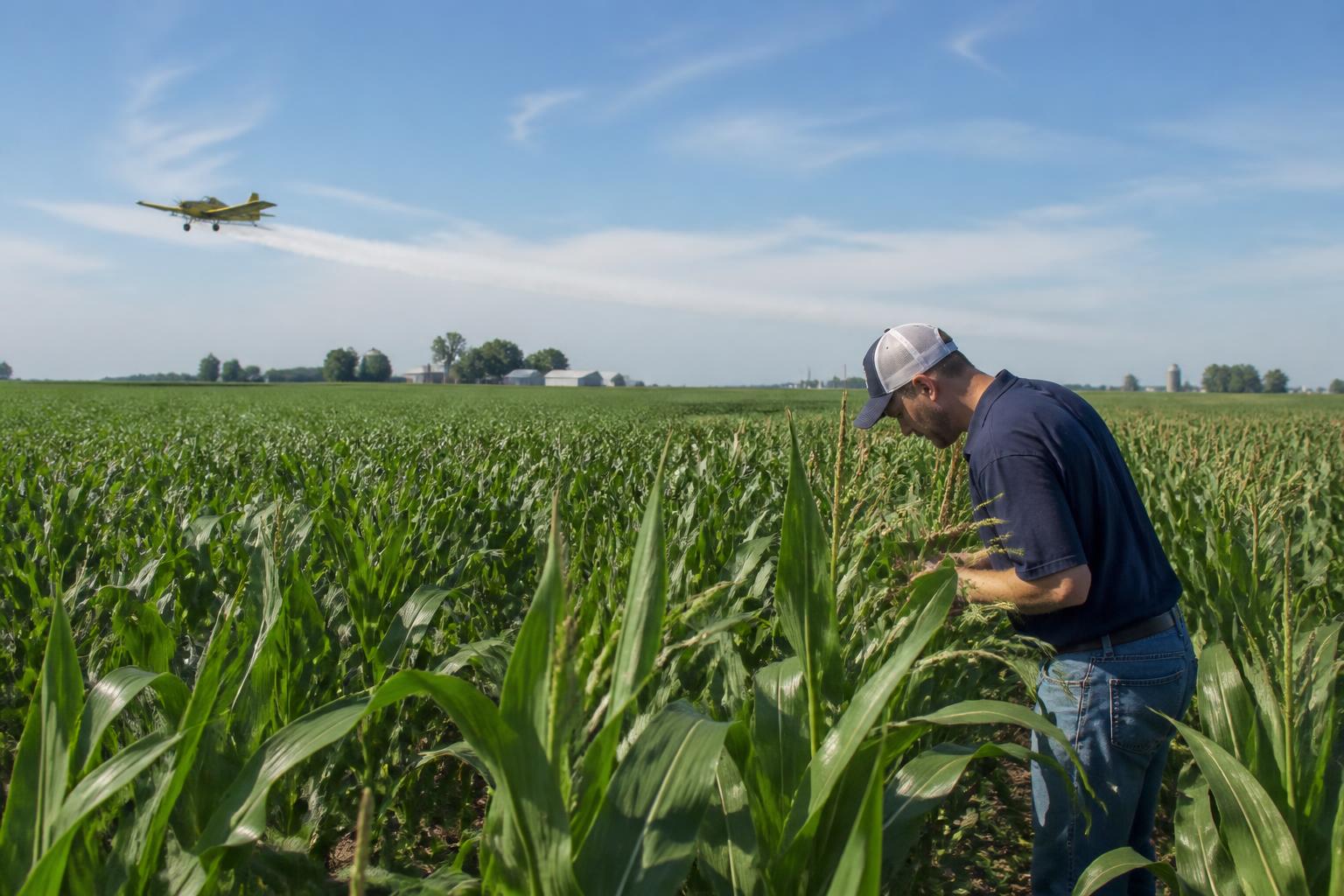
As summer settles across Illinois, growers are actively monitoring fields during a critical phase of the vegetative season. While seasonal rains have brought needed moisture to some areas, they have also intensified weed pressure and created operational challenges for timely field applications. Securing crop health through the summer requires a proactive approach to emerging pests and a sharp focus on application safety.
The Emerging Threat of Asian Copperleaf
Illinois farmers face a relatively new weed threat that is raising concerns among agronomists: Asian copperleaf. This invasive weed has begun to threaten Illinois crops, demanding close field scouting. Unlike common waterhemp or marestail, Asian copperleaf can be difficult to identify in its early stages, yet it possesses the potential to spread rapidly in typical corn and soybean rotations. Agronomists recommend that growers walk their fields to spot infestations early, as chemical control options are most effective when the weed is small.
Managing this pest adds another layer of complexity to seasonal spray schedules, especially when navigating state-specific regulatory deadlines. For detailed strategies on managing regulated inputs alongside summer weed control, growers can reference our updated Illinois crop protection guide.
Aerial Application Safety: Planes and Drones
With wet field conditions often delaying ground rigs, aerial application has become an increasingly vital tool for applying fungicides, insecticides, and late-season herbicides. Crop dusting, whether performed by traditional piloted planes or emerging agricultural drone technology, offers rapid coverage without risking soil compaction along heavy transport corridors like the Interstate-55 and Interstate-39 agricultural belts.
However, safety remains a critical priority for both manned and unmanned operations. Drone applications are gaining traction due to their precision and ability to target smaller, irregular field boundaries. Traditional crop-dusting planes still lead for high-volume, rapid-coverage needs. Regardless of the platform, operators must closely monitor wind speeds, temperature inversions, and droplet sizes to prevent off-target drift, which can lead to costly damage to neighboring crops and native vegetation.
Soil Protection and Climate-Smart Agriculture
Protecting crops also involves protecting the soil. The adoption of climate-smart agricultural practices, such as no-till farming, is gaining renewed attention in the state. Inspired in part by international practices, including those brought to the region by South American agronomy experts, Illinois growers are exploring how no-till and cover crops can improve water retention and soil structure during extreme summer weather. Adapting these methods requires evaluating the economic balance of climate-smart inputs against traditional tillage costs, helping farmers build resilience while keeping an eye on long-term profitability and crop health management in Illinois.
Key Takeaways for Summer Field Management
- Scout Aggressively: Look for Asian copperleaf and other late-emerging weeds along field edges and low-lying areas.
- Optimize Application Methods: Balance the speed of traditional aerial crop dusting with the precision of drone technology depending on field size and topography.
- Evaluate Soil Health: Consider integrating no-till or reduced-tillage practices to safeguard soil moisture during hot summer intervals.
What it means for the market
With crop protection costs representing a substantial portion of summer operating budgets, Illinois farmers must make highly strategic input decisions. Effectively managing emerging weed threats like Asian copperleaf and utilizing precise application technologies will protect yield potential at a time when market returns require maximum efficiency. Protecting the crop today ensures better storage options and marketing leverage as the state prepares for the upcoming harvest season.
Comments
No comments yet — be the first to share your take.