
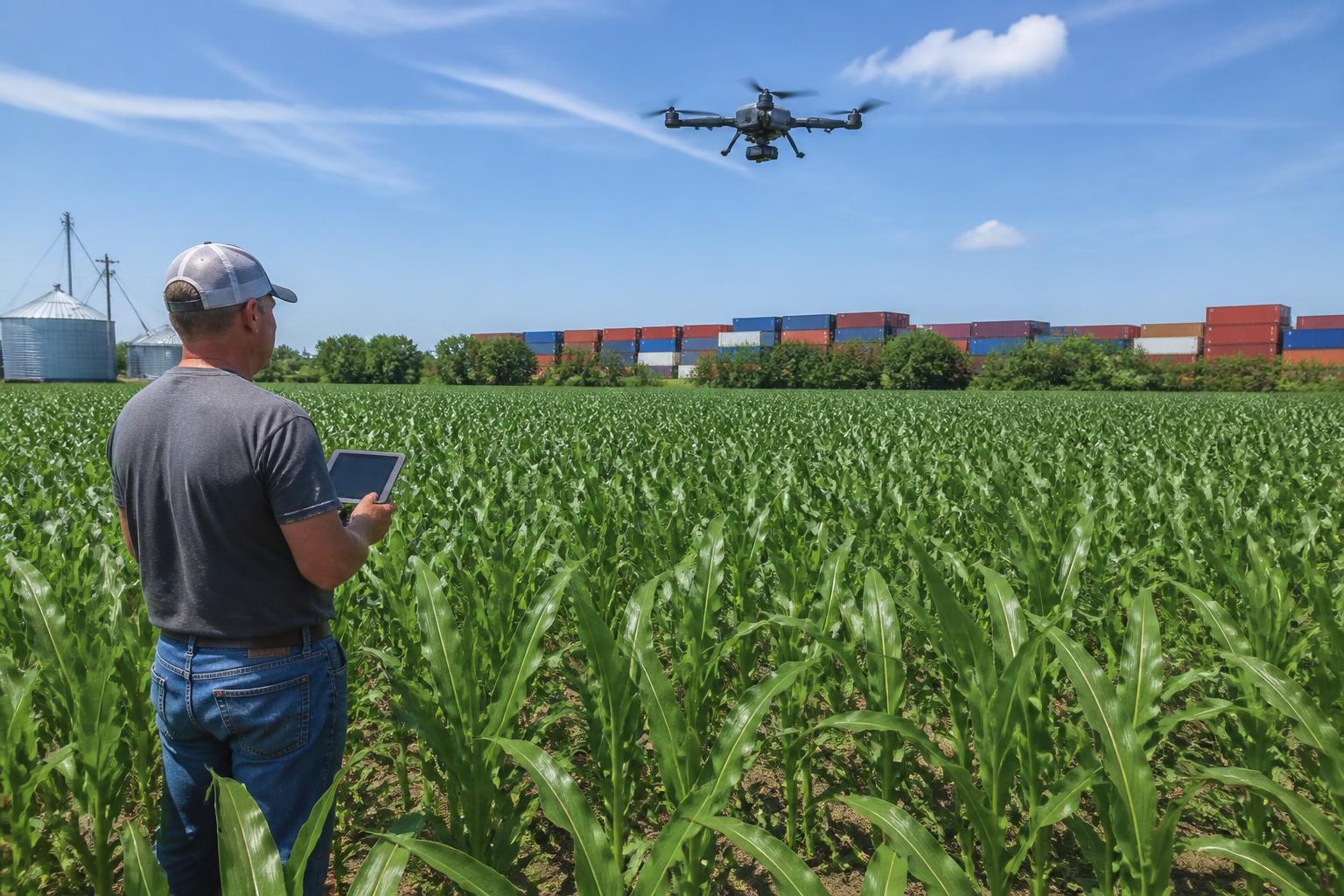
As the Illinois growing season reaches its peak in late June, farmers across the state are facing the annual challenge of aggressive weed pressure and emerging pest threats. With corn and soybean crops rapidly closing canopy in counties from McLean to Sangamon, the window for effective post-emergence herbicide applications is tightening. To combat tough, herbicide-resistant weeds while managing input costs, agricultural operators are increasingly adopting precision application technologies and innovative chemical formulations.
Achieving optimal coverage during the summer months requires a delicate balance of timing, weather monitoring, and advanced machinery. To stay ahead of resistant weeds, growers can refer to the Illinois Crop Protection Guide to plan their late-season applications safely and avoid off-target drift.
High-Tech Application: Drones Take Flight in Illinois Fields
Precision agriculture is undergoing a significant transformation in Illinois, driven by the rapid adoption of unmanned aerial vehicles (UAVs), or spray drones. These high-tech tools are changing how local farmers approach crop protection, particularly in fields with irregular boundaries or where wet soils prevent heavy ground rigs from entering without causing compaction.
Drones allow for highly targeted, spot-spraying applications, reducing the overall volume of chemical inputs needed. This level of precision is especially beneficial in hilly regions of western Illinois or near sensitive waterways, where run-off is a constant concern. By delivering crop protection products directly to weed patches rather than broadcasting across entire fields, growers can cut chemical expenses while minimizing environmental footprints. This is especially true when tracking early disease and nutrient challenges that require precise, mid-season applications.
Managing Weed Pressures with Next-Gen Tank Mixes
As weed species like waterhemp and palmer amaranth continue to show resistance to common herbicides, Illinois agronomists are highlighting the value of new tank-mix technologies. Recent field trials have focused on innovative tank-mix additives designed to improve both the longevity and the performance of weed-control applications.
These new formulations help stabilize active ingredients, ensuring they remain on the leaf surface longer and penetrate tough weed cuticles more effectively. This increased residual activity helps farmers reduce the need for multiple passes over the field, saving on fuel, labor, and machinery wear. Additionally, with changing regulatory cutoff windows, application timing and product efficiency are more critical than ever during the hot summer months.
Long-Term Soil Health and Conservation
Modern crop protection in Illinois is no longer just about the current season; it is increasingly tied to long-term soil health and conservation practices. Long-term agricultural research, such as the historic Morrow Plots in Champaign County, has long demonstrated that crop rotation and thoughtful soil management are vital to sustaining yields over decades.
By integrating precision chemical applications with cover cropping and minimal tillage, Illinois farmers are protecting valuable topsoil from heavy summer rainstorms. This holistic approach ensures that chemical applications work in harmony with the natural soil biology, preserving the land for future generations while keeping input costs manageable today.
Key Takeaways for Illinois Growers
- Embrace Precision: Consider drone-based spot spraying for hard-to-reach areas or wet fields to reduce soil compaction and chemical waste.
- Optimize Tank Mixes: Utilize advanced tank-mix technologies to extend the residual activity of herbicides and reduce the need for repeat applications.
- Prioritize Long-Term Health: Pair chemical weed control with conservation strategies to protect soil structures and build organic matter.
What it means for the market
For the broader Illinois agribusiness sector, the shift toward precision crop protection is driving a more efficient use of resources. As input costs remain a primary concern for farm profitability, the adoption of drone technology and advanced tank mixes allows operators to protect yield potential without over-purchasing chemicals. In the long run, these efficiencies help keep Illinois grain competitive in domestic and global markets, ensuring robust supply chains even during challenging growing seasons.
Comments
No comments yet - be the first to share your take.