
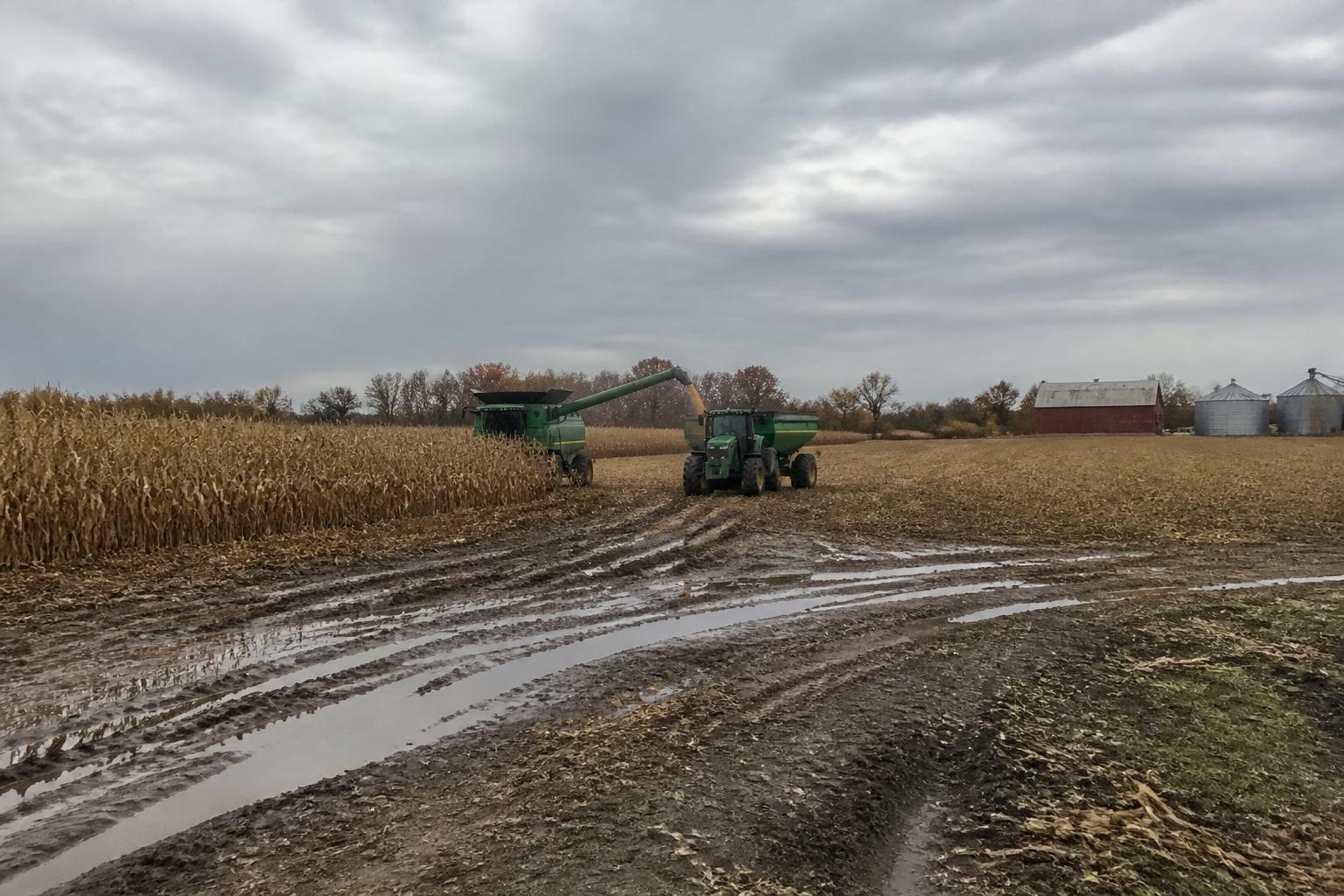
Oklahoma producers are currently navigating a challenging landscape marked by historic rainfall patterns and evolving market data. As farmers across the state assess their operations, the combination of saturated soil and new reports on grain stocks is driving a cautious approach to seasonal management.
While conditions vary significantly from the Panhandle to the Red River, the impact of excessive moisture remains a primary concern for field accessibility and late-season logistics. Maintaining awareness of local grain market trends is essential for those balancing harvest operations against the realities of a wet landscape.
Evaluating the Impact of Excess Moisture
The recent trend of high precipitation across the Midwest has created logistical hurdles for many agribusinesses. In Oklahoma, while conditions may differ from northern regions, the cumulative effect of a record-wet period often translates into delayed field work and increased scrutiny of grain quality. Elevators and producers are keeping a close watch on storage moisture levels, as persistent humidity can create localized bottlenecks in moving supply to regional terminals.
Interpreting Recent Small Grains Data
The latest USDA grain stocks and small grains reports are providing a new baseline for market participants. For Oklahoma, the challenge lies in reconciling these national shifts with local storage capacity. As market analysts weigh these figures, producers are encouraged to focus on their specific regional basis levels and the availability of transport, which can become strained when harvest windows are compressed by weather events.
Key Takeaways for Oklahoma Producers
- Monitor soil saturation levels closely, as these may dictate the timing of equipment movement and field access.
- Review current grain storage strategies to mitigate risks associated with high ambient moisture.
- Maintain clear communication with local elevators regarding transport capacity and potential delivery delays due to regional road conditions.
What it means for the market
The convergence of historically wet conditions and updated stock reports suggests a period of price sensitivity and logistical caution. Oklahoma farmers should prioritize operational flexibility, ensuring that grain handling and transport plans account for weather-related disruptions that may affect delivery timelines in the coming weeks.
Comments
No comments yet - be the first to share your take.