
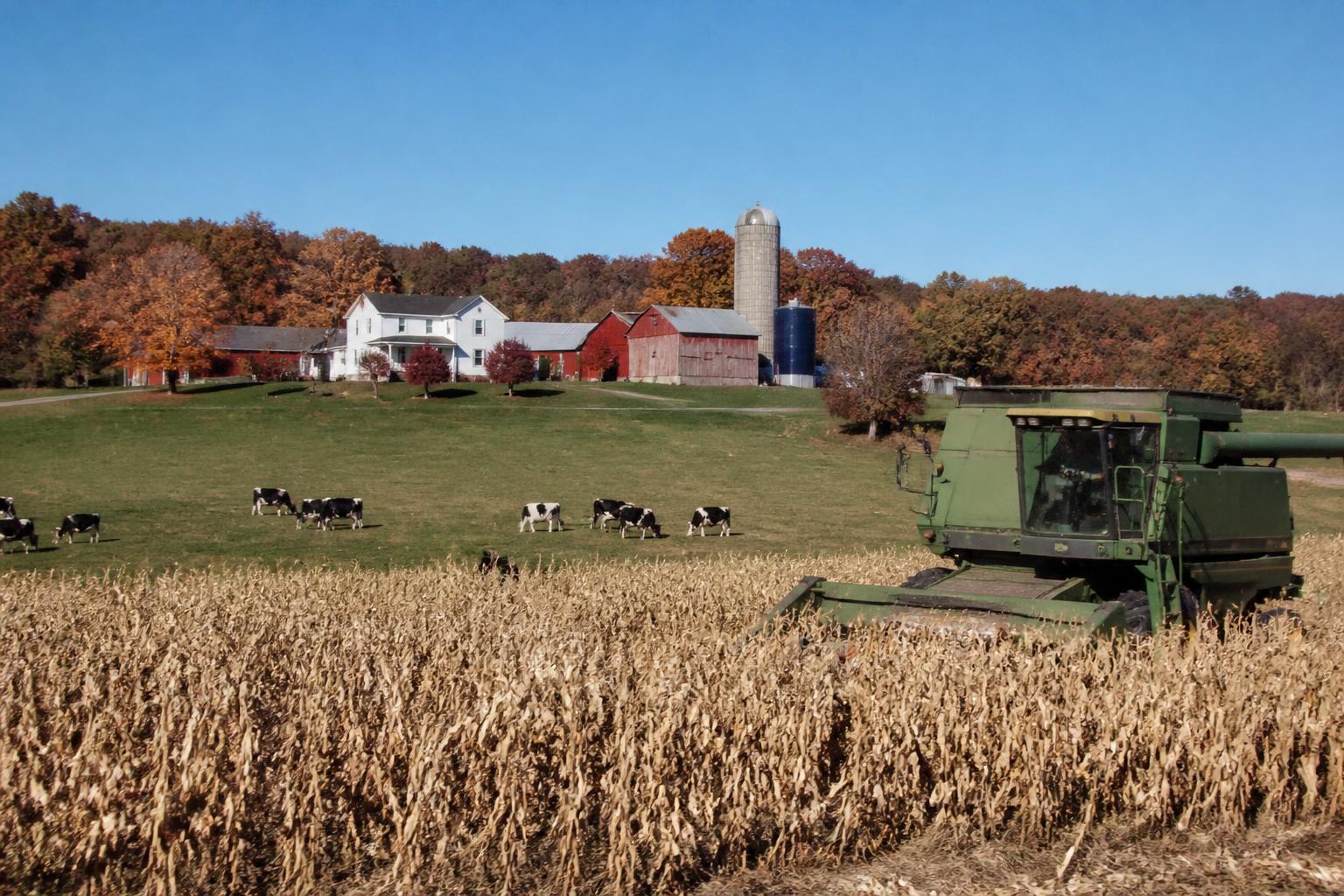
As the fall harvest season concludes across Delaware, local producers are increasingly focused on balancing tight margins with the practical realities of land management. Whether operating in the fertile corridors of New Castle County or the expansive fields of Sussex, the combination of input cost volatility and environmental pressures continues to shape the end-of-year outlook.
Understanding the link between grain market shifts and local production costs is essential for Delaware operations looking to maintain financial stability. Growers are currently evaluating their data from the recent cycle to plan for upcoming nutrient management needs and input purchasing, ensuring that investments remain aligned with realistic yield expectations.
Addressing Operational Risks
Beyond the market price of commodities, Delaware farmers are actively addressing localized production challenges. The state has recently prioritized a $1.5 million program aimed at mitigating deer damage, a significant concern that can reduce harvestable yields and complicate budget projections. Protecting the integrity of the crop remains as vital as tracking national shipping trends or global trade fluctuations.
Furthermore, the industry is seeing a renewed emphasis on long-term sustainability. Recognizing stewardship efforts across the state not only highlights the resilience of Delaware agriculture but also provides a roadmap for managing inputs more efficiently. Producers are encouraged to keep a close eye on their soil nutrient profiles, especially as local commissions continue to spotlight best practices in dairy and crop farming.
Planning for Market Resilience
With harvesting nearing completion, market participants are looking toward the next phase of the supply chain. For those managing grain storage or looking for local outlets, maintaining accurate records of production costs remains a primary hedge against market uncertainty. As producers analyze their performance, it is clear that navigating the intersection of regional grain pricing and storage logistics will define the profitability of the coming winter months.
What it means for the market
For Delaware agribusinesses, the current environment demands a focus on internal cost controls and proactive field management. By leveraging available state resources for crop protection and staying aligned with local market dynamics, farmers can better position themselves to absorb external volatility in global grain and input prices.
Comments
No comments yet - be the first to share your take.