
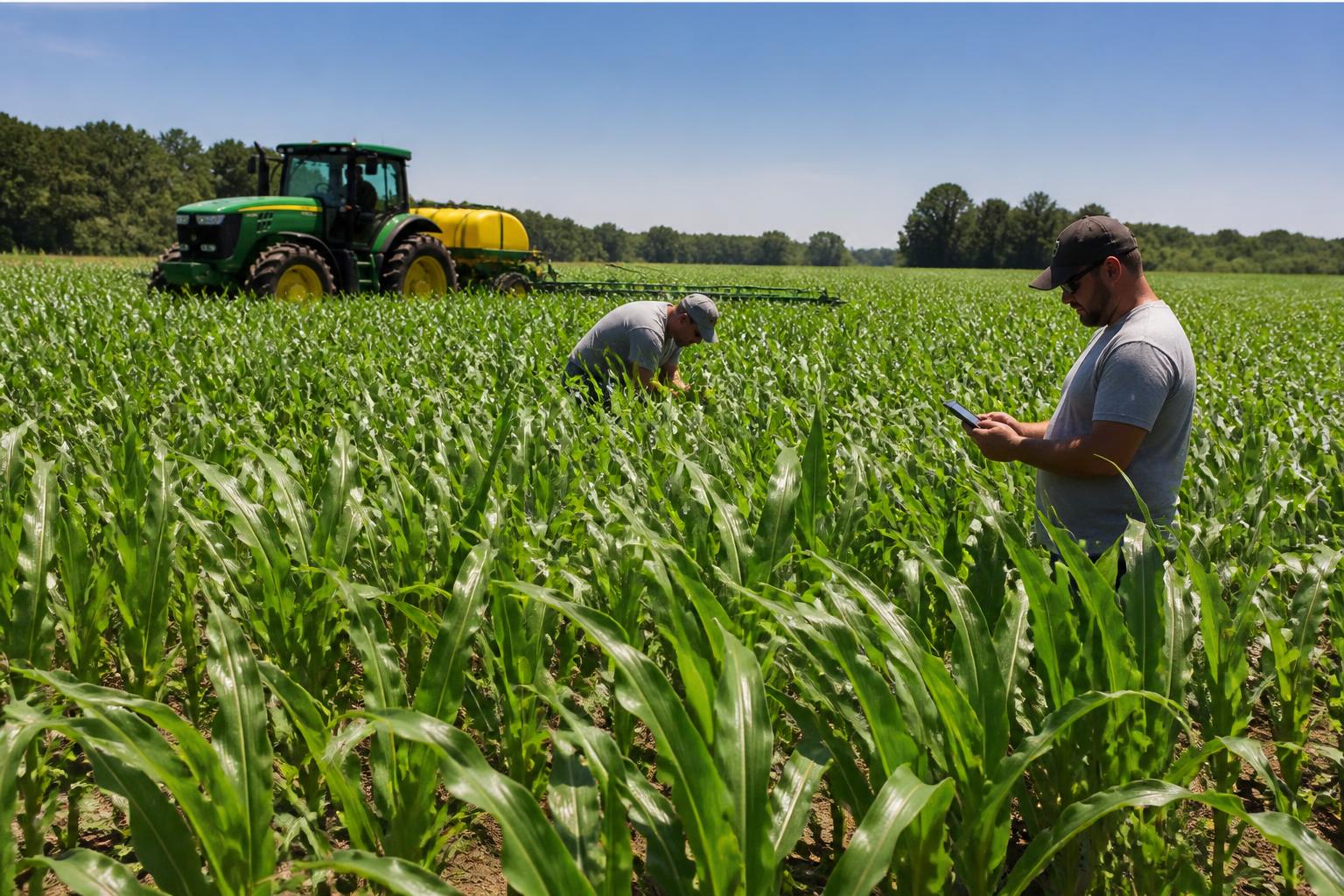
North Carolina farmers are navigating a shifting retail fertilizer market this summer as they seek to optimize nutrient management strategies. After experiencing periods of volatile pricing-where anhydrous ammonia has historically fluctuated between $940 and over $1,000 per ton, and products like urea and UAN32 have shown mixed retail adjustments-growers across the state are focusing heavily on precision application to protect their bottom lines.
With major crop nutrients showing mixed price trends rather than sharp, uniform spikes, agribusinesses and farmers have a unique window to refine their summer and fall procurement strategies. In North Carolina, this means aligning nutrient budgets with localized weather patterns and crop requirements.
Precision Mapping and Nitrogen Efficiency in Focus
In response to tighter margins, many North Carolina producers are shifting toward high-tech nutrient management. High-tech fertilizer maps, which have proven highly successful in regions like Mush Island, are helping growers apply nitrogen precisely where it is needed most. This targeted approach is particularly critical as North Carolina corn growers continue to experiment with increased plant populations, which demand highly strategic nutrient placement to sustain yield goals without over-allocating capital.
Furthermore, researchers at NC State University have joined international research platforms aimed at improving nitrogen use efficiency. These efforts are designed to help farmers maximize the impact of every pound of applied nitrogen, reducing environmental runoff while optimizing input costs during critical growth stages. Staying informed on these crop requirements is an essential part of managing the broader North Carolina summer crop outlook as seasonal heat intensifies.
Weather Constraints and Logistics
Weather remains a primary driver of fertilizer efficiency and application timing. Soil moisture levels dictate how effectively plants can take up nutrients; dry spring conditions in parts of North Carolina have historically complicated early-season applications, forcing growers to adjust their side-dressing schedules. When dry summer weather sets in, the window for effective top-dressing narrows, requiring careful coordination between retail suppliers and farm operators.
Logistical efficiency is also key to ensuring that nutrients arrive at the field on time. Growers must coordinate with local distributors to secure product availability, paying close attention to regional ag transport and hauling capacity to avoid costly delivery delays during peak application windows.
Retail Price Landscape
On the national retail level, fertilizer prices have remained relatively stable compared to the extreme highs of previous seasons, though they still sit slightly elevated above long-term historical averages. While some nitrogen-based fertilizers have experienced periodic upward surges, other inputs, including potash and phosphates, have seen more mixed, minor adjustments.
For North Carolina agribusinesses, this mixed pricing behavior highlights the value of forward contracting and maintaining flexible nutrient plans. Rather than relying on a single bulk purchase, some growers are opting to split their applications, utilizing precision tools to adjust rates dynamically based on real-time crop performance and soil tests.
What it means for the market
For North Carolina’s agricultural sector, the current fertilizer market rewards precision over volume. With retail prices holding steady without major upward spikes, growers have an opportunity to invest in efficiency-driven practices, such as variable-rate technology and split nitrogen applications. By leveraging local research, high-tech mapping, and strategic transportation planning, North Carolina farmers can successfully protect their crop yields while mitigating the financial risks of a historically volatile global input market.
Comments
No comments yet - be the first to share your take.