
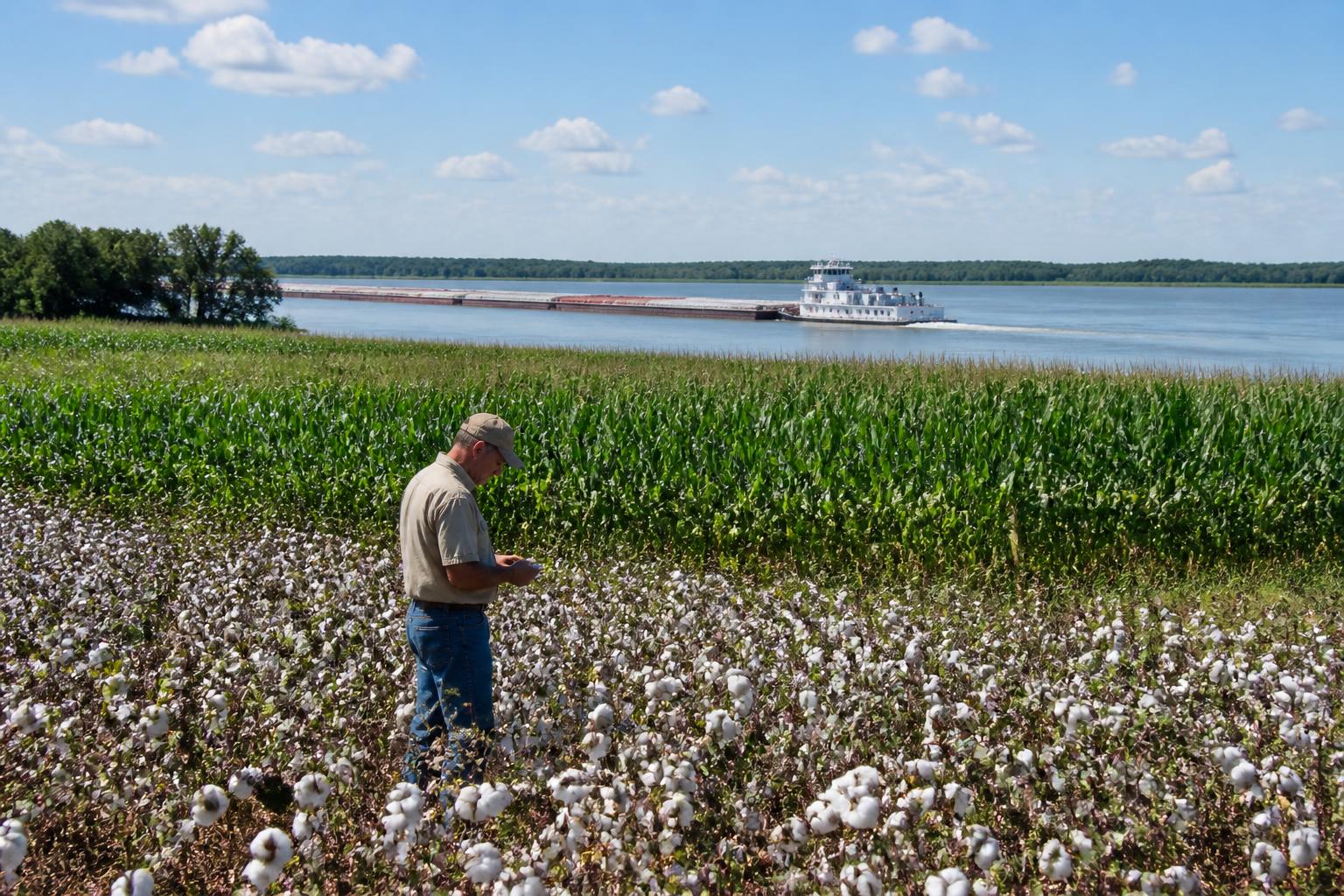
Mississippi grain growers and agricultural elevators are navigating a demanding summer marketing season. As the mid-year point passes, a combination of volatile river logistics and a cooling commodity price outlook is reshaping operational strategies across the Magnolia State. From the fertile soils of the Delta to the southern piney woods, producers are closely watching both the skies and the river gauges.
With global grain supplies remaining ample, local cash prices have faced steady downward pressure. This shift is not only impacting immediate marketing decisions for the current corn and soybean crops but is also beginning to influence broader financial fundamentals, including regional farmland valuations.
River Levels Cast a Shadow over Delta Logistics
For Mississippi grain shippers, the Mississippi River is the lifeblood of export logistics. Low water levels on the river are once again threatening to disrupt barge traffic, raising concerns reminiscent of previous shipping seasons. When river stages drop, barge operators are forced to reduce draft levels and limit tow sizes, which directly increases freight costs and puts downward pressure on local basis bids.
These persistent transportation challenges highlight the importance of proactive risk management. Delta growers are increasingly forced to balance on-farm storage decisions with volatile river freight rates. Navigating these logistics requires a deep understanding of local supply chains, as detailed in our guide on Mississippi Delta grain movement challenges, which highlights how basis fluctuations impact farm-gate prices.
Farmland Values Respond to Lower Commodity Outlooks
The prolonged period of lower crop prices is beginning to register in the regional real estate market. Mississippi land values are showing signs of ebbing as the outlook for crop profitability remains subdued. Farmland has historically been a highly resilient asset class, but tighter margins for core crops like corn and soybeans are prompting buyers to exercise greater caution.
While premium ground in highly productive counties still commands competitive rates, marginal acres are seeing softer demand. This shift emphasizes the need for careful budgeting and crop planning, as lower land equity can tighten operating credit lines ahead of the next planting cycle.
Adaptation Through Crop Rotation and Genetics
To combat tight margins, Mississippi growers are focusing on agronomic efficiency and crop diversification. Traditional rotations, such as integrating peanuts and cotton with corn, have proven effective for soil health and pest management, helping to spread market risk across multiple commodities. Utilizing diverse rotations allows growers to optimize input costs and maintain productivity even during periods of low grain prices.
At the same time, the industry is looking toward advanced seed technologies to boost yield potential. Recent collaborations in the seed sector, such as the partnership between Inari, Mertec, and MS Technologies, aim to deliver high-yielding, resilient seed varieties to the market. These genetic advancements may offer growers a critical tool for improving productivity on every acre in future seasons.
Key Takeaways for Mississippi Producers
- Monitor River Stages: Shipping restrictions on the Mississippi River remain a primary risk factor for late-summer and fall basis.
- Land Equity Management: Softening land values reflect tighter farm margins; securing favorable operating loans will require robust financial planning.
- Agronomic Diversification: Utilizing multi-crop rotations like corn, cotton, and peanuts can help mitigate individual commodity price drops.
What it means for the market
The Mississippi grain sector is entering a transitional phase where supply-chain resilience and financial discipline are paramount. While low river levels present immediate shipping headwinds, long-term success will rely on adopting advanced seed genetics and maintaining flexible crop rotations to handle fluctuating input costs and ebbing land values.
Comments
No comments yet - be the first to share your take.