
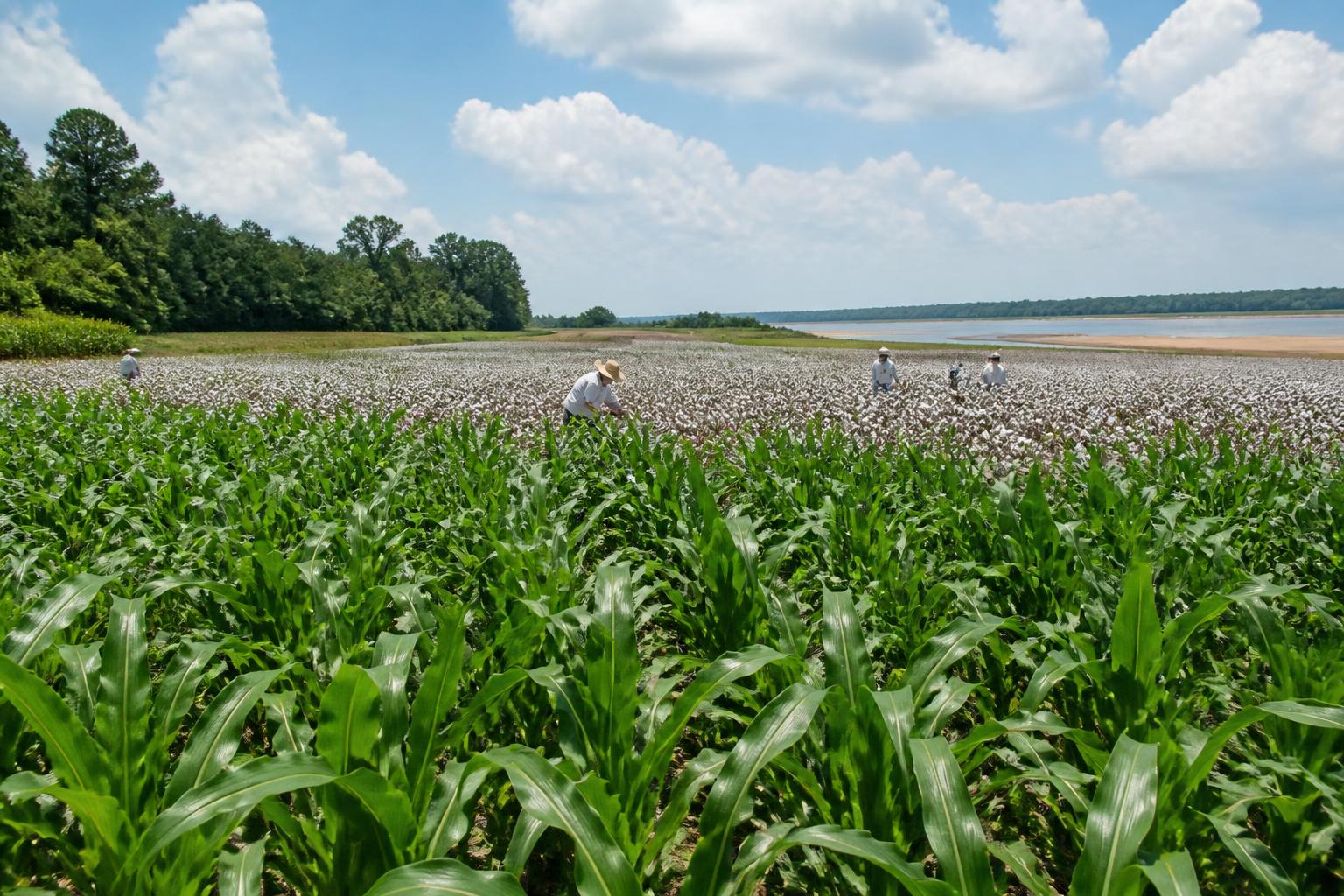
Mississippi growers are navigating a complex summer marketing landscape as grain movement across the Delta relies heavily on shifting river logistics and regional storage dynamics. The seasonal tug-of-war between corn and cotton acreage in counties like Washington, Bolivar, and Coahoma continues to redefine local grain flow. With the winter wheat harvest wrapping up and early-planted corn progressing rapidly under the summer sun, grain elevators along major highway corridors are preparing for a demanding transport season.
For local producers, securing competitive bids requires a close eye on both local elevator competition and international shipping corridors. The introduction of new tenants at regional grain facilities has the potential to stir up local basis, offering farmers alternative outlets as they balance the costs of storage against immediate delivery.
The Acreage Shift: Corn and Cotton Dynamics in the Delta
In recent seasons, Mississippi field crops have seen a delicate transition. Farmers often pivot between corn and cotton depending on early-spring planting windows and input price projections. A lull in spring rains earlier in the year allowed many Mississippi growers to complete their corn planting ahead of schedule, setting up a strong potential for summer yields. However, this shift is often described as bittersweet, as market volatility forces continuous reassessment of crop-sharing agreements and equipment investments.
This acreage volatility directly impacts regional elevators. When corn acres rise, high-volume logistics take priority, pushing local networks to their limits. Conversely, years with higher cotton acreage shift the local agricultural focus toward ginning and warehouse storage, altering the cash basis for remaining grain supplies.
River Levels and Shipping Infrastructure
The Mississippi River remains the ultimate arbiter of grain pricing in the Delta. Recent years have demonstrated how quickly drought conditions can shrink river channels, forcing draft restrictions and reduced barge sizes. Such logistics bottlenecks immediately depress local cash prices, as elevators must absorb the higher costs of alternative freight.
While temporary relief from spring rains can boost river levels and restore barge capacity, the threat of low-water restrictions during late summer and fall harvest remains a persistent concern. Navigating these Mississippi river logistics and export routes is essential for operations looking to capture regional price premiums before global logistics chokepoints impact major export terminals along the Gulf.
Elevator Competition and Market Access
Local market structure is also evolving. The entry of new operators at key grain terminals can provide much-needed competition, potentially raising bid prices for nearby farms. Producers located near Delta ports and major truck routes stand to benefit most from these changes, as elevators compete more aggressively to fill storage capacity.
To capitalize on these shifts, growers are monitoring regional logistics closely, aligning their on-farm storage strategies with local transport capabilities. Managing weight limits and keeping trucks moving efficiently during peak summer heat can make a significant difference in seasonal profitability. Understanding Delta grain transportation and weight limits is crucial for hauling operations looking to minimize downtime and maximize grain volume per load.
Key Takeaways for Mississippi Grain Sellers
- Monitor Local Basis: Watch for pricing shifts driven by new terminal operators and facility tenants competing for summer and fall grain.
- Track River Conditions: Stay updated on Mississippi River draft limits, as barge rates directly impact the bid prices at Delta ports.
- Optimize On-Farm Storage: Use on-farm bins strategically to avoid selling into logistics-driven cash market dips during peak harvest windows.
What it means for the market
The Mississippi grain market this summer is defined by local resilience in the face of variable river conditions and shifting crop mixes. While acreage shifts between corn and cotton alter local supply expectations, infrastructure developments and river logistics will dictate final producer margins. Farmers who maintain flexible marketing plans and monitor local competitive bidding will be best positioned to navigate the seasonal volatility.
Comments
No comments yet - be the first to share your take.