
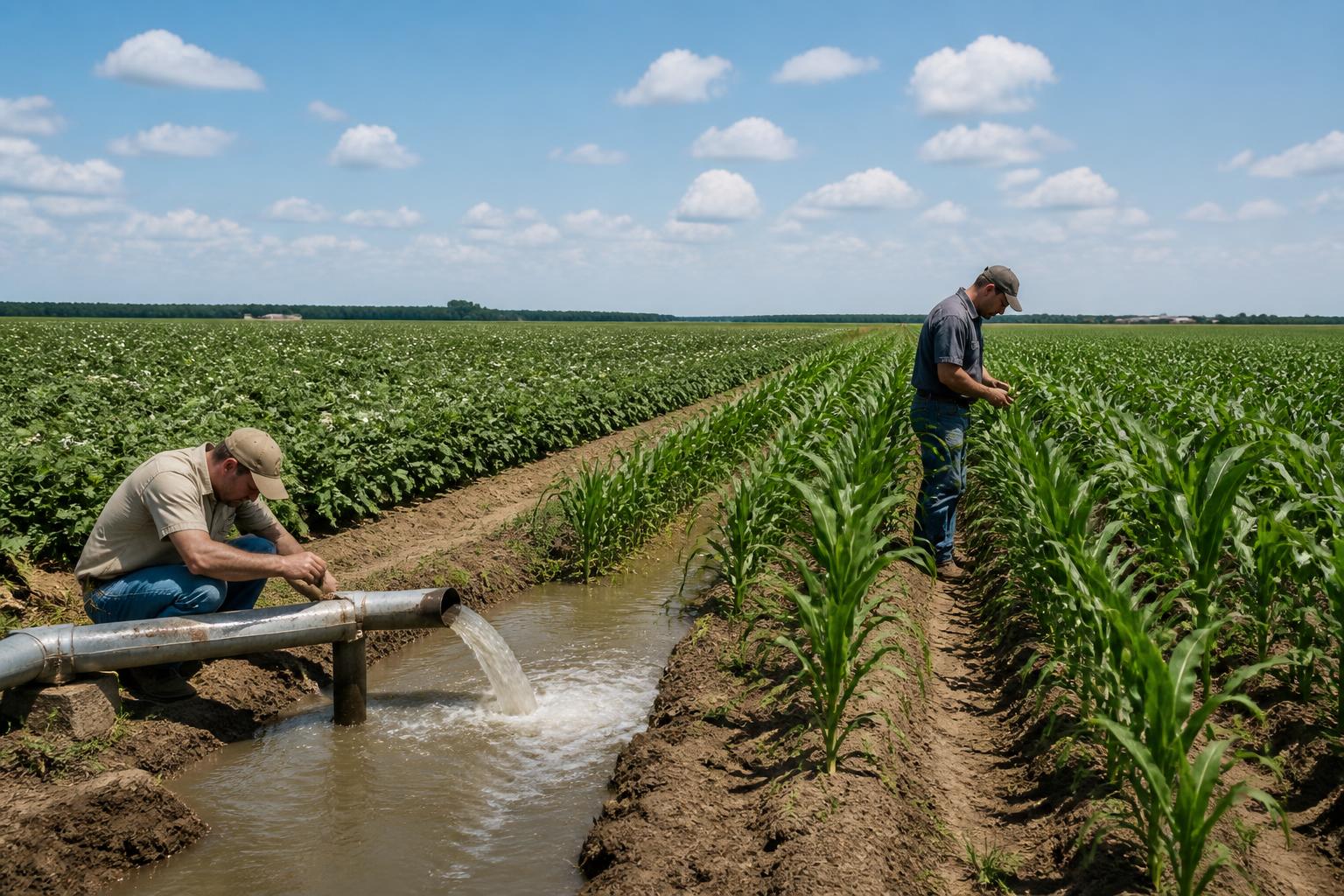
As summer settles across North Carolina, grain growers from the Coastal Plains to the mountain valleys are actively managing their fields to protect yield potential. With unpredictable summer weather patterns, the ability to manage water effectively and adopt innovative cropping strategies is proving to be the difference between a profitable year and a challenging one.
Local operations are increasingly focusing on conservation and soil health to build resilience. From adjusting planting configurations to adopting new tillage practices, North Carolina farmers are utilizing proven regional techniques to navigate the seasonal transition. For those looking to optimize their post-harvest logistics, tracking grain buyers, sellers and prices in North Carolina provides the necessary local context to make timely marketing decisions.
Water Management and Row Configurations in Summer Corn
In many parts of North Carolina, water management has become a primary pillar of staying in business. Growers like Chad Poole emphasize that controlling soil moisture, both drainage during heavy wet periods and retention during summer dry spells, is critical for crop survival. Proper drainage infrastructure and conservation practices help maintain soil integrity across the state's diverse soil types.
Alongside water control, agronomic adaptations are reshaping summer corn fields. Some local growers have successfully transitioned to narrow-row corn setups, aiming to optimize light interception and maximize plant populations. Other producers have turned to late-planted corn strategies to work around challenging spring weather windows or to fit corn into double-cropping systems. These management adjustments allow operations to spread risk and utilize summer heat units more efficiently.
Diversifying Rotations with Small Grains and Rapeseed
Wheat and other small grains remain cornerstones of North Carolina's agricultural economy. Local field tests have demonstrated that conservation-minded practices, such as utilizing vertical tillage, can increase wheat yields by improving seedbed conditions without excessively disrupting soil structure. This focus on soil preservation has also earned regional recognition, with local farmers receiving awards like the American Soybean Association Conservation Legacy Award.
To further diversify rotations, some grain farmers are integrating alternative crops. Rapeseed has emerged as an excellent fit for local grain rotations, providing a winter crop option that diversifies income and breaks pest cycles. In other niche markets, crops like German millet are occasionally grown, finding demand for wildlife feed and conservation cover.
National Voice and Local Leadership
North Carolina's influence extends well beyond state lines. Local leadership, highlighted by growers like Darren Armstrong serving as chairman of the U.S. Grains Council, ensures that East Coast grain interests are represented in national and international trade discussions. This leadership helps keep local producers informed of global demand shifts while they focus on local agronomic precision.
What it means for the market
For North Carolina grain buyers and sellers, the focus on water management, diversified crop rotations, and soil conservation translates to more resilient local supply chains. While summer weather will ultimately dictate final crop volume, the widespread adoption of resilient practices, from narrow-row corn to vertical tillage, helps stabilize yield volatility, keeping local elevators and livestock feed buyers well-positioned for the upcoming harvest season.
Comments
No comments yet - be the first to share your take.