
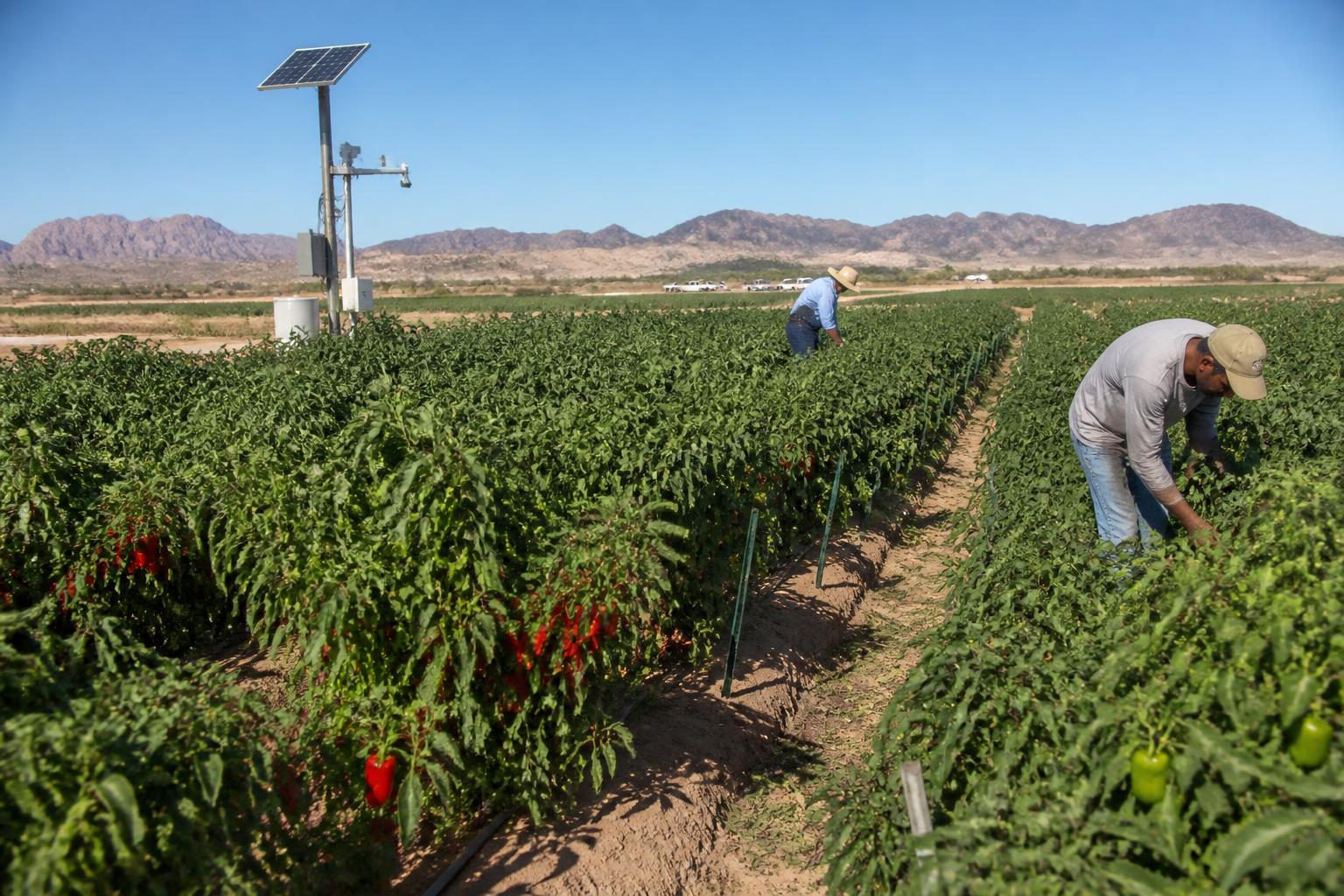
Arizona's agricultural landscape is currently undergoing a period of intense adjustment, marked by evolving water access challenges and the persistent need for operational efficiency. As producers look to manage resources more effectively during the demanding summer season, technology firms are increasingly turning to the Yuma region as a testing ground for advancements in agricultural robotics and data-driven crop management.
New pilot programs focusing on Physical AI represent a shift toward integrating specialized technology into daily field operations. For producers, these tools are often viewed as a potential way to mitigate some of the uncertainties inherent in high-value specialty crop production. By deploying intelligent systems, farmers may be better equipped to handle precision tasks that require careful monitoring in the intense heat of the Arizona climate.
Navigating Operational Challenges
Beyond technological adoption, the broader regional market remains focused on supply chain stability. Growers continue to contend with fluctuating input costs, which directly impact transport logistics and labor planning during the peak harvest windows. Tight margins in the fertilizer market and volatile water supplies have forced many agribusinesses to reevaluate their standard logistics and procurement strategies to keep costs within a manageable range.
Technology as a Strategic Pivot
The introduction of Physical AI in local fields is primarily aimed at improving yield outcomes through more granular oversight of crop health and development. While the technology is still in the pilot phase, stakeholders are closely watching how these digital and physical integrations can scale across different crop types. The goal remains consistent: identifying ways to maintain productivity without exponentially increasing the resource footprint.
What it means for the market
For the average producer or agribusiness operator, these developments signal a slow but steady transition toward more automated, data-centric field management. While these pilots do not provide an immediate solution to systemic water or commodity price issues, they do suggest that long-term survival in the Arizona market may increasingly depend on adopting precision-based technologies that allow for tighter control over input usage and harvest efficiency.
Comments
No comments yet - be the first to share your take.