
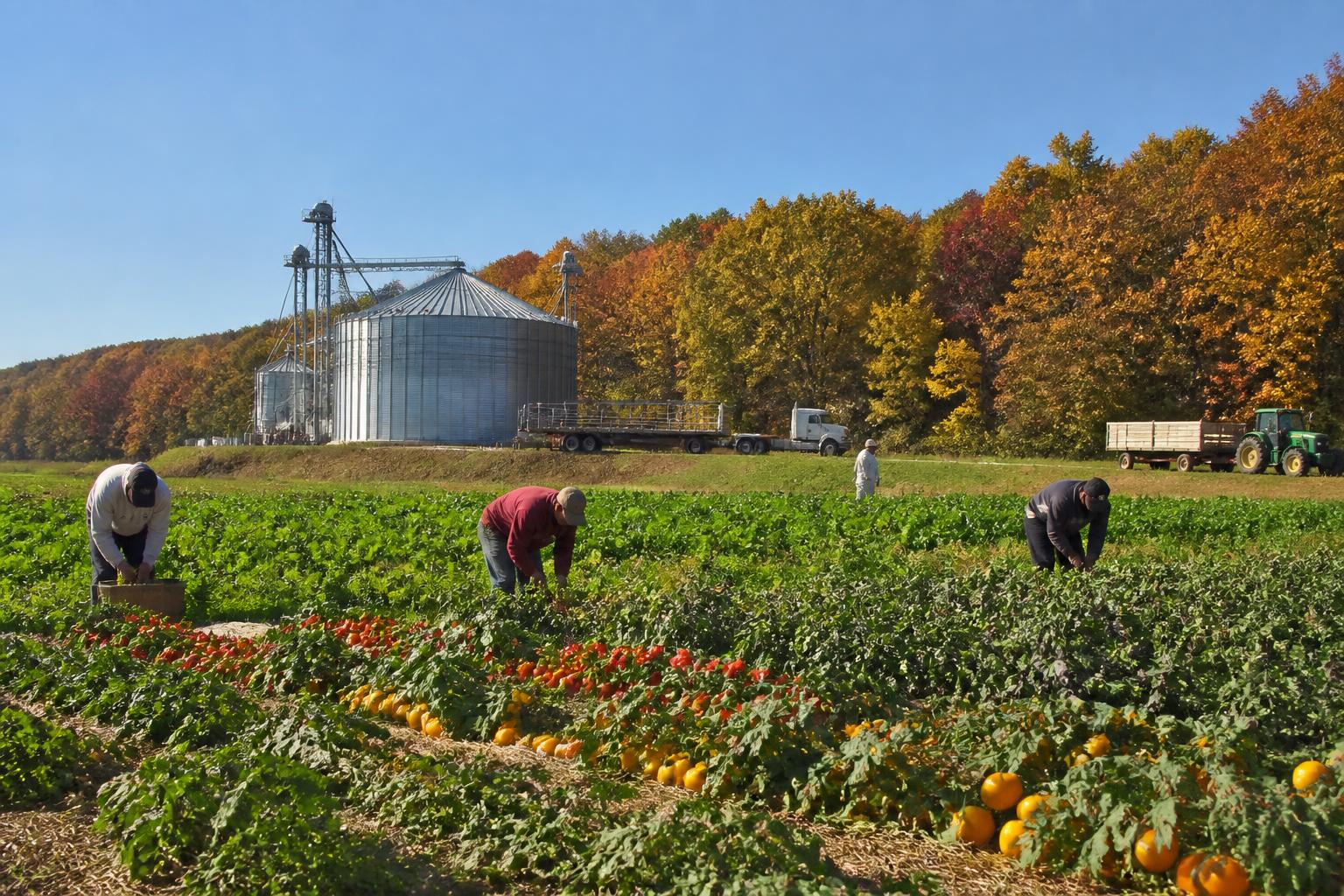
The Maryland harvest season is now in full swing, bringing a unique set of logistical challenges for the state's grain handlers and transport providers. While fieldwork progresses across the Eastern Shore and into the rolling hills of the Piedmont, regional producers are balancing the demands of high-volume seasonal traffic with the need for careful crop scouting and efficient transport management.
Amidst this busy period, stakeholders in the Maryland grain sector are monitoring developments that could tighten local supply chains. With recent reports of corn disease, including the first identified cases of tar spot in select counties, the importance of coordinated field access and timely delivery to elevators has become more pronounced to ensure grain quality and prevent potential bottlenecks at receiving points.
Streamlining Regional Grain Flow
Infrastructure efficiency remains a top priority for those coordinating the movement of commodities from farm to port. Recent investments, such as new grain transload facilities serving the Mid-Atlantic region, are being closely watched by industry participants. These developments are intended to bolster export capacity, providing farmers with more options to move their crop during the narrow windows allowed by typical fall weather patterns in Maryland.
However, logistics professionals are also keeping a cautious eye on broader shipping trends. Increased scrutiny of international carrier restrictions has the potential to influence local logistics costs, reminding operators that global market shifts often find their way to the rural road corridors and river terminals that define our state's agricultural commerce.
Leveraging Tools for Success
As traffic increases on state highways and rural county roads, the use of technology for tracking nutrient management and optimizing transport routes has become standard practice for many Maryland agribusinesses. Integrating these digital solutions can help mitigate the operational strain often associated with the peak harvest and aerial seeding phases, allowing for smoother transitions between field activities.
What it means for the market: Producers and logistics managers should prepare for potential site-specific delays as regional health concerns impact crop uniformity. Prioritizing clear communication with local elevators regarding moisture levels and delivery windows will be critical to maintaining market access and avoiding unnecessary detention or storage costs during this high-pressure window.
Comments
No comments yet - be the first to share your take.