
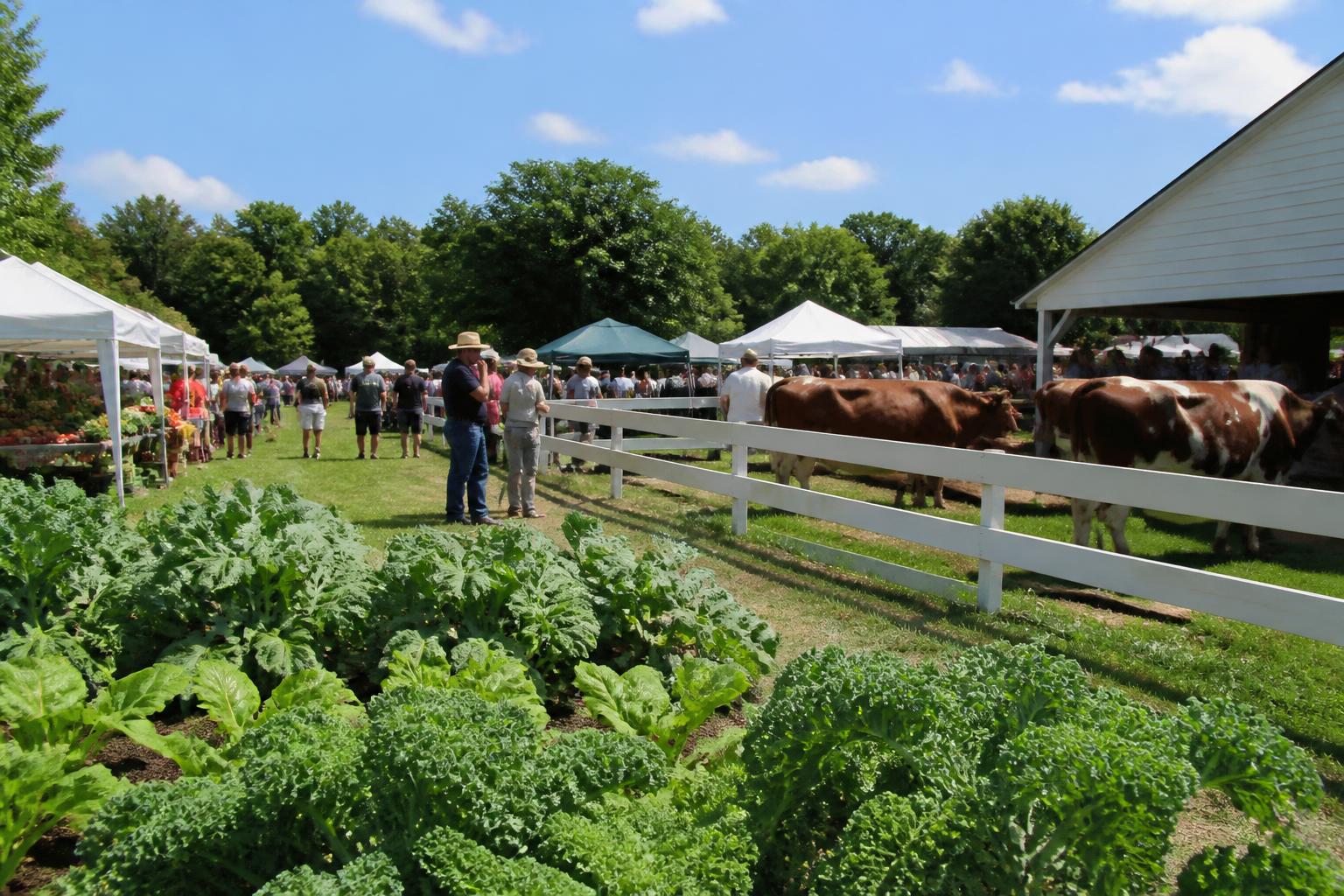
New Hampshire producers are currently managing a complex late-summer season defined by worsening drought conditions that continue to pressure crop yields and pasture health. Across the Granite State, from the quiet expanses of the Monadnock region to the established orchards in the north, growers are increasingly looking toward sustainable management practices to mitigate the risks associated with volatile weather patterns and shifting soil conditions.
Infrastructure and Economic Pressures
Beyond the immediate field concerns, the state's agricultural economy faces persistent structural bottlenecks. One of the most significant challenges remains the limited capacity of local meat processing facilities. With only a few slaughterhouses available to serve the entire state, livestock producers often encounter significant hurdles when attempting to bring their products to market. This supply chain limitation forces many farmers to operate on thinner margins, making even moderate expansions or facility upgrades a heavy financial lift.
Land Stewardship and Policy Shifts
Land preservation efforts continue to shape the rural landscape, though the transition from development rights to sustained profitability remains a nuanced struggle for many family farms. As recent climate grant initiatives begin to provide some relief, producers are also evaluating their long-term inputs. Reports regarding the potential presence of PFAS in certain biosolid fertilizers have introduced a new layer of caution for soil management programs, pushing many operators to re-examine their long-term nutrient plans to ensure both environmental compliance and public confidence.
What it means for the market
For agribusinesses and logistics providers operating in New Hampshire, the current environment demands agility. The combination of localized drought stress and infrastructure constraints means that localized supply chains are tighter than usual. Buyers and processors should prepare for potential delays or supply volume volatility as producers prioritize water conservation and struggle with processing capacity. Focusing on regional partnerships and efficient resource distribution will be critical for maintaining consistent throughput through the remainder of the harvest season.
Comments
No comments yet - be the first to share your take.