
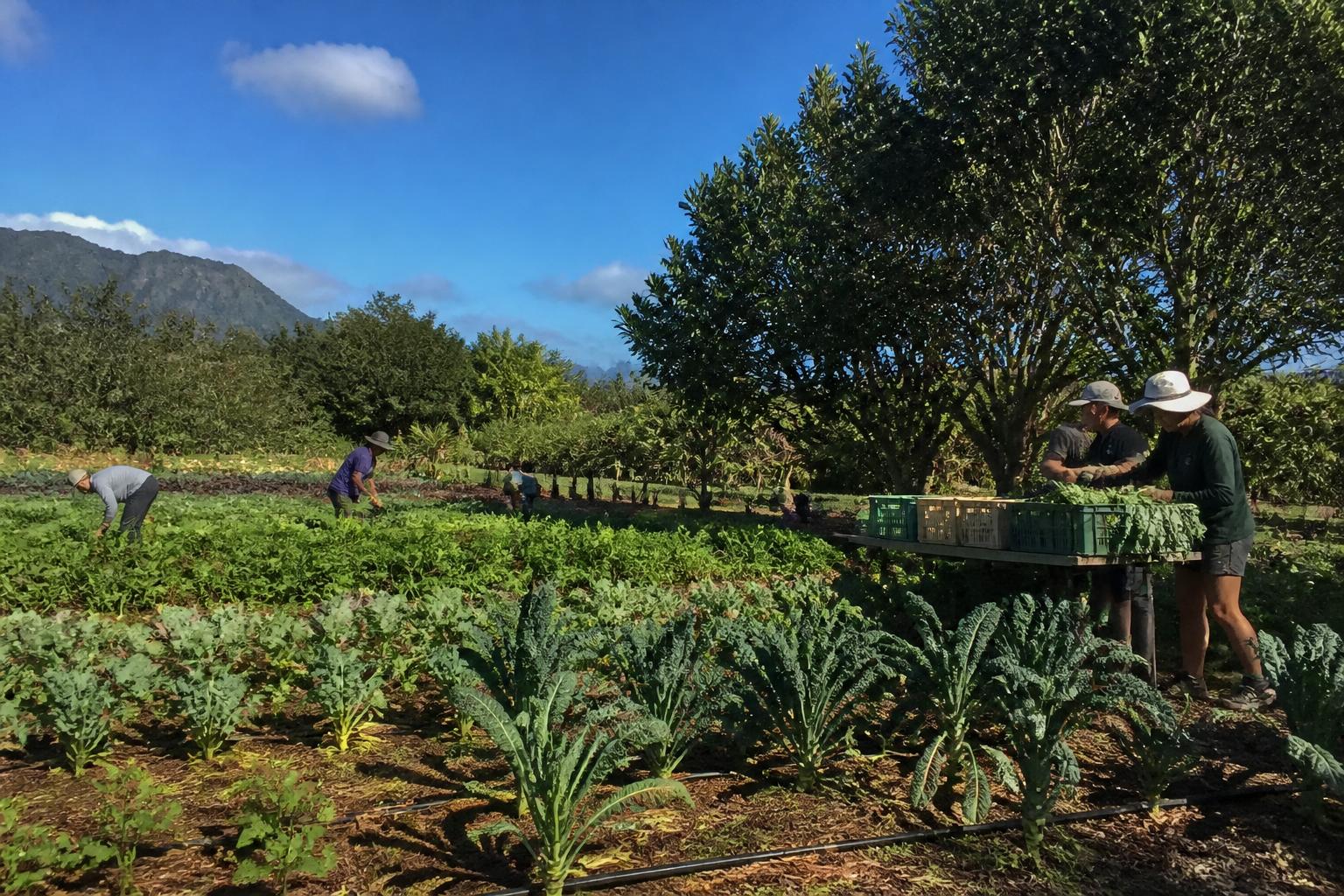
Building Resilience in Hawaii Agriculture
Hawaii producers are navigating a changing landscape as the agricultural sector seeks to reduce its historical reliance on imported inputs. Strengthening the local supply chain remains a priority for growers aiming to hedge against the volatility often seen in island logistics. Effective logistical management is becoming an essential component of modern island farming, as producers look for ways to optimize their operational overhead amidst fluctuating costs.
The Shift Toward Local Solutions
Research and extension efforts by institutions like the University of Hawaii are currently focusing on identifying methods to help farmers transition away from expensive, imported inputs. This push is intended to alleviate the financial strain that many local growers experience when sourcing basic production materials from the mainland. By fostering local alternatives, the state aims to keep more capital within the regional farming economy while simultaneously improving the sustainability of diverse crop systems.
Operational Challenges and Market Realities
Farmers in Hawaii often report that high operational costs—ranging from land leases to specialized equipment maintenance—sapping farm energy remains a primary barrier to expansion. While the desire to produce locally is strong, the economic reality of competing with low-cost imported produce creates a narrow margin for error. Producers who are diversifying their output and seeking out direct-to-consumer or specialty wholesale channels may find themselves better positioned to weather these inflationary pressures.
Key Takeaways
- Research initiatives are prioritizing locally sourced alternatives to traditional imported inputs.
- Operational efficiency is critical for maintaining farm viability in a high-cost environment.
- Strengthening regional supply chains can help mitigate risks associated with reliance on mainland shipping routes.
What it means for the market: For agribusinesses and input suppliers in Hawaii, this shift represents a move toward localized procurement. As farmers prioritize cost-saving measures and sustainability, there may be increased demand for products that can be sourced or produced within the state, signaling a potential long-term pivot in the regional agricultural market.
Comments
No comments yet - be the first to share your take.