
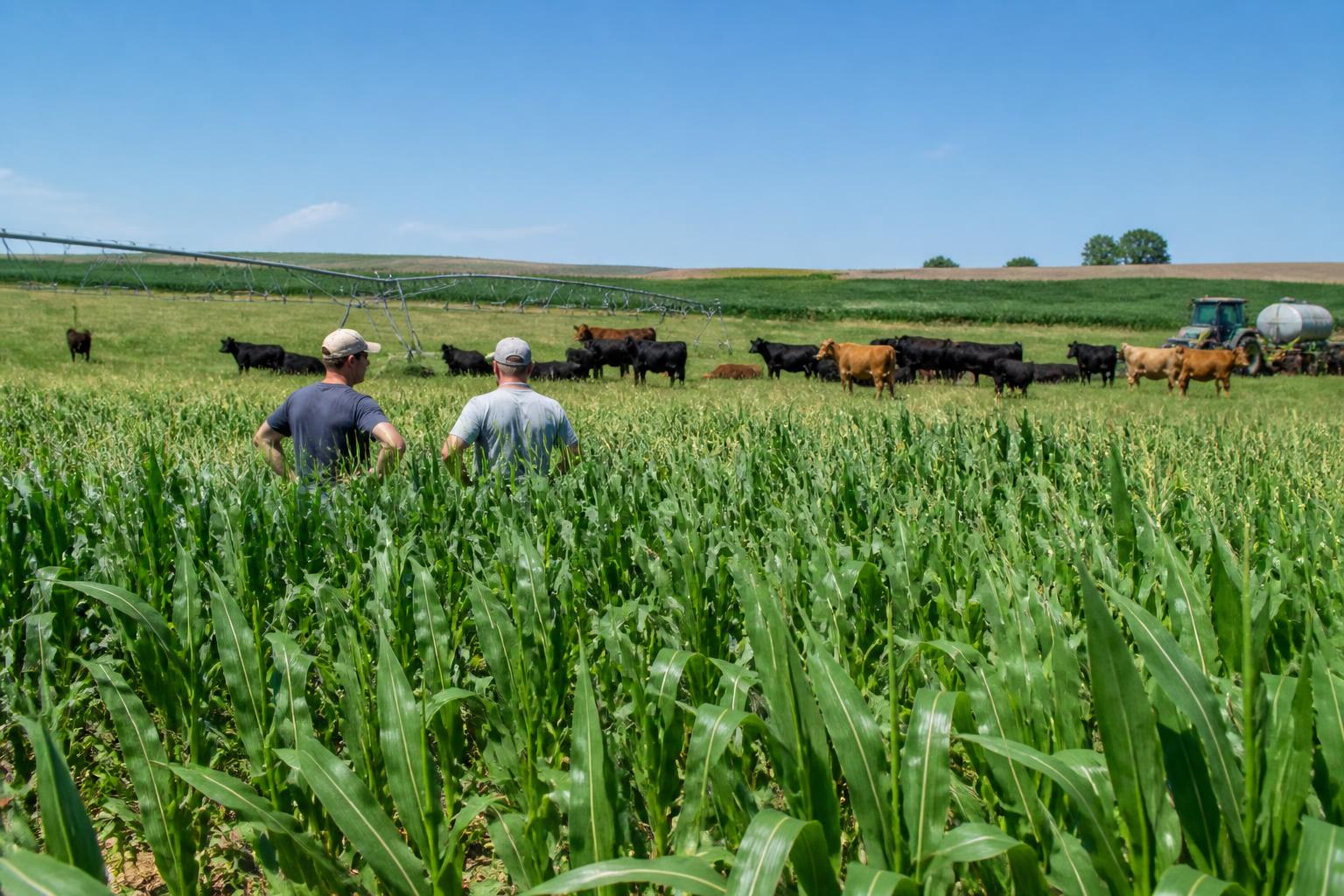
As the summer heat settles across the Platte Valley and the expansive fields of the Nebraska Panhandle, local producers are facing a complex web of economic and operational pressures. While the state remains a national powerhouse in corn production and livestock ranching, the dual pressures of steep input prices and shifting federal leadership have many agricultural families operating with heightened caution this season.
From the corn fields of the east to the ranchlands of the west, keeping input costs manageable is the top priority. Farmers are actively seeking ways to protect their bottom lines through advanced precision technologies, local on-farm research, and strategic marketing adjustments.
The Input Cost Squeeze and Geopolitical Pressures
Nebraska producers are grappling with a prolonged squeeze from elevated fuel and fertilizer prices, which economists warn could impact farm budgets for months to come. Global volatility, particularly concerns surrounding international conflicts, has historically driven up energy markets, directly escalating the cost of diesel and synthetic fertilizers. For dryland and irrigated operations alike, these overhead expenses threaten to erode profit margins during a critical phase of the summer growing season.
In response to these tight margins, growers are paying closer attention to Nebraska's agricultural landscape and its navigating challenges. Managing crop health with highly targeted applications of fungicide and fertilizer is no longer just an environmental goal; it is a vital economic strategy. Identifying the absolute best times to apply inputs helps ensure that every dollar spent directly supports yield potential without wasting expensive materials.
Precision Nitrogen and Soil Innovations
To combat high fertilizer costs, state-level research programs are focusing heavily on precision nitrogen management. By utilizing advanced crop modeling and real-time soil sensing technologies, Nebraska farmers can adjust their application rates to match the exact needs of the crop. This prevents over-application and lowers overall production costs.
Additionally, innovative soil conservation practices are gaining traction. Practices such as applying biochar, which acts as a long-lasting carbon trap, are being evaluated for their ability to improve soil water retention and nutrient efficiency over the long term. Local on-farm research networks continue to host summer field days and winter update meetings across multiple locations in Nebraska, allowing growers to share practical data on what worked and what did not in their specific soils.
Livestock Resilience and Generational Transition
In the Nebraska Panhandle, cattle ranching remains a resilient cornerstone of the local economy. However, the sector has had to overcome significant hurdles, including devastating wildfires that left some western ranchers scrambling to secure alternative forage for their herds. Despite these natural disasters, cattlemen and women continue to adapt by utilizing rotational grazing and cooperative forage sharing.
At the same time, farm families are focusing on the next generation's return to the operation. Transitioning a family business requires clear planning, financial diversification, and access to modern marketing tools. Organizations such as the University of Nebraska-Lincoln (UNL) are supporting this shift, recently establishing a modern agricultural commodities trading room to better equip future managers with real-time market-risk management skills. Furthermore, exploring alternative revenue models, such as integrating Nebraska's wind energy opportunities with traditional agriculture, provides stable, off-farm income streams that help families buffer against commodity price swings.
What it means for the market
For Nebraska agribusinesses and operators, the summer of 2026 is a period of transition and careful optimization. Success this season will largely depend on a producer's ability to minimize waste through precision application, adapt to sudden input price hikes, and utilize regional research network data. While macro pressures and national agricultural leadership transitions introduce uncertainty, local technological adoption and proactive risk management remain the best tools for securing long-term farm viability.
Comments
No comments yet - be the first to share your take.