
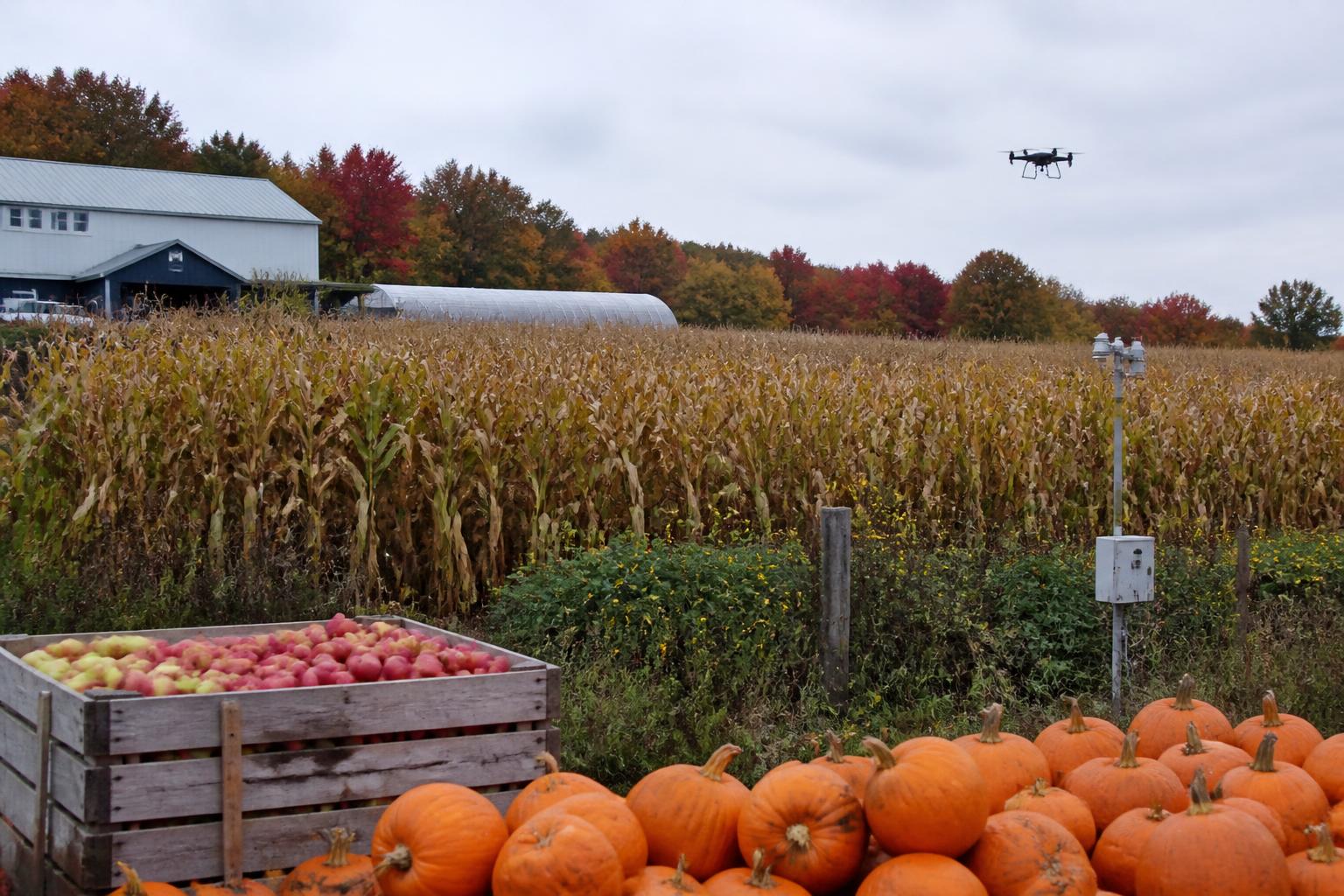
As the harvest season progresses across New York, producers and grain handlers are balancing regional operational demands with shifting financial landscapes. The recent launch of a state-led tariff relief program, valued at $30 million, aims to provide targeted assistance to help agricultural businesses mitigate external cost pressures. For many farmers in regions ranging from the Hudson Valley to the Finger Lakes, this program represents a vital mechanism to help stabilize balance sheets as they navigate the complexities of modern market volatility.
Strengthening Regional Infrastructure
The push to bolster the state's food and fiber supply chains remains a top priority. Recent grant initiatives are designed to improve efficiency, potentially easing the bottlenecks that can occur during the peak movement of commodities. For carriers and grain elevators, these improvements may help in streamlining the transport of goods across state highway corridors, particularly as seasonal labor and logistics demand increase. For further insight into the operational shifts affecting the region, see our guide on managing harvest logistics effectively.
Market Context and Operational Realities
Beyond direct financial support, the broader agricultural sector is watching the interplay between global market dynamics and local input costs. Fluctuations in the price of essential inputs often require producers to adopt more precise management strategies. Integrating modern tools and data-driven logistics is one way regional operations are attempting to gain an edge. These advancements are part of a wider effort to ensure that regional agricultural logistics remain robust even when global market conditions fluctuate. Agribusinesses that lean into these efficiencies are better positioned to handle the pressures of both the current harvest and future planting cycles.
What it means for the market
For New York grain handlers and producers, the current environment suggests a transition toward more localized supply chain security. While the tariff relief program offers a buffer against immediate financial headwinds, the long-term goal remains the optimization of local infrastructure. Operators should stay focused on maximizing efficiency within their own supply networks as the industry continues to modernize its approach to seasonal operations and asset management.
Comments
No comments yet - be the first to share your take.