
The High Road and Water Corridors of the Far North
In major agricultural hubs like the Matanuska-Susitna Valley and the Tanana Valley near Fairbanks, the summer months bring a flurry of activity. However, getting goods from these fertile zones to the rest of the state is rarely straightforward. Ground transport is heavily dependent on primary arteries like the Parks and Richardson Highways, which frequently face summer construction delays, weight restrictions, and intense competition from the tourism and resource-extraction sectors.
For coastal and island communities, the Alaska Marine Highway System and private barge services are the only viable ways to haul heavy agricultural machinery and bulk inputs. Because of these challenges, managing the high freight costs and seasonal bottlenecks in the state requires careful planning, as discussed in our brief on navigating Alaska's summer ag logistics.
Decentralizing Logistics via Vertical and Village-Driven Ag
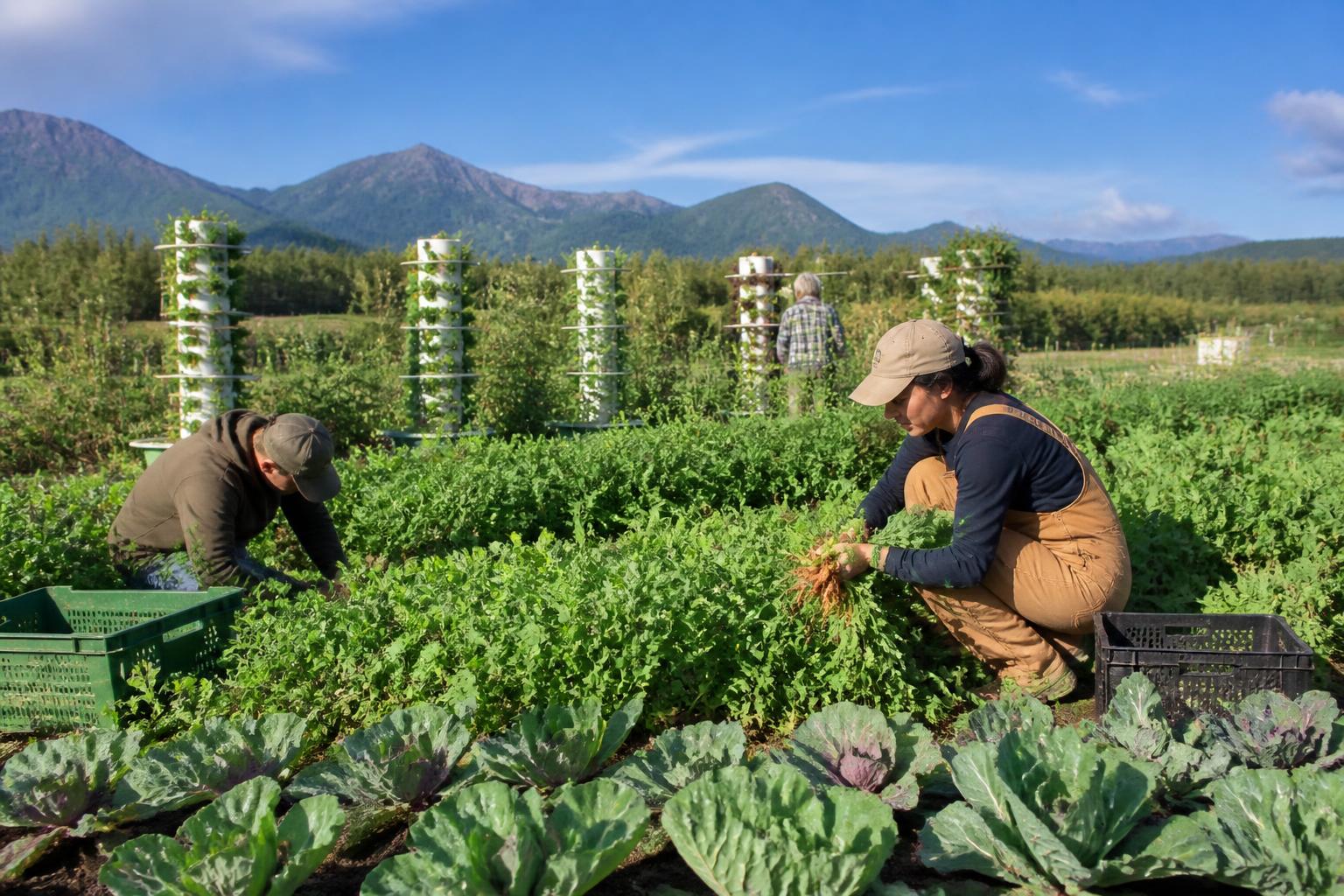
To mitigate the extreme costs of importing perishable food-which often travels thousands of miles by container ship and truck before reaching Alaskan grocery shelves-there is a growing push toward decentralized, village-driven agriculture. Innovative indoor farming operations, such as Vertical Harvest Hydroponics, are showing that remote communities can bypass traditional shipping lanes entirely by growing fresh greens on-site. By producing food locally, these systems are beginning to offer fresh produce to isolated villages at prices competitive with, or even lower than, traditional air-freighted imports.
Additionally, community-led agricultural projects in rural villages are reducing dependency on external supply chains. By establishing localized greenhouses and small-scale growing systems, these communities are insulating themselves from the erratic schedules and high fuel surcharges associated with rural Alaskan freight delivery.
Adapting Farms to Minimize Input Freight
Another way Alaskan growers are tackling transport challenges is by changing how they manage their land. Transporting heavy commercial fertilizers and soil amendments across the state is incredibly costly. To counter this, some farmers are adopting conservation tillage methods. Implementing high tunnels and no-till practices helps local growers build soil health naturally, decreasing their reliance on imported, bulk inputs that are expensive to ship.
At the same time, agricultural researchers and local veterans are exploring climate-resilient, low-input crops-such as localized hazelnut varieties-that can thrive in high-latitude climates without requiring the massive volume of synthetic inputs typical of traditional commodity crops.
Key Logistical Takeaways for Alaskan Ag
- Multi-modal reliance: Supply chains in Alaska must remain flexible, utilizing a mix of trucking, marine barging, and bush-plane air transport depending on the destination.
- Localizing production: Controlled-environment agriculture (CEA) and vertical farming are proving crucial for stabilizing the year-round supply of fresh vegetables in remote areas.
- Reducing input dependency: Soil conservation practices like no-till are gaining traction as practical strategies to cut down on the volume of imported fertilizers and chemical inputs.
What it means for the market
For agribusinesses, carriers, and local distributors operating in Alaska, success hinges on minimizing transport distance and bulk. The market is shifting toward localized food security solutions, creating unique opportunities for compact, high-efficiency agricultural technologies. Companies that can provide localized inputs, decentralized growing systems, or specialized cold-chain logistics for remote deliveries will find a highly receptive and resilient market in the Last Frontier.
Comments
No comments yet — be the first to share your take.