
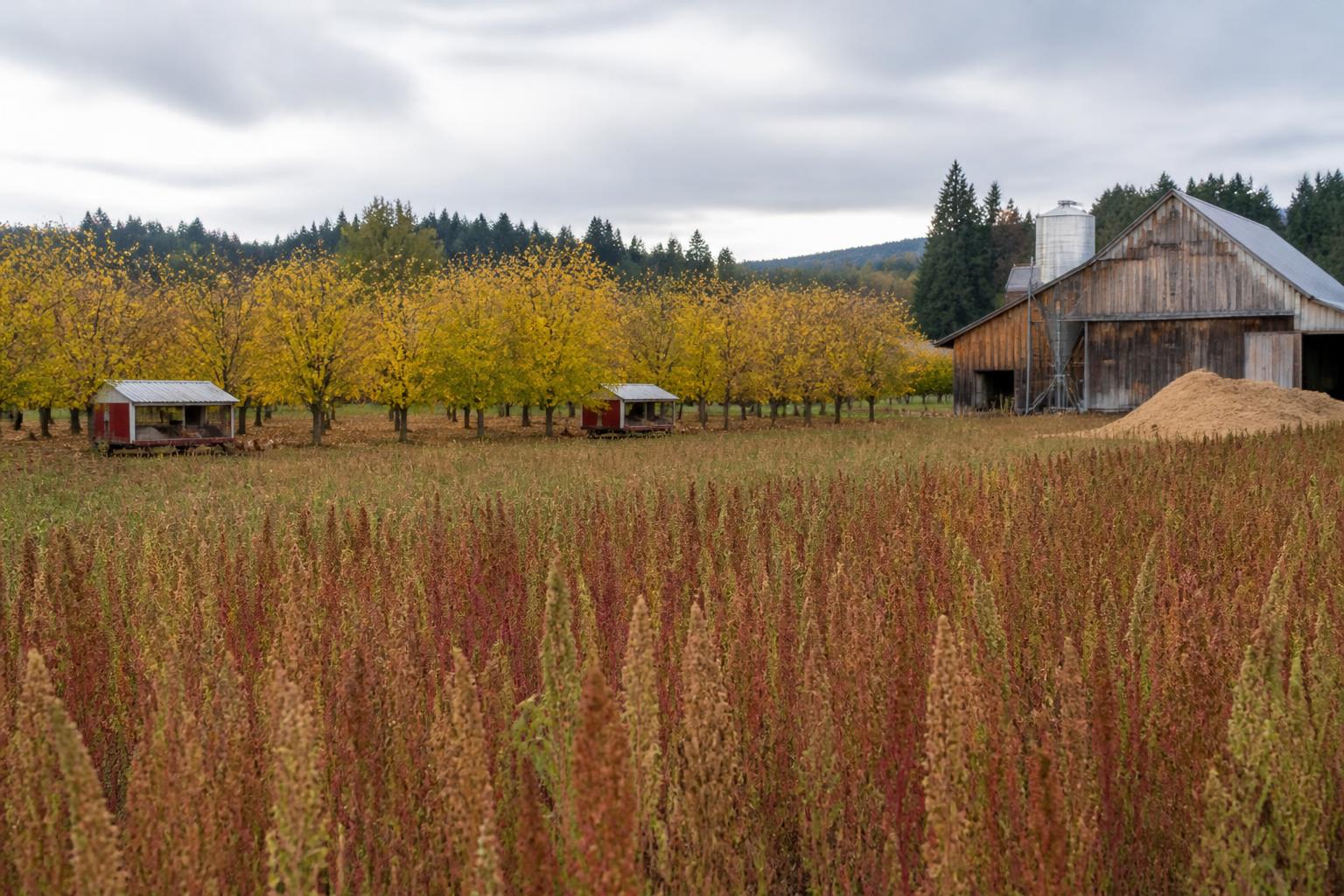
Oregon's hazelnut industry is currently navigating a complex period of market uncertainty, prompting state lawmakers to seek federal assistance to support growers. As the harvest season progresses, regional producers are exploring various avenues to stabilize their operations, ranging from government purchase programs to the integration of sustainable practices like mobile pest management in orchards.
Expanding Value and Diversification
Beyond traditional commodities, Oregon producers continue to refine their approaches to agricultural stability. For instance, recent developments in new milling infrastructure on the Umatilla Reservation highlight an ongoing shift in the state's grain processing capacity, offering potential new pathways for value-added products. This localized growth aligns with broader statewide efforts to optimize supply chains and explore niche crops, such as quinoa, tailored for the Willamette Valley's specific climate conditions.
Managing Risk and Efficiency
As growers evaluate their long-term strategy, the focus remains on operational efficiency and risk management. With evolving infrastructure and regulatory updates continuing to shape the operational environment, many producers are looking toward innovation to mitigate input costs. Integrated pest management, including the use of moveable flocks to maintain orchard health, represents the type of adaptive strategy becoming more common in the Pacific Northwest as producers seek to maintain margins in a volatile global trade environment.
What it means for the market
The push for federal support underscores the current financial strain on Oregon hazelnut growers, who are contending with external market pressures and shifting export demands. For agribusinesses and logistics providers, these developments signal a need for increased flexibility in storage and transportation planning as the industry attempts to recalibrate its supply-to-demand ratio through the remainder of the fall.
Comments
No comments yet - be the first to share your take.